


 Business Recorder
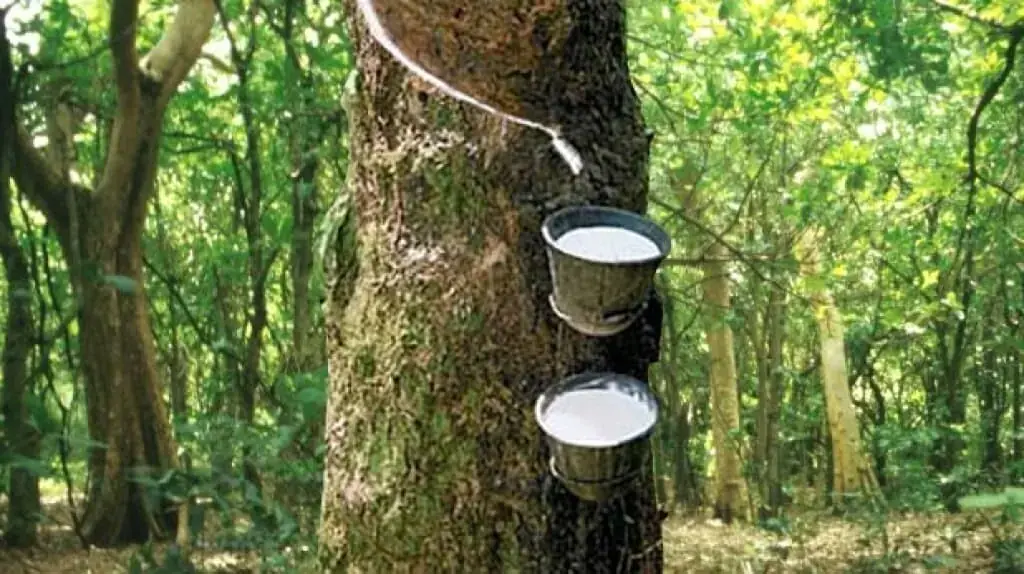
Japanese rubber futures are range-bound on Tuesday as traders are uncertain about supply from top producer Thailand, whose rubber trees are approaching peak seasonality amid heavy rains that are hampering tapping. The Osaka Exchange (OSE) rubber contract for October delivery was down 1.6 yen, or 0.39%, at 411.5 yen ($2.61) per kg. The rubber contract on the Shanghai Futures Exchange (SHFE) for September delivery fell 60 yuan, or 0.34%, to 17,750 yuan ($2,612.14) per metric ton. The most active June butadiene rubber contract on the SHFE gained 395 yuan, or 2.57%, to 15,765 yuan per metric ton. Rubber prices are range-bound as traders expect supply to ease as Southeast Asian rubber trees approach the peak harvesting period, though weather-related concerns still linger. Rubber crops usually experience a low-production season from February to May, followed by a peak harvesting period that lasts until September. However, the meteorological agency of top producer Thailand warned of heavy rain and flash floods in the south, where the country’s rubber plantations are concentrated, over the next week. In addition, higher oil prices support natural rubber prices, as its substitute, synthetic rubber, is made from crude oil. Oil prices rose 1% on Tuesday as talks to end the U.S.-Israeli war on Iran appeared fragile, with Tehran’s response to a Washington proposal highlighting stark differences that have kept supply concerns alive. Traders are also eyeing U.S. President Donald Trump’s visit to China, where deals on agriculture and commercial aviation are said to be discussed. The visit is expected to generate positive news, which could boost market sentiment, a Singapore-based rubber trader said. The front-month rubber contract on Singapore Exchange’s SICOM platform for June delivery last traded at 221.2 U.S. cents per kg, down 0.9%, as of 0700 GMT.
Go to News Site