


 Ruptly
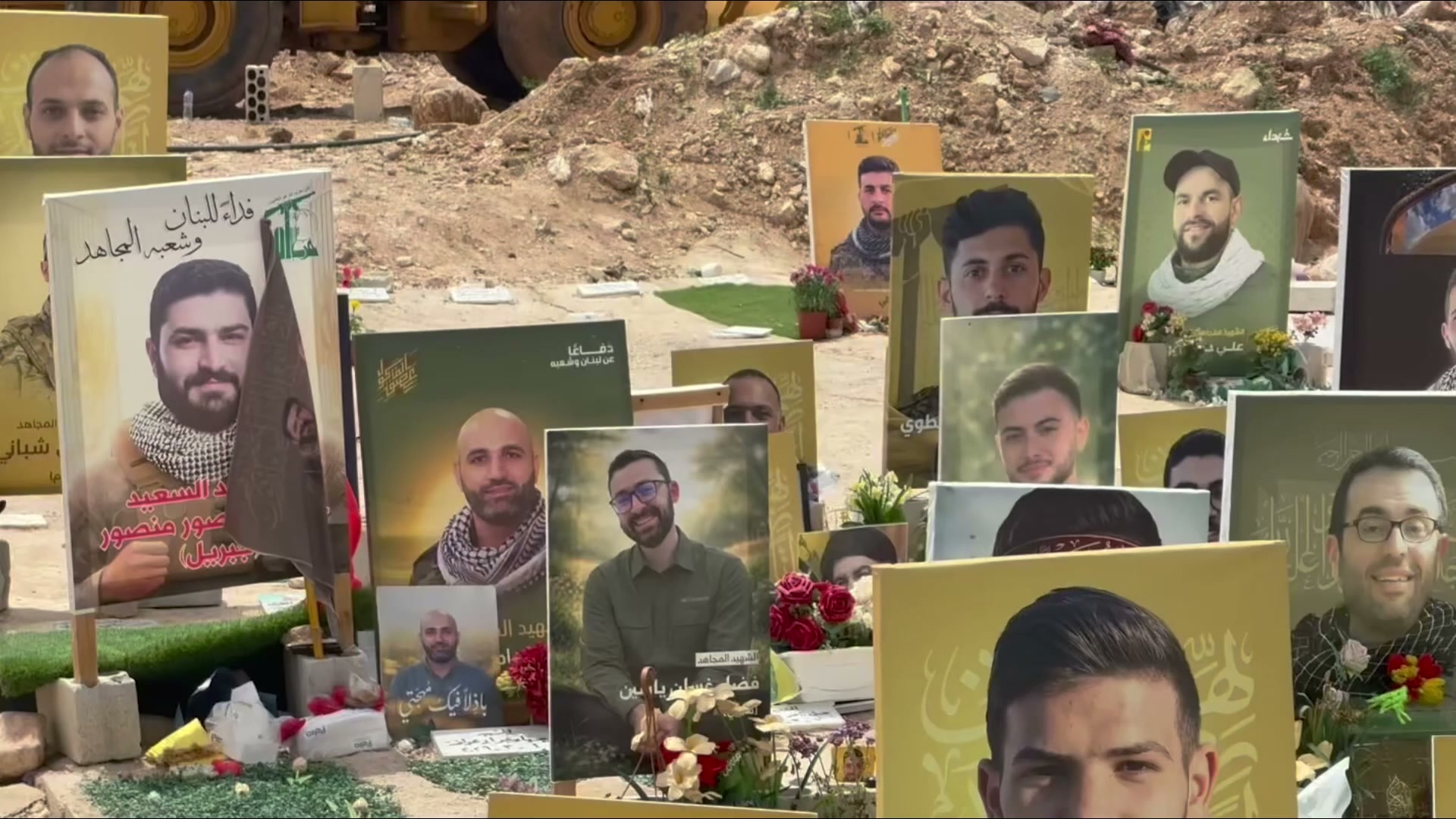
"Lebanese families from the south of the country are being forced to bury their relatives in 'deposits graves' in Beirut, waiting for the day they can be returned to their hometowns when the conflict ends. Footage from Wednesday shows rows of temporary graves, known as 'deposits', adorned with photographs, the names of the deceased, and floral wreaths. Several relatives spoke of the profound pain associated with these temporary interments. Dana Maki, who lost six family members in 2024, explained that they were forced to bury them as 'deposits' in the city of Tyre because "the situation and circumstances do not allow us to bury them in their hometown." “For me, I knew the word ‘deposit’ as a term, but I didn’t know its real meaning. When my family was martyred, I felt it and understood what a ‘deposit’ really is. It is a temporary burial for a person, and it is also a temporary, open wound,” she added. Ibrahim Khair El-Din said that his brother was killed during the war, and that he also lost another brother and his nephew in the 2024 war. He explained that his brother was buried in Choueifat because it was impossible to transfer him to the Marjeyoun district due to the “current occupation circumstances.” "Once the war ends and conditions improve, we will transfer him and bury him alongside his companions who were martyred on the same front, without a doubt,” he continued. According to Lebanese media, since March 2,500 bodies have been placed as temporary 'deposits' while waiting for the war to come to an end. On April 15, US President Donald Trump announced a 10-day ceasefire between Israel and Lebanon, and on the 23rd of the same month, he confirmed its extension for three weeks, following direct talks hosted in Washington between Lebanese and Israeli officials. Meanwhile, the IDF has designated what is known as the "yellow line" in southern Lebanon, in a move aimed at preventing residents from returning to areas under its control. This measure is considered an extension of a tactic previously used in the Gaza Strip, where it designates areas under its control within ceasefire agreements and prevents civilians from entering them. The IDF has called on residents of about 80 towns in the south not to return to their homes, stating that it continues to maintain its presence in those areas, justifying this by saying it is confronting what it described as "terrorist activities." Israel indicates that it intends to establish a "security zone" within Lebanese territory, extending from the border to the Litani River, which is equivalent to about 10% of Lebanon's area."
Go to News Site