


 Business Recorder
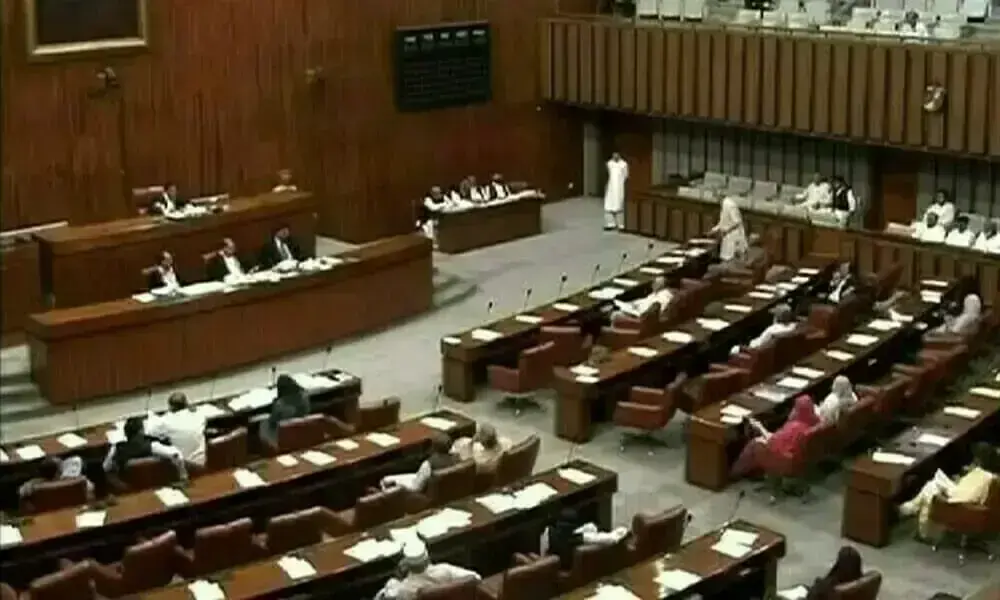
ISLAMABAD: The Senate Standing Committee on Economic Affairs, on Thursday, expressed serious concerns over alleged corruption in Sindh government’s foreign-funded projects, long delays in Karachi’s developmental projects, which resulted in escalating costs by hundreds of millions of dollars. The committee meeting held here under the chairmanship of Senator Saifullah Abro also expressed anger over the long delay in the completion of Karachi mass transit schemes, and non-compliance of Power Division (PD) in the recoveries of Rs20.8 billion from M/s GE and Rs1.282 billion from the qualified firm in the 765kV Dasu-Islamabad Transmission Line Project (LoT-IV).The Committee reviewed matters relating to Sindh’s foreign-funded projects, the power sector, and implementation of its previous recommendations. It was recalled that senior officers from the government of Sindh had earlier been directed to attend the meeting. The Economic Affairs Division (EAD) informed the Committee that letters had been issued to the concerned authorities; however, responses were still awaited. The committee members raised serious concerns regarding alleged irregularities in Sindh foreign-funded projects. It was observed that the Secretary, Energy Department, Government of Sindh, had earlier acknowledged in the meeting that massive misappropriations and financial irregularities had been identified in the Sindh Solar Energy project. The fake invoices amounting to USD12.5 million were allegedly involved. The committee remarked that funds provided by international donors are meant for the development and welfare of the country and should not be misused through corrupt practices. The Transport and Mass Transit Department, Government of Sindh, presenting a detailed briefing on the Karachi Mass Transit Plan, informed the panel that the project was initially studied in 2012 and comprised six transport corridors. The Green Line and Orange Line projects are operational, while work on the Red Line and Yellow Line projects is currently underway. Regarding the KBRT Red Line Project, the Committee was informed that it is funded by the Asian Development Bank and that the loan agreement was signed in June 2020. The revised closing date of the project is 30 June 2026, whereas the earlier completion target was 2024. The officials further said that due to delays of almost two years, the project cost has increased by approximately USD100 million, and the initial estimated cost of the project was USD 490 million. The increase in cost was attributed to rupee depreciation, design changes, and changes in the number of buses planned for the project. It was informed that Lot-I comprised the corridor from Mosamiyat to Malir with six stations and two depots, while Lot-II covered the route from Numaish to Mosamiyat with sixteen stations. The Committee was informed that the tendering process was delayed by one and a half years. A complaint lodged by car showroom owners at Numaish, Karachi, also resulted in design changes to the project. Another major delay was caused by non-payment of utility shifting, which cost approximately Rs4 billion by the Government of Sindh. The committee expressed serious concern over the additional financial burden of USD100 million despite utility shifting expenses amounting to only Rs4 billion. It was further informed that the project had incurred interest charges of USD10.9 million. The Committee was informed that the project is now expected to be completed in December 2027. The Committee was further informed that Lot-II, despite achieving 38 percent progress, had been terminated due to delays by the contractor. The members questioned why Lot-I, with comparatively less progress, remained under execution while Lot-II had been terminated despite substantial advancement. The Committee directed the EAD to invite the contractor to the next meeting, along with complete details. Upon inquiry regarding payments made to contractors, the committee was informed that Package-I, costing Rs13.79 billion with 26 percent progress, had already been paid approximately Rs13 billion, while Package-II, valued at Rs15.93 billion, had been paid around Rs15 billion with 38 percent progress. Documents presented by the Sindh Government revealed that a 92 percent escalation amounting to Rs3.6 billion, along with Rs3 billion as a mob advance, had also been paid, which is about 22 percent mobilisation advance. The Committee expressed serious concern over how the department had made nearly 100 percent payments despite only 26 percent and 38 percent physical progress in both Lots. The officials remained unable to satisfy the committee regarding the justification for such excessive payments. The committee recommended that the EAD formally write to the Chief Minister of Sindh to conduct an inquiry and take action against the officials involved in the slow progress of the project and excessive payments made to the contractor. The Committee was also briefed on the KBRT Yellow Line Project, which starts from Dawood Chorangi and ends at Numaish, covering a distance of approximately 21 kilometres. The project is funded by the World Bank, and the loan agreement was signed in 2019. The project comprises six packages. It was informed that Package IV of the project had achieved 55 percent progress. The original completion date of the project was 31 December 2025; however, it has now been extended to 31 December 2028. The initial estimated cost of the project was USD439 million, which has now increased to USD 620 million, resulting in an additional financial burden of USD 181 million. The Transport and Mass Transit Department, Government of Sindh, attributed the increase in project cost to design changes, construction of an additional bridge, and the transition from diesel-hybrid buses to electric vehicles. The Chairman of the Committee was further briefed about the Jam Sadiq Bridge Project, estimated to cost Rs12.5 billion, and is scheduled to commence in 2026 and is expected to be completed by March 2027. The Committee was informed that physical progress on the project stood at 55 percent, whereas 99 percent of the payment had already been made to the contractor. The committee again raised objections over excessive payments made to contractors despite slow progress on the projects, emphasizing the need to address delays, strengthen financial oversight, and ensure transparency in payments to contractors. The Committee also decided to hold the next meeting within one week and directed the EAD to ensure the presence of the Chairman, Planning and Development Department, Government of Sindh, along with the concerned Secretaries in the forthcoming meeting. The committee chairman observed that the Planning and Development Department, government of Sindh, would be answerable before the nation for failing to control such large-scale alleged corruption in Sindh. He directed the EAD to formally write to the Chief Secretary, Government of Sindh, to ensure that the Chairman, Planning and Development Department, Government of Sindh, attends forthcoming meetings and briefs the panel on Sindh foreign-funded projects. Copyright Business Recorder, 2026
Go to News Site