


 Daily Finland
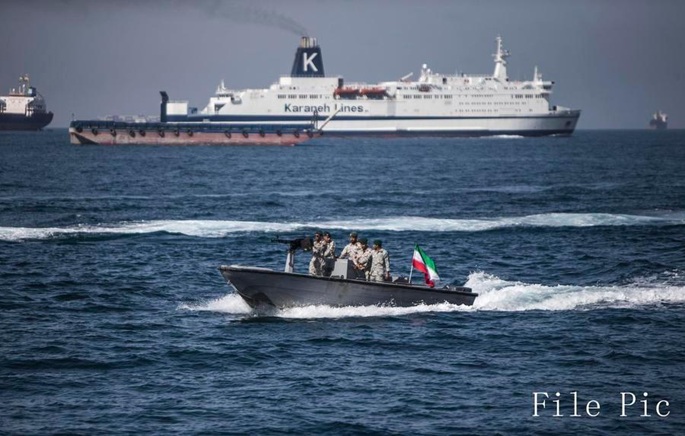
Iran will soon unveil a "professional mechanism" to manage traffic in the Strait of Hormuz along a designated route, a senior Iranian lawmaker said Saturday, without specifying the exact timing of the disclosure, reported Xinhua. Ebrahim Azizi, chairman of the Iranian parliament's national security and foreign policy committee, wrote on social media platform X that the route will "remain closed" to the operators of Project Freedom, a U.S. military operation aimed at guiding commercial vessels out of the strait. "In this process, only commercial vessels and parties cooperating with Iran will benefit from it," he said, adding that Iran will collect the "necessary fees" for "the specialized services provided under this mechanism." The United States and Israel conducted joint strikes on Tehran and other Iranian cities on Feb. 28, killing Iran's then Supreme Leader Ali Khamenei, senior Iranian officials and civilians. Iran responded with missile and drone attacks against Israel and U.S. interests in the region and tightened control over the Strait of Hormuz. A ceasefire between the warring parties took effect on April 8, which was followed by talks between Iranian and U.S. delegations in Pakistan's Islamabad on April 11 and 12 that ended without an agreement. Later, the United States imposed its own blockade on the strait. Since the ceasefire, U.S. and Iranian forces have engaged in multiple direct exchanges of fire in and around the strait. On Monday, U.S. President Donald Trump told Fox News that he was considering restarting Project Freedom with an expanded scope, yet no final decision had been made. Iran suspected in cyber breach of US gas station tank monitoring systems US officials suspect Iranian hackers may be behind a series of cyber intrusions targeting systems that monitor fuel levels at gas stations across multiple US states reported ANI, quoting CNN, citing multiple sources briefed on the matter. According to CNN, compromised systems, known as automatic tank gauge (ATG) systems, were reportedly exposed online without password protection, allowing hackers, in some cases, to alter display readings of fuel levels. However, officials clarified that the actual fuel quantities in the storage tanks were not affected. While the incidents have not resulted in physical damage or injuries, they have raised concerns among security experts and officials, as unauthorised access to such systems could potentially be used to conceal fuel leaks or create operational risks, as reported by CNN. According to CNN, citing sources, Iran's past cyber activity targeting fuel infrastructure is one of the key reasons it is being considered a leading suspect. However, they cautioned that a definitive attribution may not be possible due to limited forensic evidence left behind by the attackers. US agencies, including the Cybersecurity and Infrastructure Security Agency (CISA), have not publicly commented on the incident, while the FBI declined to respond, as reported by CNN. Cybersecurity experts noted that Iran-linked hacking groups have previously targeted vulnerable, internet-connected infrastructure systems, including those linked to oil, gas, and water facilities in the United States. CNN further recalled earlier incidents in which Iranian-affiliated hackers were accused of breaching US water utilities and displaying anti-Israel messages following the October 7, 2023, Hamas attack on Israel. Security researchers have long warned about the risks posed by exposed ATG systems, with past studies indicating that such systems have remained vulnerable for over a decade due to weak cybersecurity protections. US intelligence agencies reportedly view Iran's cyber capabilities as less advanced compared to China and Russia, but officials say Tehran-linked groups have become increasingly active and opportunistic, targeting critical infrastructure in recent years, CNN reported. Since the ongoing conflict in Western Asia escalated, Iran-linked hackers have also allegedly targeted US oil and gas facilities, medical device companies, and government officials' communications, as reported by CNN. Israeli entities have similarly faced a surge in cyberattacks attributed to Iranian groups amid the broader regional conflict.
Go to News Site