


 Business Recorder
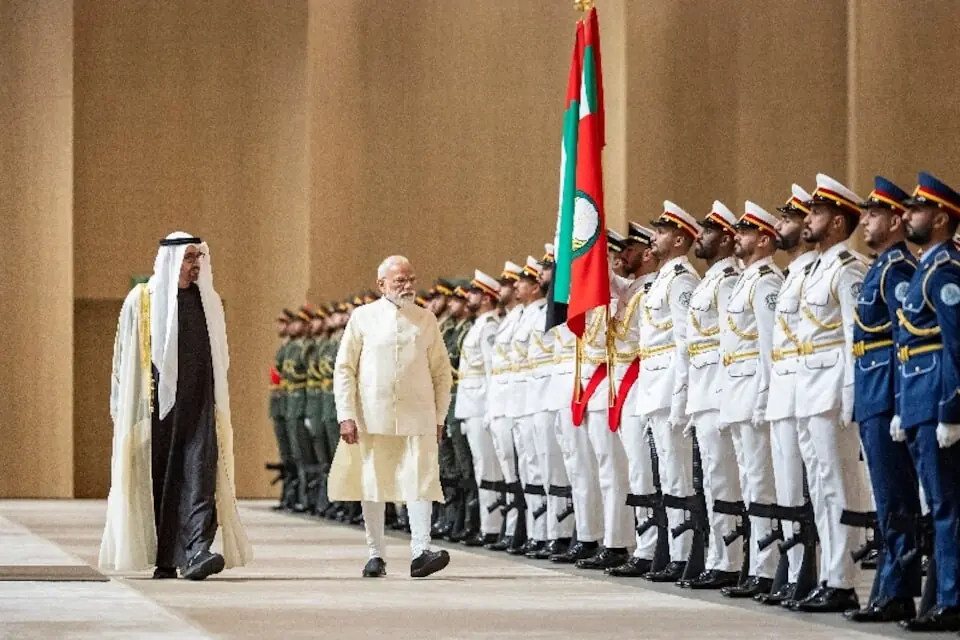
India’s increasing strategic partnership with the United Arab Emirates (UAE), including defence, energy and maritime cooperation, is raising concerns in Pakistan over the country’s geopolitical and economic space in the Gulf region, a historic ally of Islamabad. During Indian Prime Minister Narendra Modi’s visit to Abu Dhabi last week, India and the UAE agreed on a framework for a strategic defence partnership, while also signing agreements on strategic petroleum reserves and liquefied petroleum gas (LPG) supplies. “The two sides have agreed on deepening defence industrial collaboration and cooperation on innovation and advanced technology, training, exercises, maritime security, cyber defence, secure communications and information exchange,” the India’s foreign ministry said in a statement. The agreements come amid heightened instability in the Middle East following the Iran conflict and disruptions in the Strait of Hormuz. For Pakistan, analysts say the growing India-UAE alignment carries implications extending far beyond diplomacy. Michael Kugelman, Senior Fellow at the Atlantic Council, said the Gulf region has become a strategic arena where India and Pakistan increasingly compete for influence, particularly in energy, trade and security cooperation. “GCC is a strategically significant entity for both Islamabad and New Delhi. One could argue that the fact that India is now ramping up its ties in a big way with the UAE, which could be seen in Islamabad as a strategic disappointment,” Kugelman told Business Recorder . “I would not suggest it’s a strategic failure for Pakistan,” he maintained, as Islamabad still maintains a “workable relationship” with Abu Dhabi and strong relations with other Gulf states, including Egypt. However, he said the UAE’s engagement with Islamabad has “fallen on hard times” even as its partnership with India intensifies. Kugelman highlighted that India’s rise in the Gulf was not sudden, and that New Delhi has spent nearly a decade strengthening ties with GCC states after reducing its dependence on Iranian energy imports. “There’s been a pretty strong energy relationship between India and the UAE for quite some time. Some years ago, those two countries agreed to a new infrastructure fund, where the UAE was going to provide significant amounts of support to India for infrastructure,” he said, adding that Pakistan’s cooling ties with Abu Dhabi just created an opening for India “to dig in more and capitalise”. The implications for Pakistan’s economy could become increasingly significant as India locks in long-term energy access and strategic reserves with one of the world’s leading oil exporters. The bilateral oil pact announced last week includes a potential increase of ADNOC’s crude oil storage in India for up to 30 million barrels, Abu Dhabi’s state oil firm said in a separate statement, adding the deal also explores potential crude storage in the UAE’s Fujairah as part of India’s strategic reserve. Meanwhile defense analyst Brigadier Ahmed Saeed Minhas (Retd) warned that tighter Indo-UAE energy integration could reduce Pakistan’s leverage in future energy negotiations with Gulf suppliers. “India and the UAE agreement on strategic petroleum reserves in India, expanded crude storage, and long‑term LPG/LNG supply deals that strengthen India’s energy resilience and lock in Emirati volumes for the Indian market,” he told Business Recorder . “For Pakistan, this carries two quiet risks. First, tighter Indo-UAE energy coupling could make Abu Dhabi even more sensitive to Indian economic preferences in crises. Secondly, Pakistan might face relatively less flexible Emirati energy terms if more barrels are pre‑committed eastwards.” Pakistan remains heavily dependent on Gulf states for oil and gas imports, with recurring balance-of-payments pressures. The country’s current account swung back into deficit in April as a sharp rise in imports, driven largely by higher global oil prices, outweighed earlier gains. Analysts warn that if India succeeds in positioning itself as the Gulf’s indispensable economic and security partner, Pakistan risks gradual marginalisation in regional economic and diplomatic forums. Minhas said rising Indian trade and investment ambitions with the UAE — projected to touch $200 billion by 2032 — have coincided with some “high‑profile disappointments for Pakistan, such as the collapse of planned Emirati management of Islamabad airport and tougher Emirati financial terms besides a relatively more pro‑India tilt in certain UAE policy”. “Pakistan’s traditional strengths, i.e. large expatriate workforce, military training links, and perceived role as a reliable security partner, although still matter, are no longer exclusive assets in the Gulf,” he said. Minhas added that India could also attempt to leverage its growing Gulf security footprint to “portray Pakistan as a security risk under the familiar terrorism narrative, something Indian diplomacy has attempted with Gulf partners before”. The strategic concern for Islamabad is amplified by India’s expanding maritime and defence cooperation with Gulf states, particularly in the Arabian Sea region, where Pakistan has historically maintained a strong naval presence. Minhas argued that Pakistan would need to respond through calibrated diplomacy rather than confrontation, including strengthening defence coordination with Saudi Arabia, expanding maritime cooperation with friendly Gulf states and enhancing economic engagement with the region. “Diplomatically, Pakistan should consistently flag Indian efforts to securitise the Arabian Sea against Pakistan as destabilising, while endorsing cooperative frameworks that include all littoral states, making it harder for India to turn UAE platforms into exclusive anti‑Pakistan forums.” He said Pakistan must urgently shift from being viewed merely as a labour-exporting country to becoming a broader economic partner for Gulf investors through special economic zones, agricultural corridors and technology partnerships. However, despite the concerns, experts believe Pakistan is unlikely to lose access to UAE energy supplies in the near term. Kugelman noted that the UAE still sees Pakistan as a valuable and longstanding energy customer at a time of volatility in global energy markets. “It’s not going to just want to push away a loyal, dedicated customer like Pakistan, particularly a country that has been a longtime purchaser of UAE energy,” he said. Still, the deepening India-UAE partnership underscores a broader regional realignment in which Gulf states are increasingly prioritising economic scale, technology and strategic diversification.
Go to News Site