


 Dawn.com
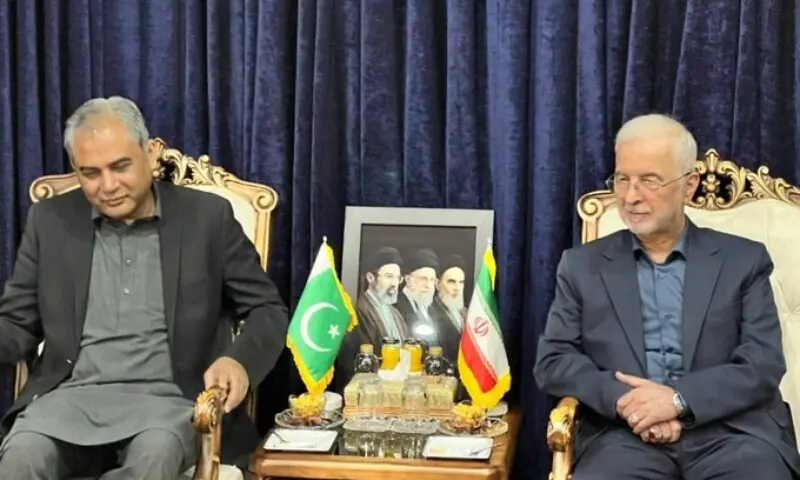
• Naqvi travels to Tehran for 2nd time in a week to break deadlock, meets Iranian president, IRGC chief • Trump claims talks in ‘final stages’, warns of renewed hostilities if deal not reached • Iran warns confrontation will ‘go beyond Middle East’ if war resumes; Pezeshkian says ‘all paths’ for talks remain open • Saudi FM backs Pakistani mediation, praises Trump for giving diplomacy a chance ISLAMABAD: As the US and Iran continue to trade threats, putting their fragile ceasefire at risk, Pakistan has stepped up its diplomatic efforts to break the deadlock, sending its emissary — Interior Minister Mohsin Naqvi — to Tehran for the second time in less than a week to resuscitate negotiations. The minister landed in the Iranian capital with a “crucial message” for the Iranian leadership, reflecting the urgency of the mediation efforts amid fears that the ceasefire could unravel if negotiations remained at a standstill. Diplomatic sources said Pakistan was continuing to relay messages between Tehran and Washington, but differences over Iran’s nuclear programme, sanctions relief, the Strait of Hormuz, and wider regional security concerns linked to Tehran’s missile capabilities and allied armed groups continued to impede progress. The latest round of contacts is taking place under heightened pressure from the US and its Middle East allies. US President Donald Trump on Wednesday said talks in Iran were in the final stages, and also threatened to resume strikes if a deal is not reached in a “limited timeframe”. Iran, meanwhile, warned of confrontation beyond the Middle East in the case of a US attack but also insisted that all paths were open to avert the resumption of hostilities. According to diplomatic observers, Naqvi’s meetings in Tehran during this trip, including with President Pezeshkian and Gen Vahidi, remained focused on Pakistan’s attempts to preserve the narrow opening for negotiations. The rapid succession of Naqvi’s Tehran visits also fuelled speculations that Chief of Defence Forces Field Marshal Asim Munir may soon also travel to Iran; though officials have so far avoided confirming any such plans. Diplomatic sources also said Pakistan’s mediation effort was becoming complicated by quiet strains, despite the two sides demonstrating good ties. Officials familiar with the contacts said Iranian circles were viewing Pakistan through the prism of its close coordination with Gulf Arab states and Washington, while there was consternation in Islamabad over Iran’s engagement with India, such as at the recent Brics summit. Gulf backing The mediation effort has also received cautious backing from Gulf states anxious about the risk of wider regional escalation and prolonged instability around global energy routes. Highly appreciating “ongoing mediation efforts carried out by Pakistan”, Saudi Foreign Minister Faisal bin Farhan Al Saud wrote on X that Riyadh “looks forward to Iran seizing the opportunity to avoid the dangerous implications of escalation, and urgently responding to the efforts to advance the negotiations leading up to a comprehensive agreement to achieve lasting peace in the region and the world”. He also appreciated “US President Donald Trump’s decision to give diplomacy a chance to reach an acceptable agreement to end the war, restore the security and freedom of maritime navigation in the Strait of Hormuz to its state prior to February 28th, 2026, and address all points of contention in a way that serves the security and stability of the region”. Meanwhile, Turkish President Tayyip Erdogan told President Trump in a call on Wednesday he welcomed the extension of a ceasefire, adding he believed contested issues between the sides could be resolved, according to the Turkish presidency. “During the meeting, our President stated that he viewed the decision to extend the ceasefire as a positive development (and) that he believed a reasonable solution to the disputed issues was possible,” the presidency said. US-Iran distrust Distrust, however, continued to mar the US-Iran negotiations as both sides stuck to their rigid stances. President Trump said negotiations with Iran were “in the final stages”, while warning of further attacks unless Tehran agrees to a peace deal. “We’re in the final stages of Iran. We’ll see what happens. Either have a deal or we’re going to do some things that are a little bit nasty, but hopefully that won’t happen,” he told reporters. He also said that American forces were “ready to go” and resume military operations should an agreement with Iran not be reached. “If we don’t get the right answers, it goes very quickly,” President Trump told reporters. “We have to get the right answers. It would have to be complete, 100 per cent good answers, and if we do, we save a lot of time, energy and lives, most importantly.” Tehran, for its part, accused the US president of plotting to restart the war, and threatened to retaliate with attacks beyond the Middle East. “If aggression against Iran is repeated, the promised regional war will extend beyond the region this time,” the Revolutionary Guards said in a statement. In a tweet, President Masoud Pezeshkian advised against war. He said Iran consistently honoured its commitments and “explored every avenue to avert war; all paths remain open from our side”. “Forcing Iran to surrender through coercion is nothing but an illusion. Mutual respect in diplomacy is far wiser, safer, and more sustainable than war,” he added. Likewise, Iranian national security official Ebrahim Azizi said the country’s experience “demonstrates the inherent and enduring untrustworthiness of the United States; that is why we are prepared for every scenario”. “Even now, despite the intense media blackout, the American people know how much cost and damage their government has imposed on them,” he added in a post on X. “The world witnessed Iran’s astonishing power, although many more surprises still remain.” Iranian speaker Mohammad Bagher Ghalibaf, Iran’s top peace negotiator, said in an audio message on social media that “obvious and hidden moves by the enemy” showed the Americans were preparing new attacks. Published in Dawn, May 21st, 2026
Go to News Site