


 Business Recorder
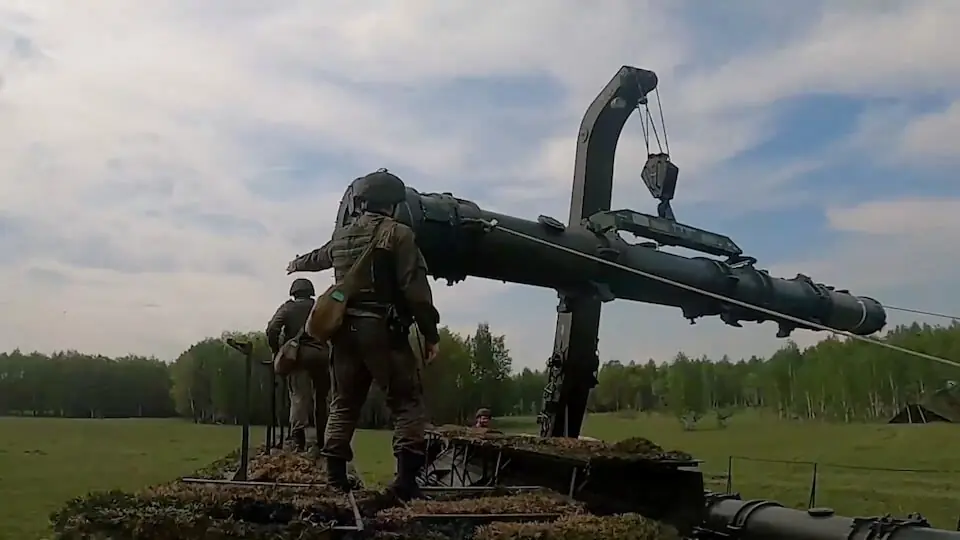
MOSCOW: Russia delivered nuclear munitions to field storage facilities in Belarus as part of major nuclear drills, the Russian Defence Ministry said on Thursday. The three-day nuclear exercise, which started on Tuesday and is taking place across Russia and Belarus, comes at a time when Moscow is locked in what it says is an existential struggle with the West over Ukraine. “As part of the nuclear forces exercise, nuclear munitions were delivered to the field storage facilities of the missile brigade’s position area in the Republic of Belarus,” the ministry said. Russia said the missile unit in Belarus was carrying out training to receive special munitions for the mobile Iskander-M tactical missile system, including loading munitions onto launch vehicles and secretly moving to a designated area for launch preparation. Footage released by the Defence Ministry showed a truck driving through a forest amid lightning and unloading an item. It was not immediately clear what they were unloading. The Iskander-M, a mobile guided missile system code-named “SS-26 Stone” by NATO, replaced the Soviet “Scud”. Its guided missiles have a range of up to 500 km (300 miles) and can carry conventional or nuclear warheads. Two dead after drone attack on Syzran in Russia’s Samara region, governor says Throughout the war in Ukraine, President Vladimir Putin has issued reminders of Russia’s nuclear might as a warning to the West not to go too far in its support of Kyiv. The Kremlin slammed remarks by Lithuania’s top diplomat as “verging on insanity” on Wednesday after Foreign Minister Kestutis Budrys said NATO had to show Moscow it was capable of penetrating the Russian exclave of Kaliningrad. Kaliningrad is sandwiched between NATO members Lithuania and Poland on the Baltic coast. It has a population of around 1 million and is heavily militarised, serving as the headquarters of Russia’s Baltic Fleet.
Go to News Site