


 Forbes India
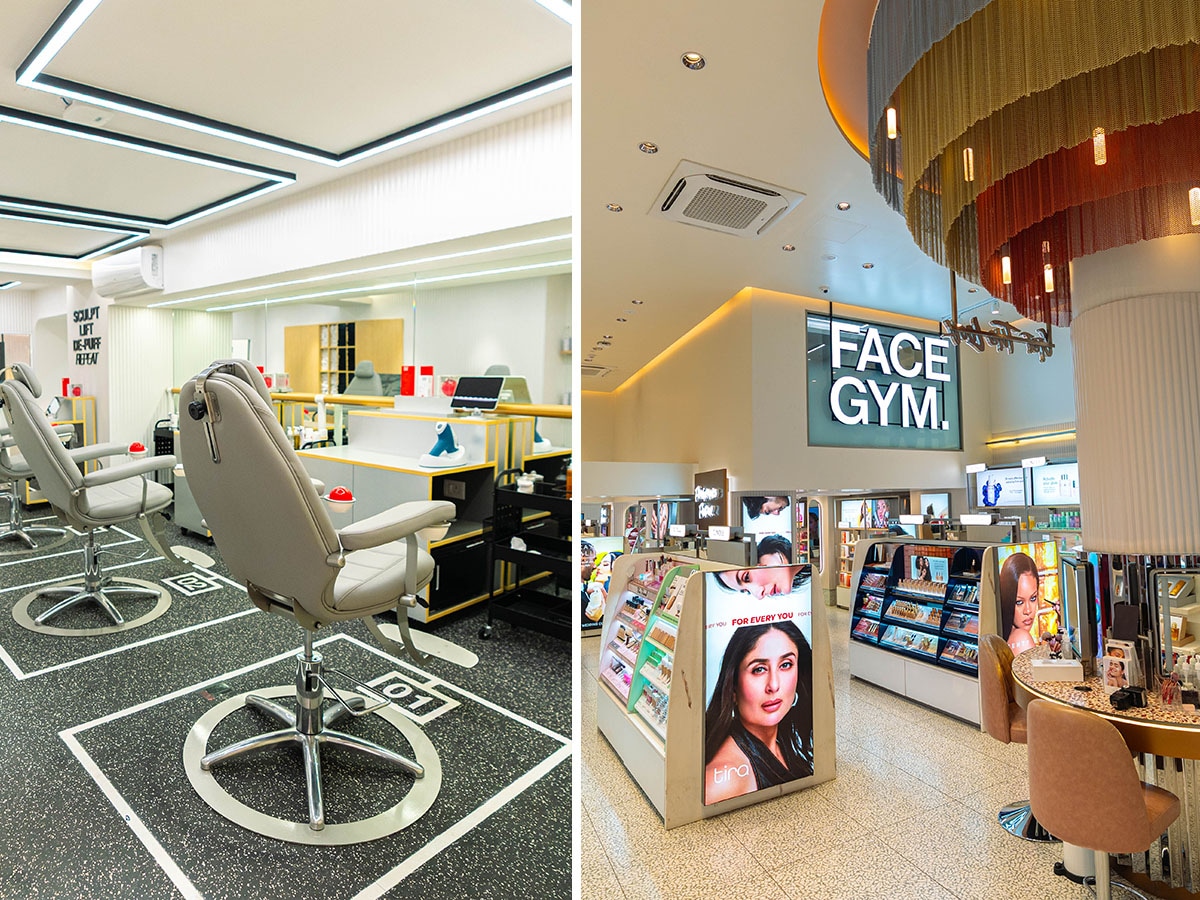
You know the facial, where you lie back, close your eyes, and let someone layer serums on your skin for an hour. You know the massage too, where strong hands work out the tension you've been storing in your jaw since Monday. But walk into a FaceGym studio and you'll find something else entirely.The setup looks less like a spa and more like a workout floor. There are tools, equipment, a structure—a deliberate, almost athletic logic to how the space is organised. The person working on your face isn't following a relaxation script; they're running you through a session. There are warm-ups, there is technique, there is intention. The 40-odd muscles in your face, the ones you've never once thought to exercise, are about to be put to work.That idea is what FaceGym—the UK-born facial fitness brand with studios in London, New York and Los Angeles—is now bringing to India. Through a shop-in-shop at Reliance Retail's Tira in Kemps Corner, Mumbai, FaceGym opens its first India outpost on May 25 with Delhi, Kolkata and Hyderabad next on the map.Founded in 2014 by beauty entrepreneur Inge Theron, whose first branded counter opened at Selfridges in London, FaceGym is built on the premise that the face has over 40 muscles that respond to structured exercise, much like the body. The brand describes its sessions as workouts rather than facials: High-energy, technique-led treatments that combine deep tissue kneading, muscle activation and advanced tools to lift, sculpt and improve circulation.For Angelo Castello, CEO of FaceGym, India was a deliberate choice, not a speculative one. "We are witnessing right now this boom in the premium beauty market, with brands coming in and finding a real appetite from a growing consumer base for international labels," he says. "FaceGym has always thrived in markets where beauty is not an occasional element but something intrinsic and habitual to the culture. We think India is exactly that kind of market."The entry is part of a three-pronged global growth strategy: Deepening FaceGym's footprint in its existing hubs through corporate-owned locations; rolling out a franchise model across the broader UK, with the first franchise studio opening in Cambridge imminently; and international expansion, of which India is the flagship bet.Also Read: Forbes India 30 Under 30 2025: How Pallav Bihani is building Boldfit into India's dependable fitness tracking brandThe Reliance PlayThe choice of partner is telling. FaceGym entered the US through Saks Fifth Avenue, and the pattern—debut inside a credible premium retailer before moving to freestanding locations—has been deliberate from the start. In India, Tira, Reliance Retail's fast-growing omnichannel beauty platform, fits that template."We didn't want to go into the Indian market alone," says Castello. "We wanted to partner with someone who truly understands the local consumer, has the scale, and has a proven track record of bringing international brands to market. Being present in association with a partner that helps build credibility and access—that strategy has worked for us before."Tira, which has crossed 20 million app downloads since its launch and delivers to over 98 percent of India's pin codes, gives FaceGym both retail presence and access to Reliance's broader real estate network—a meaningful advantage in a market where prime urban locations are fiercely contested.The positioning has been calibrated accordingly. "It will be a premium proposition," says Castello, "but positioned in a way that is still sufficiently appealing to a wide enough group of consumers. We really don't want it to be exclusive to very few."Also Read: How pursuit of fitness is helping Asics build its India businessReframing TraditionIn India, facial massage and face yoga are hardly new. The challenge for FaceGym is not convincing Indian consumers that the face is worth attending to—it's convincing them that what FaceGym offers is categorically different from what they already know.Castello's answer is science and performance. "The idea is to reframe something that already exists in some form in the culture, but through the lens of science and performance," he says. "We bring in muscle training through electrical muscle stimulation—a very performance-driven approach that builds on the face yoga tradition but elevates it with a higher-science element."The tools matter, but so do the products. FaceGym's skincare line is formulated specifically for the workout context, with what Castello calls significant "play time"—designed to stay workable on the skin long enough for the full session rather than absorbing immediately. On top of the core workout, consumers can choose from a menu of boosters targeting specific concerns, and this is where India gets its own tailoring.Boosters addressing hyperpigmentation, humidity-related congestion and sun damage are already part of the range, and Castello signals that India-specific additions are on the table. "We see the opportunity to design market-specific boosters that speak directly to the concerns of local consumers," he says.The analogy he returns to is fitness. "People have always trained and looked after their bodies. But then concepts like Pilates or boot camp come in and bring that performance-science angle, reframing something existing into a new form. That's what FaceGym does for the face."Consistency as a MoatIn a market filling up quickly with at-home facial tools and Instagram-driven skincare routines, the obvious question is: What stops a consumer from just buying a gua sha and doing it themselves?Castello's answer is brand reliability—something that, he argues, the beauty services category has failed to deliver at scale. "It is still a very fragmented market globally. Consumers crave predictability—knowing what they're going to get, as opposed to something highly variable. What a global brand like FaceGym can bring is reliability, consistency and performance in a fragmented market," he says.To ensure that consistency holds in India, FaceGym trained the initial Tira team directly at its UK headquarters before a single session was delivered. "It was critical that the core of the brand was not diluted," says Castello. "That's why the key initial trainers were trained directly by us."Year one is about establishing the brand in Mumbai, Delhi, Hyderabad and Kolkata, through both Tira shop-in-shops and, eventually, freestanding locations. From year three onwards, the plan deepens—broader city penetration, a fuller omnichannel presence, and the kind of scale that would make India a third pillar alongside the UK and the US."I really hope that India will become as relevant from a business perspective as our existing markets—a key hub, and almost an example for other brands of what successful international expansion looks like," says Castello. "There are very few examples in this industry of brands that have managed to bring beauty services internationally. To demonstrate that there is a model that can cross cultural barriers—that, to me, is what success will truly look like."
Go to News Site