


 The Huffington Post
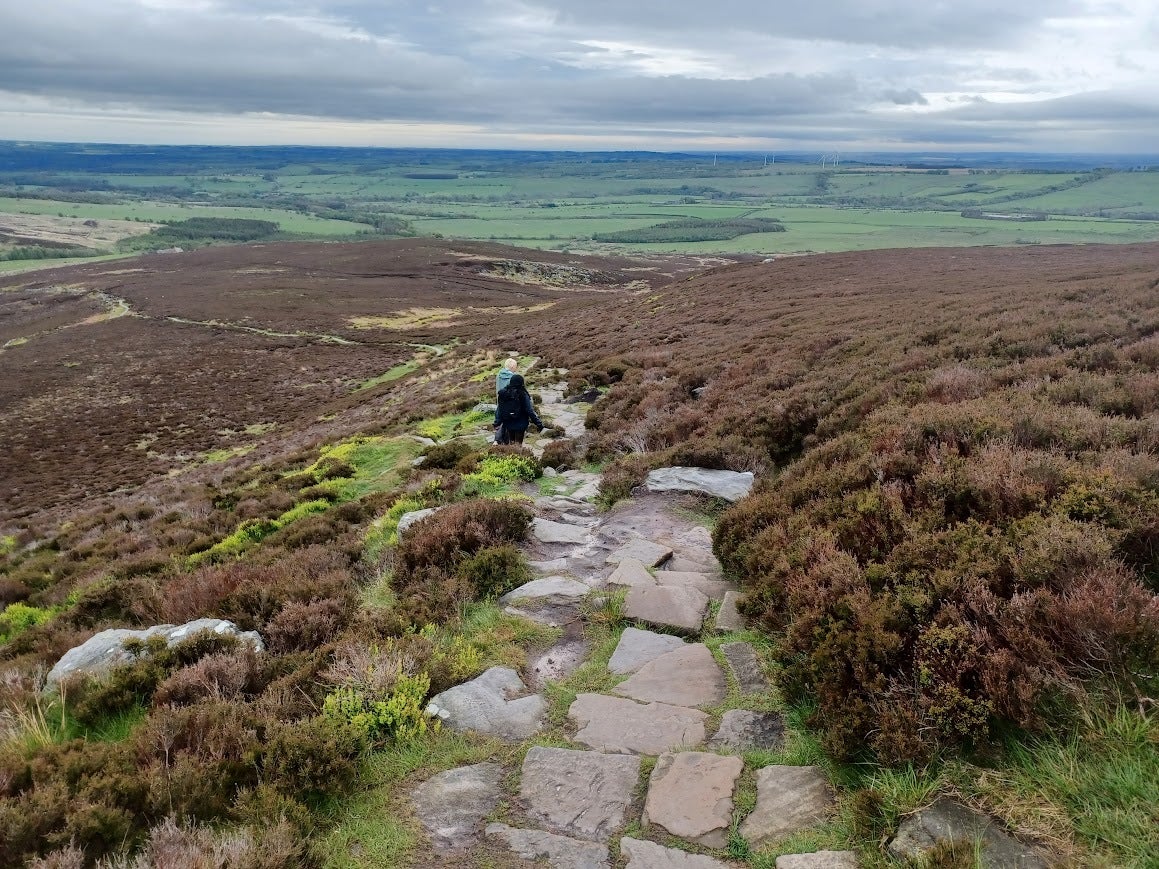
Whether it’s Japanese walking , “ Jeffing ” or the run-walk-run method, and even “retro walking” to help my knees , it’s safe to say I’m fond of a good stroll. But on a recent hilly Northumberland hike, I noticed my legs felt more strained than usual: my muscles felt a little tenser, and my knees had worked harder. This seemed most extreme after the downhill part of the walk, a change other walkers noticed too. So, I asked experts ob-gyn Dr Suzanne Bartlett Hackenmiller, Chief Medical Advisor at AllTrails, and Fatema Contractor, osteopath and director at The Health Suite in Leicester, whether that post-descent twinge was a good or bad thing. The view on top of a hill Which are the main muscles used in downhill walking? Turns out the difference wasn’t just in my head – “we can often feel different muscles working” during a downhill walk,” Contractor said. Dr Hackenmiller explained that the main muscles worked during a downhill walk include the: Quadriceps, Posterior chain and hips, Lower legs, and Deep core. These are key for stability, strength, and balance. “Walking downhill gives our muscles an eccentric exercise, where a muscle lengthens while under tension,” Contractor continued. Dr Hackenmiller told HuffPost UK that “Eccentric exercise forces muscles to generate tension while lengthening, creating microscopic, healthy tears that trigger the body’s repair process and build lower-limb strength and lean muscle mass more effectively than flat-surface walking”. Downhill walking, or “decline” walking, can help as we age “For those going through or past menopause, [downhill walking] is brilliant for supporting healthy ageing,” Dr Hackenmiller told us, adding “This kind of muscle activation is especially valuable as we age”. During and after menopause, many people experience accelerated bone loss, increasing the risk of osteoporosis and fractures. But, the doctor said, “ clinical studies have shown that downhill walking specifically boosts bone health by reducing the breakdown of old bone tissue”. For her part, Contractor said the walking style involves “challenging different muscle groups and also testing balance, which is really important as we get older to help guard against falls and injury”. Downhill walking might help with blood sugar, too, Dr Hackenmiller added. “Separate clinical trials also show that decline [downhill] walking sees the strongest improvement in glucose tolerance of any walking style, making it a highly accessible tool for managing metabolic health and reducing the risk of type 2 diabetes”. Who should avoid downhill walking? Those with sensitive or damaged joints (especially sore knees), people recovering from injuries, and individuals with balance issues might want to speak to a medical professional before trying the walking style, both experts agreed. “Walking downhill also comes with a risk of falls and injury... If you have any mobility concerns, then take it very steady, or avoid it altogether depending on your own circumstances,” Contractor said, pointing out that you can use the downhill setting on a treadmill for a lower-risk version if you like. If you’re a beginner, going through menopause, or aren’t sure about your endurance level, starting slowly is key. How often should I try downhill walking for better ageing? Contractor said that the same things that benefit the rest of us can also help people going through menopause. Namely, “at least 150 minutes of moderate intensity exercise a week and resistance training, which is always important but becomes even more so as we age and are looking to further support our bones with muscle strength.” So, she said, “If you can build it into your weekly exercise to add a few hills, taking in both uphill and downhill, then it can be beneficial if there are no contraindications such as knee issues or certain back conditions like advanced spinal stenosis or poor balance”. Related... A 20-Minute Walk Could Help Keep Bee Populations Healthy This Walking Habit Might Be One Of The Easiest Ways To Improve Your Balance Every Day Habits That Could Be Early Signs Of Dementia
Go to News Site