


 Business Recorder
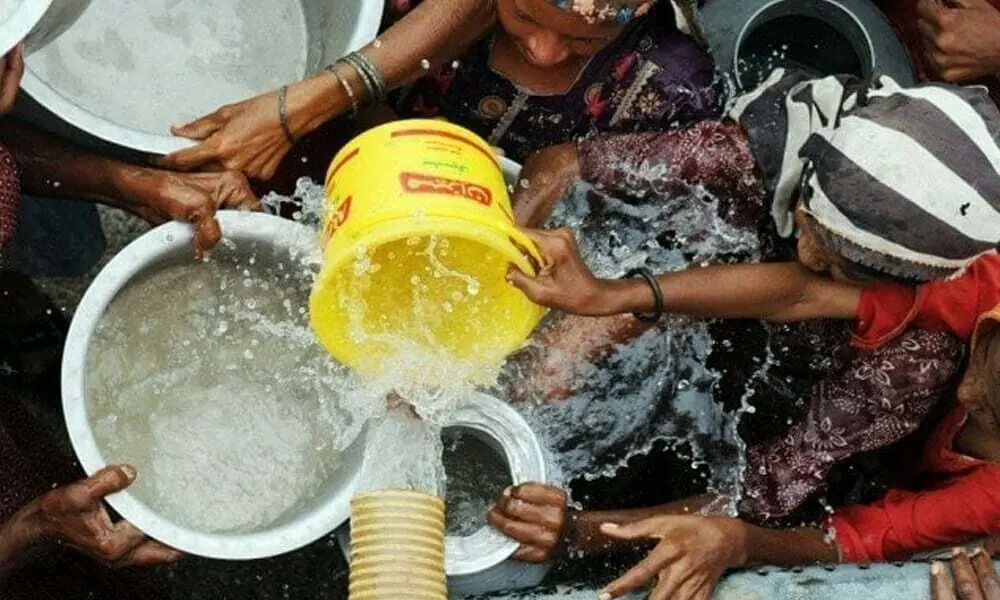
KARACHI: Water scarcity has emerged as one of the most serious challenges confronting Karachi, affecting millions of households and imposing a growing social and economic burden on the megacity’s residents, said Pasban Democratic Party (PDP) Chairman Altaf Shakoor here Sunday. He said despite being Pakistan’s commercial capital and home to more than 20 million people, Karachi continues to face a chronic shortage of water that is steadily worsening with population growth and urban expansion. He said according to various estimates, Karachi’s daily water requirement exceeds 1,200 million gallons per day (MGD), while the city receives only around 550 to 650 MGD. This leaves a shortfall of nearly 600 MGD every day, depriving large sections of the population of reliable access to water. The situation provides a windfall for the tanker mafia but is a nightmare for citizens. He said the consequences of water scarcity are visible across the megacity. In many neighborhoods, residents receive water only once or twice a week, while some areas remain largely dependent on private water tankers. Families are forced to store water whenever it becomes available, turning what should be a basic public service into a daily struggle for survival. Altaf Shakoor said the financial burden on households is particularly alarming. Due to unreliable municipal supplies, thousands of families are compelled to purchase water from private tankers on a regular basis. A significant portion of the monthly household budget is often spent on securing water for drinking, cooking, cleaning, and other essential needs. At a time when citizens are already grappling with inflation, rising utility costs, and economic uncertainty, the additional expense of buying water places enormous pressure on family finances. For many Karachiites, access to water has become an expensive necessity rather than a guaranteed public service. He said the crisis also poses serious public health concerns. Limited access to clean water compromises hygiene and sanitation, increasing the risk of waterborne diseases and other health complications. Poor families are often the worst affected, as they have fewer resources to purchase water or install adequate storage facilities. He said the crisis is the result of a combination of factors, including rapid population growth, ageing infrastructure, leakages in the distribution network, illegal connections, water theft, and decades of underinvestment in water supply systems. Large quantities of water are reportedly lost before reaching consumers, further aggravating shortages across the city. However, lack of interest of the government to facilitate the citizens is the most prominent reason behind the water scarcity. He said the K-4 project is still a distant dream. In fact, the long-delayed expansion of Karachi’s water infrastructure has failed to keep pace with growing demand. While major projects have been announced over the years, residents continue to face recurring shortages and uncertainty regarding future supplies. He said Karachi’s water crisis is no longer merely a utility issue; it has become a major social, economic, and public health challenge. Urgent measures are needed to improve water infrastructure, reduce transmission losses, curb water theft, expand storage and treatment facilities, and accelerate the completion of major water supply projects. As Karachi continues to grow, ensuring reliable and affordable access to water must become a top policy priority, he urged. Failure to address the megacity’s deepening water crisis will not only affect public health and household finances but also undermine social stability, economic productivity, and the quality of life in Pakistan’s largest city. He said access to safe and affordable water is a basic human right. The people of Karachi deserve a water supply system capable of meeting the needs of a modern metropolis. The time for decisive action is now; he reminded the government. Copyright Business Recorder, 2026
Go to News Site