


 Business Recorder
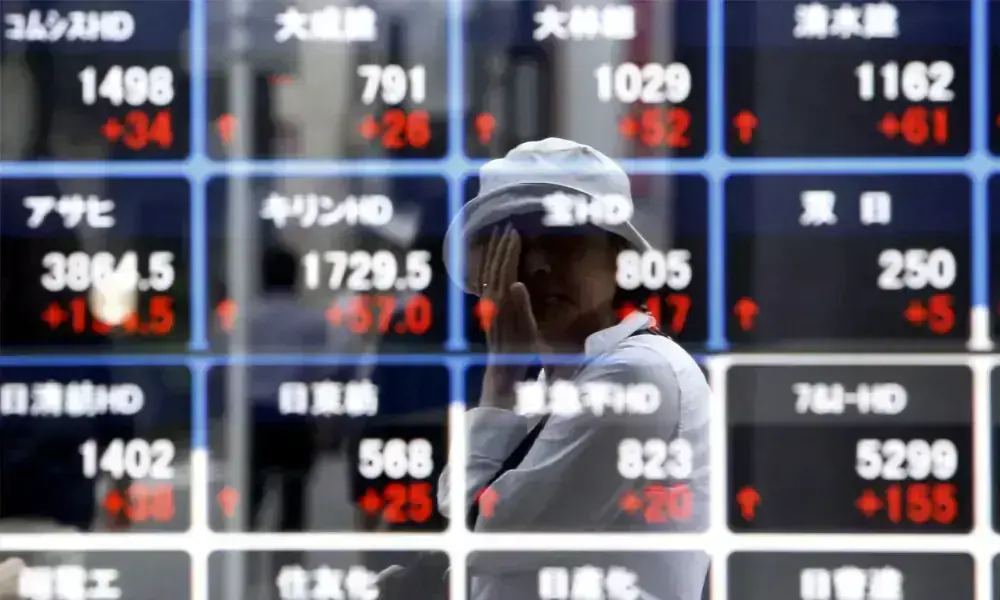
SYDNEY: Asian share markets firmed on Monday as the boom in all things AI continued to drive demand, offsetting a lack of progress in Gulf peace talks that challenged optimism on a re-opening of the Strait of Hormuz and lifted oil prices . While negotiators from Washington and Tehran are apparently working to hammer out a deal, President Donald Trump has been notably silent on their progress. Speaking on Saturday, Defence Secretary Pete Hegseth said the US was ready to restart attacks on Iran if a deal could not be reached. Tensions in the region were not helped by an Israeli push further into Lebanon in the battle against the Iranian-backed Hezbollah group. “While uncertainties remain, the acute risk phase for the global economy should be over if tankers can begin moving again,” said Michael Feroli, head of US economics at JPMorgan. “Still, not everything would return to its pre-conflict place - oil prices are likely to remain elevated for some time, as inventories get rebuilt and the supply infrastructure in the Middle East is repaired.” Indeed, the lack of news nudged Brent up 1.9% to $92.89 a barrel, while U.S. crude added 2.4% to $89.46. Asian share markets remain underpinned by demand for semiconductors and AI-related gear, with Japan’s Nikkei up a further 0.5%, having risen almost 5% last week to all-time highs. South Korea rose 1.3%, after surging 8% last week, while Taiwanclimbed almost 6% last week. MSCI’s broadest index of Asia-Pacific shares outside Japan added 0.2%. Nvidia boss Jensen Huang kicks off the Computex trade show in Taiwan on Monday with a speech about AI in which he is expected to expound on his company’s latest product efforts as well as the island’s central role in the industry. Countdown to payrolls For Europe, EUROSTOXX 50 futures dipped 0.3%, while DAX futures eased 0.2% and FTSE futures lost 0.5%. S&P 500 futures were up 0.2%, while Nasdaq futures firmed 0.4% after hitting records last week. Yet the gains have been narrowly based with the AI-linked big 10 companies making up 40% of the S&P 500 and only 21 stocks of the 500 making record highs. While tech stocks climbed almost 16% in May, consumer discretionary and healthcare managed little more than 2%, and consumer staples lost more than 3%. The inflationary pulse from oil continues to hamper bond markets as U.S. 10-year yields rose 3 basis points to 4.470%. Markets imply a 50-50 chance the Federal Reserve will have to hike rates by year-end to prevent rising prices from getting baked into inflationary expectations. A host of Fed members are set to speak this week, while major data include the ISM survey of manufacturing and the May payrolls report on Friday. Market forecasts are for a solid rise of 85,000 in employment, keeping the jobless rate steady at 4.3%. Anything stronger would likely see the odds of a hike narrow further. The market’s hawkish outlook has kept the dollar broadly steady, with the Japanese yen and the euro hampered by those regions’ reliance on energy imports. The dollar was a shade firmer on the yen at 159.42 , but bulls were wary of risking Japanese intervention on a break of the 160.00 barrier. The euro stood at $1.1645 , having spent the past week hemmed in between $1.1585 and $1.1661. In commodity markets, gold was little changed at $4,535 an ounc e , having found little support as a safe haven or as a hedge against inflation.
Go to News Site