


 Ruptly
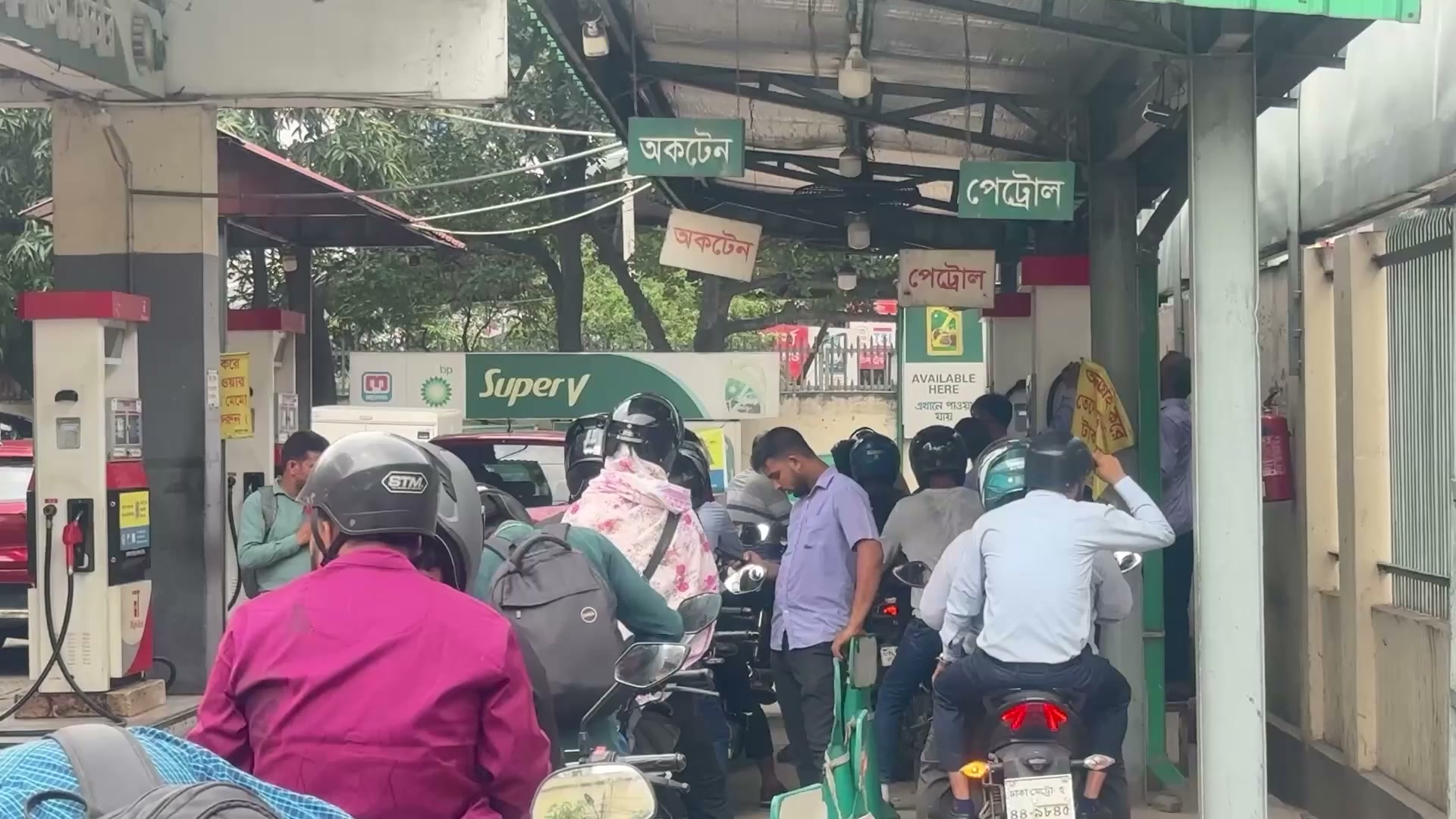
"Drivers and locals in Dhaka expressed frustration after the government raised fuel prices for the second time in less than two months, piling pressure on households already struggling with rising living costs. Footage captured on Monday shows long queues of vehicles at filling stations across the capital, with drivers waiting for hours to refuel as demand surged following the latest price announcement. The Bangladeshi government increased retail prices of octane, petrol, and kerosene by Tk 5 per litre, citing fluctuations in global oil markets. It is the second major hike in just six weeks, following a larger increase on April 18 amid global market volatility linked to tensions in the Middle East. “The government subsidises fuel oil; I personally do not want the government to subsidise it,” said local resident Abdul Barek. “However, if the government stops the corruption that occurs in reaching us at the price at which the government buys oil, then the price of oil will not have to be increased,” he noted. He warned that repeated increases were hitting middle-class families hard, saying price jumps from “80 taka to 120 taka, and again from 120 taka to 145 taka” are becoming unsustainable. “All products are related to oil,” said Sohel Rana. “An increase in the price of oil means that our daily living expenses will also increase. This is a very painful matter for middle-class, lower-middle-class, and poor people like us.” Drivers also reported mounting pressure as transport price increases fail to keep pace with fuel hikes. “Passengers are suffering a lot due to the increase in oil prices,” said driver Abu Taleb. “The car rental has not increased much in line with the oil price, so we, along with the owners, are losing a lot.” The government said the new prices reflect adjustments under its Monthly Automatic Fuel Pricing Formula, which links domestic rates to international oil markets, currency exchange rates and import costs. Bangladesh, which imports around 95 percent of its oil, primarily from Saudi Arabia and Qatar, faces heightened risk as supply routes remain unstable. Shipping disruptions in the Strait of Hormuz, a key route for roughly 20 percent of global oil and liquefied natural gas, have driven prices higher and strained imports. The disruption follows escalating tensions after the United States and Israel launched joint military operations against Iran on February 28."
Go to News Site