


 The Advocate
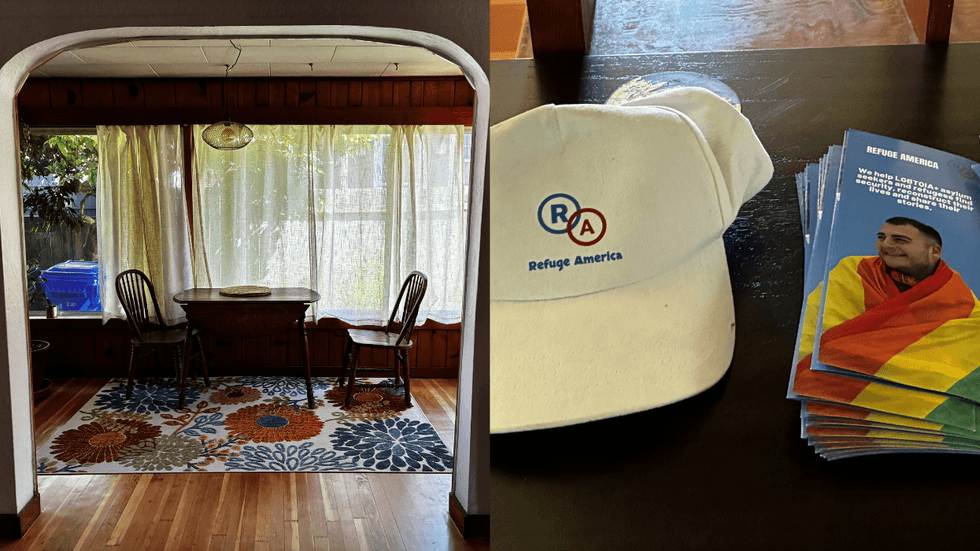
We are witnessing one of the most aggressive attacks on LGBTQ + people in America in generations. It is heartbreaking, but in many ways, it does not feel new. In 2018, during the first Trump administration and amid the separation of mothers and children at the border, far less attention was paid to the growing number of LGBTQ+ migrants and trans people seeking safety in the United States. Their stories often went unseen. During that time, I helped build New York City’s first shelter for LGBTQ+ asylum seekers and refugees because it became clear that our community was falling through the cracks of existing systems. Today, the hostility toward migrants and LGBTQ people has only intensified. We are receiving messages from members of our community seeking protection who are now being ordered deported to third countries. We have heard from Senegalese asylum seekers being ordered deported to Uganda before their court proceedings were even completed. The administration is actively making it harder, and in many ways impossible, for vulnerable people to seek protection safely. We have long understood that the targeting of LGBTQ+ migrants often happens quietly, without widespread public attention. That is why we believe it is critical to build systems of care, protection, and community support during this moment of crisis. At a moment when politicians are spending millions of dollars convincing Americans to fear immigrants, building a home for them can feel almost irrational. Yet the need for that home has never been greater. Every month, LGBTQ+ people continue to arrive in the United States after fleeing imprisonment, violence, extortion, family rejection, and state-sponsored persecution, only to discover that safety is far more complicated than crossing a border. This week, Refuge America will open a safe house for LGBTQ+ asylum seekers and refugees in Oregon. We hope it will serve as a safe haven for displaced LGBTQ+ migrants across the Pacific Northwest, including Oregon, Washington, Idaho, and the Mountain States. Why open a space like this? Because there is nothing of its kind in the region. We have seen the importance of LGBTQ-focused shelters and safe housing programs in places like Michigan, Boston, and Philadelphia, and we believe the Pacific Northwest represents a new horizon for building community-based protection and care for displaced LGBTQ+ people. For many Americans, asylum ends when someone arrives. The story they imagine is straightforward: a person escapes danger, reaches the United States, receives protection, and begins a new life. The reality is far messier. Protection from persecution does not automatically create stability. It does not guarantee housing, healthcare, employment, legal support, community, or a sense of belonging. For many LGBTQ+ asylum seekers and refugees, arrival is not the end of uncertainty. It is the beginning of a different kind of struggle. When I fled anti-gay persecution in Nigeria and sought asylum in the United States, I believed I was arriving in a country that understood what refuge meant. Instead, I experienced detention, homelessness, and the disorienting reality of trying to rebuild my life inside systems that often seemed incapable of seeing displaced people as human beings rather than administrative burdens. The hardest part of my journey was not leaving home. It was discovering how difficult it could be to find one again. That experience shaped everything that came after. It shaped my decision to found Refuge America. It shaped the work we have done supporting displaced LGBTQ+ people across the country. And it shaped our decision to establish a dedicated safe house in Oregon at a moment when many organizations are pulling back, uncertainty is growing, and immigrant communities are increasingly being treated as political targets rather than neighbors. The project is rooted in a reality that rarely makes headlines. LGBTQ+ asylum seekers and refugees face many of the same challenges as other newcomers, but those challenges are often compounded by isolation, discrimination, trauma, and the absence of family support systems. Many arrive after being rejected by their communities of origin. Some arrive after surviving detention. Others arrive carrying years of trauma associated with criminalization, violence, or forced concealment of their identities. Even after securing legal protection, many remain vulnerable to housing insecurity, poverty, social isolation, and exploitation. The safe house we are opening is intended to address those realities directly. Residents will have access not only to stable housing, but also to legal support, referrals, community connections, and the broader ecosystem necessary to build an independent life. We are working with the Q Center, Oregon’s Office of Immigrant and Refugee Advancement (OIRA), the Oregon Department of Human Services, and other local partners to help build a stronger network of support for displaced LGBTQ+ people in the region. The goal is not simply to keep someone off the street for a few months. The goal is to create the conditions under which people can begin imagining a future again. I, along with the countless others who were residents of our housing program in New York City, can testify to the power of having a stable base to build from. A safe house cannot solve every problem facing displaced LGBTQ+ people in America. It cannot reform a broken immigration system. It cannot eliminate hatred. It cannot erase the trauma many people carry with them when they arrive. What it can do is provide something every human being deserves: a place to begin again. For someone arriving after years of persecution, uncertainty, and loss, that beginning can mean everything. For us at Refuge America, becoming administration-proof means investing in infrastructure that exists beyond election cycles. It means creating systems of housing, legal support, healthcare access, mutual aid, and community care that remain in place regardless of who holds positions of power. It means understanding that while policy matters enormously, the strongest protection many vulnerable people will ever experience comes from communities that have decided they are worth protecting. That spirit is embedded in the Oregon project. The safe house is not intended to stand alone. It is part of a broader effort to strengthen what we call communities of care: networks of local organizations, service providers, advocates, volunteers, and community members committed to ensuring that displaced LGBTQ+ people are not left to navigate resettlement on their own. The strongest support systems are rarely built from the top down. They emerge when communities decide that someone else’s well-being is their responsibility, too. The funding we secured for this project represents more than an investment in a building. It represents an investment in resilience. We need more support to continue building and expanding our communities of welcome. At a time when so many organizations are being forced into defensive postures, we chose to build. At a time when fear and uncertainty continue to dominate conversations about immigration, we chose to invest in welcome. At a time when many displaced LGBTQ+ people are wondering whether there is still a place for them in America, we chose to create one. Edafe Okporo is the founder of Refuge America and author of Asylum : A Memoir & Manifesto . Follow Refuge America to discover stories of LGBTQ+ people fleeing danger in search of dignity and safety. Opinion is dedicated to featuring a wide range of inspiring personal stories and impactful opinions from the LGBTQ+ community and its allies. Visit Advocate.com/submit to learn more about submission guidelines. We welcome your thoughts and feedback on any of our stories. Email us at voices@equalpride.com . Views expressed in Voices stories are those of the guest writers, columnists, and editors, and do not directly represent the views of The Advocate or our parent company, equalpride.
Go to News Site