


 GB News
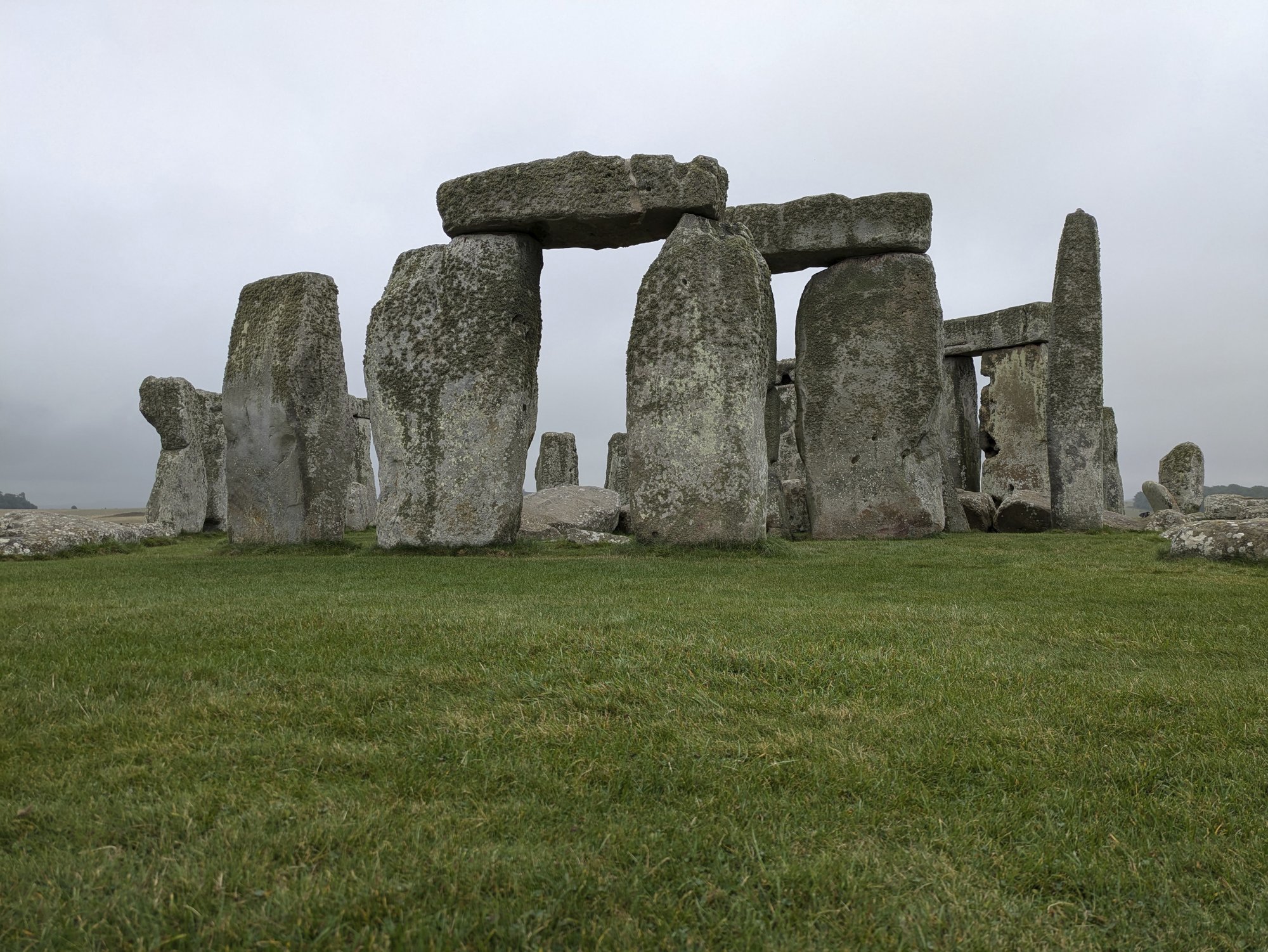
Scientists now believe that Stonehenge's Altar Stone may have been carried partway from Scotland by glacial movement. Researchers at Sheffield Hallam University and Curtin University in Perth, Australia, have developed models indicating Ice Age glaciers could have shifted rocks from Scotland as far south as Dogger Bank in the North Sea. This glacial transport would have occurred during the late Devensian glaciation. The period spanned roughly 33,000 to 11,700 years ago. TRENDING Stories Videos Your Say The six-tonne sandstone megalith originated near Orkney, meaning it travelled approximately 460 miles to reach Wiltshire. The region now submerged beneath the North Sea was once home to Mesolithic and Neolithic communities. They abandoned the area as rising waters and landslides engulfed their homeland. Dr Remy Veness, co-lead author of the paper from Sheffield Hallam University, said: "What is exciting about these findings is that they could imply that the people of Doggerland attached cultural significance to the Altar Stone long before it was incorporated into Stonehenge." She added: "The Altar Stone must have been significant enough to be willing to move the stone at least twice; first to save it from being submerged by rising sea levels at the end of the last Ice Age and then again to its final resting place on Salisbury Plain." However, the modelling found no evidence that glacial activity could have deposited the stone any closer to Stonehenge than Dogger Bank, leaving a distance of roughly 200 miles still to be covered by human effort. Dr Anthony Clarke, of Curtin's School of Earth and Planetary Sciences, said: "This stone was likely moved in stages, potentially combining overland hauling with river or coastal transport where possible." He added: "Transporting a stone of this size over such a long distance would have required planning, coordination and a deep understanding of the landscape not to mention tremendous determination." LATEST DEVELOPMENTS Metal detectorists uncover 'spectacular' Bronze Age arm rings under planned electric substation site Scientists left astonished by groundbreaking phenomenon on faraway planets Bible mystery finally solved as geologists make major Garden of Eden river discovery The Berkshire Ridgeway, an ancient route passing near Stonehenge, may have served as part of this final journey. The stone's Scottish origins were confirmed in 2024. Archaeologists established =the heart of the Neolithic monument came from the vicinity of Orkney. For years, researchers had assumed the Altar Stone shared Welsh origins with Stonehenge's bluestones, which were transported from the Preseli Mountains, but no geological match was found among Welsh outcrops. Australian experts eventually solved the mystery. They analysed mineral and uranium readings to produce a geological fingerprint, which corresponds to red sandstone formations in the Orcadian Basin of north-east Scotland. Earlier theories had dismissed glacial transport because ice sheets in that region flowed northwards, but the new modelling challenges this assumption. The findings appear in the Journal of Quaternary Science. Our Standards: The GB News Editorial Charter
Go to News Site