


 Ruptly
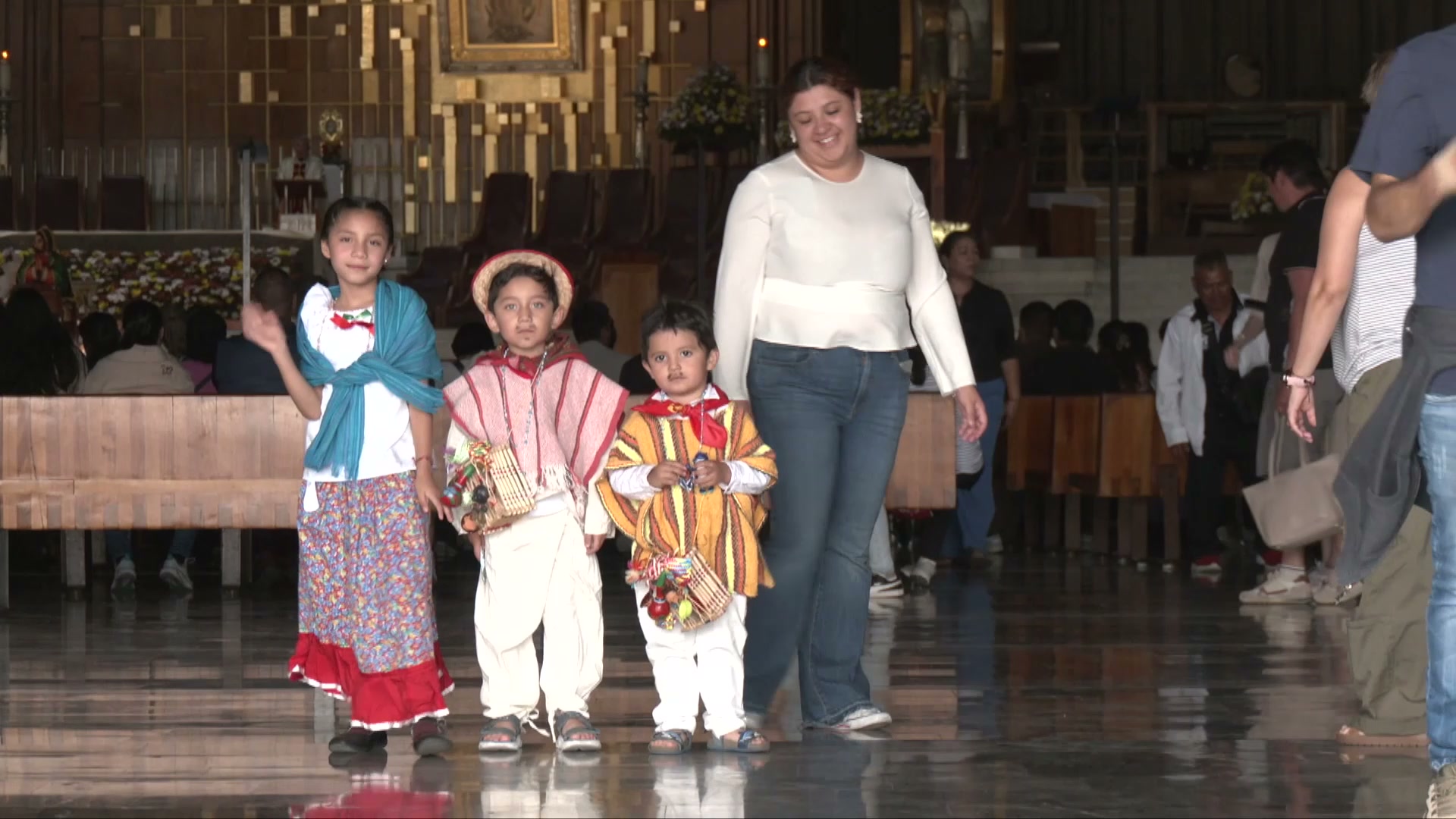
"Dozens of children dressed in traditional indigenous costumes participated this Thursday in the Corpus Christi celebrations in CDMX, a religious festival of Catholic origin, also popularly known as the 'Day of the Mules'. The outfits allude to Juan Diego, the indigenous man to whom the Catholic tradition in Mexico attributes the apparitions of the Virgin of Guadalupe in the 16th century. The celebration takes place 60 days after Easter Sunday and commemorates the presence of Jesus Christ in the Eucharist. In Mexico, the date acquired its own characteristics starting from the 16th century, merging religious elements with indigenous and peasant traditions. According to history, the so-called 'Day of the Mules' arose because peasants attended religious ceremonies mounted on mules or loaded donkeys during the colonial era with agricultural products, flowers, and offerings destined for the churches. Over time, these animals became a symbol of the festivity. For many families, the celebration represents a legacy passed down from generation to generation that has been preserved for more than a century. "For 100 years, my mother, my grandmother, my great-grandmother, I, my sisters, we continue with the Day of the Mules, the day of Corpus Christi," said Noemi Ramirez, a housewife. Previously, this celebration brought together entire families after attending mass in Catholic temples in the Mexican capital, becoming a day of community gathering. "It was very nice because we gathered, we went to the cathedral or the basilica and from there they took us to eat in the countryside (...) they gathered all the nephews and there they sat us to eat 'mules', it was a very beautiful tradition," added Noemi Ramirez. However, some participants acknowledge that the celebration has lost strength over the years, and it is currently less common to see children wearing the traditional outfits that characterized the Day of the Mules for decades. Despite this, the celebrations continue to bring together thousands of faithful in churches and cathedrals in different Mexican cities."
Go to News Site