 Dawn.com
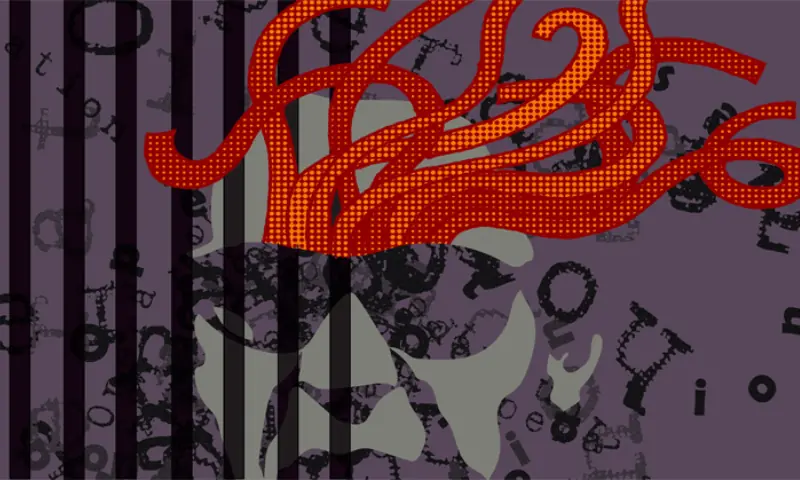
American President Donald Trump is often described by many as an ‘irrational’ man. Yet, there are those who claim he is instead an over-the-top practitioner of the ‘Madman Theory.’ This theory encapsulates a political concept suggesting that a leader can gain a significant advantage in international negotiations or crises by convincing opponents that he or she is irrational, unstable, or downright ‘crazy’. Former US President Richard Nixon coined the term during his tenure, even though the underlying strategy had been present in modern politics long before Nixon gave it a formal name. Looking to force the communist forces in North Vietnam to sign a peace treaty that would guarantee an honourable exit of American troops from South Vietnam, Nixon told his Chief of Staff, H.R. Haldeman, that he had shaped a Madman Theory for this precise purpose. He explained that he wanted the North Vietnamese to believe he had reached the point where he might do absolutely anything to stop the war, wanting his ministers to intentionally drop hints that he constantly had his hand on the nuclear button. Indeed, it is quite common for hubris to emerge within a regime or in the person leading it. But, according to the noted political scientists John J. Mearsheimer and Sebastian Rosato, hubris is not really about irrationality. They argue that states are fundamentally rational actors that rigorously hypothesise scenarios through sound theories and information, from which they develop their policies and strategies. Nixon’s strategy was entirely rational. States and leaders rarely act without reason, and it’s usually flawed assumptions, rather than irrationality, that drive policy failures and political crises However, Mearsheimer and Rosato place heavy emphasis on the fact that state rationality does not automatically guarantee successful outcomes. Their analysis suggests that policies are typically forged by leaders who act as “homo theoreticus”, relying on structured, evidence-based theories to navigate the immense complexities of international relations. These may work or fail, but their formation is a rational process. In their 2023 book How States Think , Mearsheimer and Rosato focus primarily on the mechanics of foreign policy. But I posit that the heightened interconnectivity characterising the modern digital age necessitates an acknowledgement that internal policies are no longer insulated from global consequences. Illustration by Abro In this context, domestic choices can alter the course of a nation’s foreign affairs as well. During the conflict between Iran and the US, in which Pakistan is an active mediator, Pakistan found itself accused by India and Israel of being a ‘fanatical’ Islamist state that was siding with Iran. The Pakistani government and state recognised the threat these narratives posed to its international standing. To mitigate this, the Pakistani state accelerated the abandonment of its post-1970s ideological narrative, choosing instead to actively promote a new national identity. This new narrative frames Pakistan as a moderate, pragmatic Muslim-majority civilisational state. Here we see how internal policies can impact or be impacted by geopolitics. On the foreign policy front, the Indian and Israeli states hypothesised that, if they could successfully proliferate the perception of a ‘fanatical’ Pakistan, they would create enough doubt in the White House about the wisdom of having Pakistan act as a go-between for the US and a ‘fanatical’ Iran. On the other hand, the Pakistani state hypothesised that, given Israel’s growing reputation as an aggressive state and India’s declining reputation as a secular democracy due to its shift towards a radical Hindutva state, the Pakistani side can now convincingly bolster its new contrasting narrative of being a moderate, dependable nation. The Indian, Israeli and Pakistani policies in this case were all entirely rational. Mearsheimer and Rosato are firmly of the view that scholars who accuse leaders of irrationality often conflate the concept of irrationality with that of failure. Failed policies are routinely blamed on flawed decision-making processes. To Mearsheimer and Rosato, though, this is a mistake, because even failed policies are meticulously shaped through empirical information and theories. A state is considered rational if its actions follow logically from a coherent theory, even if that theory is proven to be incorrect. The theories are constructed through a deliberative process, requiring the careful gathering of information, the assessment of alternatives and the debate of potential outcomes, rather than being a product of mere impulse or emotional reaction. So, does that mean there have never been states/ governments/ leaders that were truly irrational? Mearsheimer and Rosato use the word “non-rational” in this regard, meaning governments, states and leaders who fail to employ a credible strategic theory, relying on wishful thinking instead. Most Western media outlets describe Russian President Vladimir Putin and North Korea’s “Supreme Leader” Kim Jong Un as irrational leaders. To Mearsheimer and Rosato, this is a flawed understanding. Putin’s and Kim’s policies are rooted in rational processes, as are those of Chinese leader Xi Jinping. In Mearsheimer’s recent commentaries, he does not see Trump’s decision to plunge into a war with Iran as an irrational move but one based on an ill-informed hypothesis. According to the Lebanese-American academic Fawaz A. Gerges, the decision to attack Iran was built on an illusion heavily fed by Israeli security components, which insisted that Iran’s internal architecture would crumble immediately under direct kinetic pressure. Nothing of the sort happened. Trump’s decision was rational but based on a flawed hypothesis and inaccurate information on the reality of Iran and of contemporary geopolitics. Therefore, one can suggest that Trump isn’t ‘mad’ as such, but simply not very well-informed. What about Imran Khan? Khan was not irrational, nor was he a crank. His decisions, especially to antagonise the military establishment after he was ousted in 2022, were based on a theory that he believed in. The theory suggests that a large-scale political movement scares the military establishment who then immediately submits to its demands. This theory was formed after Khan saw how troops had refused to confront violent protests by the Barelvi Islamist outfit, the Tehreek-i-Labbaik Pakistan (TLP) in 2016. This theory mutated in 2023, largely under the influence of the then pro-Khan former head of the Inter-Services Intelligence (ISI), Lt Gen Faiz Hameed. Allegedly, Hameed believed that since there were pro-Khan officers in the armed forces, targeted riots would trigger a mutiny to force out the then military chief, Gen Asim Munir. This was not a delusion. It was a theory based on information Khan and Hameed found sound, meaning the rational thing to do was to trigger the riot. However, despite the riots, the military’s chain of command remained intact. The mutiny theory failed because it completely ignored the fact that, historically, mutinies have been almost non-existent within the armed forces of Pakistan. The attempt was what Mearsheimer would call a “rational failure.” From then onwards, though, Khan’s strategies became increasingly non-rational, based on an ever-weakening understanding of Pakistani and international politics. The state’s strategy was rational as well: to keep him behind bars and gradually isolate him, leaving his subsequent moves increasingly detached from reality and thus triggering non-rational and even irrational thinking processes in him. Published in Dawn, EOS, June 7th, 2026
Go to News Site