 GB News
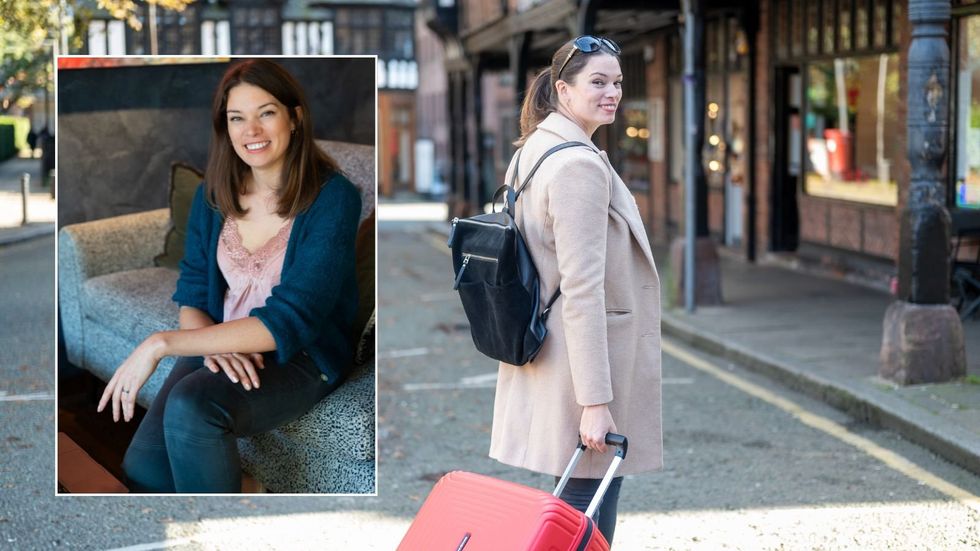
Many people dream about escaping the corporate hamster wheel and blazing their own trail in the business world, but so few make these dreams a reality. Luckily for Sorrel Ashton, a travel specialist and company director at Sorrel Travel , she was able to take the jump and launch a business that rakes in £1.3million in sales last year. Sorrel Travel, a boutique independent travel consultancy built on the belief that the best holidays come from genuine conversation, not a website algorithm. She launched it in 2019. Covid arrived almost immediately after. Speaking to GB News, Ms Ashton revaled how she was able to survive and thrive in the most challenging business environment. Ms Ashton route into entrepreneurship was, by her own admission, the classic one. She graduated, found a corporate marketing role, climbed the ladder, accumulated the salary and the title, and quietly fell out of love with all of it. Two moments crystallised it for her. The first was a recurring one: she was always the last parent to collect her children from the school gates. She explained: "There was an incredible amount of guilt. I'd be sitting on the train thinking, I need to do something different." The second came at a conference for a travel client through her old firm. Looking around the room, she remembers thinking: if people like this can be doing something like this — why can't I? Both moments arrived within weeks of each other, in summer 2019. By the autumn, she had made her decision. Sorrel Travel was born. And then, almost immediately, the world closed. To say the timing was difficult is an understatement that Sorrel herself laughs off. " The pandemic hit her from every direction. Her husband, a frontline paramedic, was terrified of bringing the virus home. She was working around the clock without being paid, cancelling and restructuring bookings, giving refunds out of her own pocket to protect clients she'd barely had time to know. "Don't ask me about timing. I started a travel business , and then COVID happened. I lost a lot of money. But my focus was on my clients. If I can keep them happy, they'll come back. Because everyone wanted to travel, they just couldn't." That instinct to absorb the short-term loss and invest in loyalty instead defined everything that followed. She pivoted to UK itineraries. Scotland became one of her strongest sellers. She mastered flexible and cancellation bookings until she could navigate them in her sleep. In the wreckage of the worst possible circumstances, she built something lasting: a client base that trusted her completely. LATEST DEVELOPMENTS Lifesaving defibrillator installed at station where 'heroic' army cadet, 15, saved child’s life Hero grandfather to embark on 450-mile east-to-west charity trek while fighting cancer ‘We had one purpose, free the world!’ D-Day veteran recalls brave service during commemorations On the biggest change from leaving the corporate world behind and starting her own business, Ms Ashton shared: "I answer to myself, as opposed to someone else." The hard lines she draws are the ones that matter to her, school drop-off and pick-up, every day, without fail. She worked until ten o'clock the night before we spoke. But she also took the afternoon off to be with her children. "In the corporate world, I was very internally focused, lots of meetings, lots of not really making progress. Now I'm completely outward-facing. I chat for a living." She spends half her working day on the phone, getting to know clients, understanding not just where people want to go but who they are. When conflict erupted in the Middle East, and drone footage began circulating from Dubai, Ms Ashton was, in keeping with most of her Saturdays, on a football pitch watching her son play. Her phone started buzzing with images sent by clients already in the region. Within minutes, she was sending voice notes to every client who was either in the country, about to travel, or due to fly anywhere nearby. She barely slept for a week with the growing world load. The range of clients she was managing simultaneously tells you something about the complexity of the work. On one end, a client in daily panic. On the other hand, someone who refused to fly home unless the specific flights suited him. "Communication was the most important thing throughout. I've got really good links with Emirates, so I was able to secure waitlisted seats quickly, and there was also a charter flight out of Oman that I managed to get seats on through industry contacts. "But unlike Covid, you couldn't just fix it and move on, you'd get someone booked onto a flight and then the flight would get cancelled. I was tracking departures on FlightAware constantly. The priority, as always, was looking after my customers." One of the more telling shifts in consumer holiday behaviour Ms Ashton has noticed is a quiet but significant turn away from flights and towards the train. "Flights are expensive now. But it's more than that. There's something about getting on a train and doing something a bit different. A sense of adventure." She describes a recent client itinerary that ran from Stoke to London, Paris, Zurich, and onward to Rome before a cruise home. No flights. Just cities, slowly. The Bernina Express — the celebrated rail route between Switzerland and Italy — is becoming one of her most recommended experiences. The broader shift, she observes, is in what people mean by switching off. "You're finding a different reality rather than just escaping your own. And you're putting money back into local economies rather than the big corporations, which sits well with my own values too." For the considerable number of people hoping to follow in Ms Ashton's footsteps and break out of the corporate grind, she has a clear and unhesitating answer. "Find the thing you really, truly love and then go for it. That passion is what's made me successful. I don't have a job in travel; I have a vocation. "I get to travel, I get to take my kids travelling, and I get to talk about travel every single day. I hope that comes across, because I absolutely love it. Our Standards: The GB News Editorial Charter
Go to News Site