 Forbes India
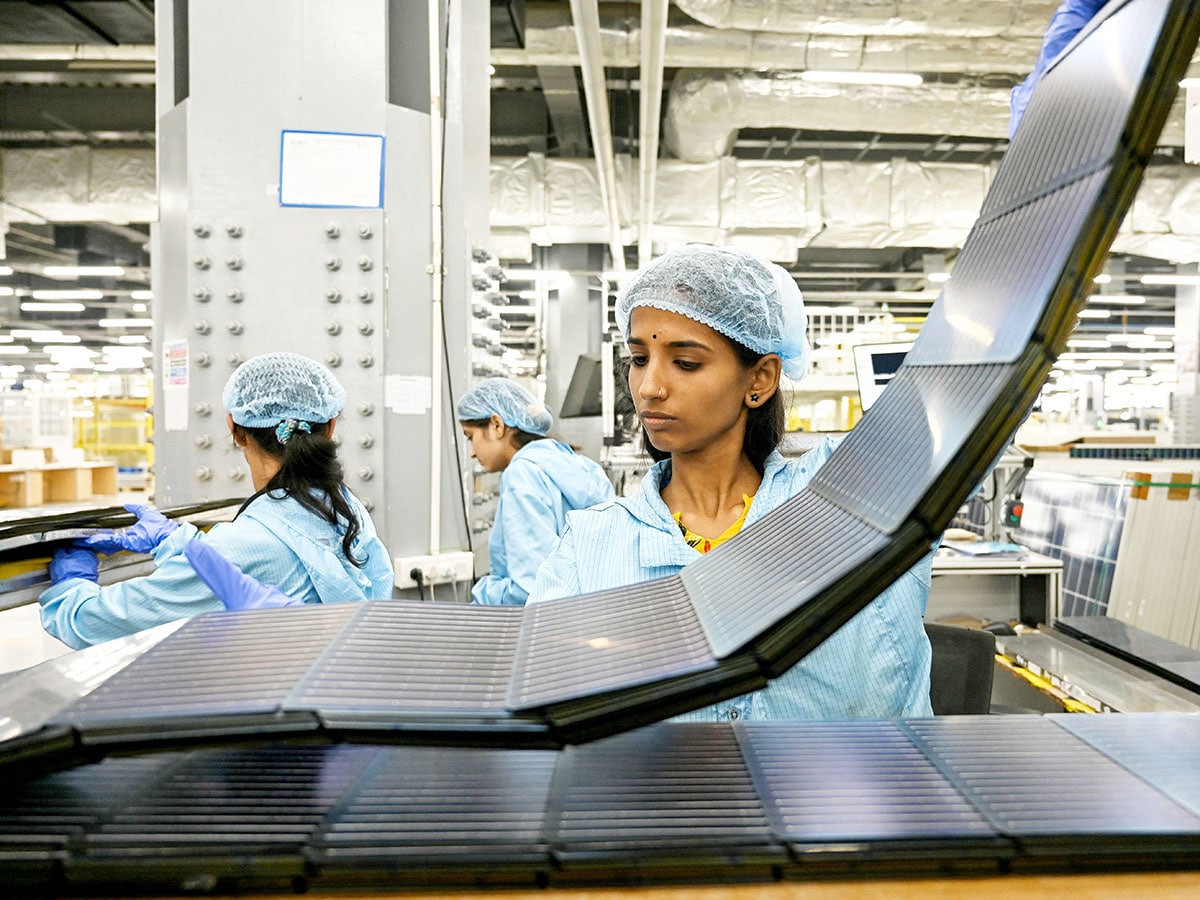
Non-metro cities are closing the salary increment gap with India’s metro cities, as manufacturing expansion, industrial corridor development, and rising consumption in smaller cities begin to reshape where talent is being hired, according to the latest Jobs and Salaries Primer from TeamLease, a recruitment and human resources company.The report projects that salary increments across industries will range between 8.6 and 10.2 percent in FY27. While Chennai, Pune, and Hyderabad lead among metros at 9.7 percent, 9.6 percent, and 9.6 percent respectively, a group of non-metro cities are also posting competitive increments. Ahmedabad and Visakhapatnam, both at 9.5 percent, are already ahead of Delhi and Mumbai, which are projected at 9.3 percent each in FY27.“Non-metro locations have been showing a lot of economic resilience in terms of consumption in the last few years. Rural demand has been very resilient, and corporate India has started taking notice. By 2030, demand from non-metros could exceed 50 percent of overall consumption,” said Balasubramanian A, senior vice president at TeamLease Services.The rise of non-metro citiesThe report states that a clutch of non-metro cities “are steadily emerging as the connective layer between India’s established hubs and its next salary-growth frontier”.However, within these non-metro cities, the increment outlook is varied. After Visakhapatnam, Ahmedabad and Nagpur, Jaipur leads at 9.3 percent, broadly in line with Delhi and Mumbai. Vadodara and Gurgaon follow at 9.2 percent each, with Coimbatore at 9.1 percent and Bhopal at 9 percent. While Kochi, Lucknow, Indore, Chandigarh, and Surat range between 8.4 percent and 8.8 percent, some like Chandigarh have moderated from 9.9 percent in FY26.The drivers behind this shift are structural rather than cyclical. Manufacturing expansion along industrial corridors, the rise of electronics assembly and electric vehicle production, and the government’s push into rare earth minerals and renewable energy are all pulling hiring from these cities. Coimbatore, Nagpur, and Visakhapatnam are increasingly functioning as full-scale industry hubs.“It is not like how things were 10 years back, where companies were looking at rural markets only for volumes. Rural markets are aspirational now, they want quality products. If you look at even the automobile sector, entry-level cars are back, hatchbacks are selling, and electric two-wheelers are selling like hot cakes in non-metros,” Balasubramanian said adding that companies just need the right talent there to maximise that opportunity.Sector increment outlookThe most notable feature of the FY27 increment outlook is that salary growth is not being led by IT or financial services alone. EV and EV infrastructure tops the industry chart at 10.2 percent, followed by FinTech at 10 percent, healthcare and pharmaceuticals at 9.7 percent, and power and energy at 9.6 percent.Manufacturing, engineering and infrastructure has seen one of the sharpest year-on-year recoveries, jumping from 7.9 percent in FY26 to 9.4 percent in FY27, a sector whose growth is concentrated precisely in the non-metro and semi-urban industrial clusters the report highlights.Hiring in the shadow of warThe West Asia war that broke out on February 27, however, has introduced a note of caution. Input costs are rising, exchange rate pressures from India’s import-heavy economy are feeding through to consumer prices as some corporate hiring budgets were already locked in before the conflict’s full impact could be assessed.“The increment budgets were largely set before the war broke out in March, so it was too early to fully factor that in. Consumption has not slowed down in the 100 days since. But if the war prolongs for another six months, there could be a more serious impact. Growth will happen; it is just that the growth may not happen to the same extent we might have forecasted earlier,” Balasubramanian explained.He added that the tailwinds, however, remain substantial. The recent revision in income tax slabs, repo rate cuts that have brought borrowing costs to among their lowest levels in years, GST 2.0 reforms that reduced prices on automobiles and consumer electronics, and back-to-back strong monsoons have together primed the consumption environment.The report is based on a survey of 1,268 businesses across 23 industries and 20 cities.
Go to News Site
 India Today

 TV9 Marathi
 TOI World
 Republic