 Forbes India
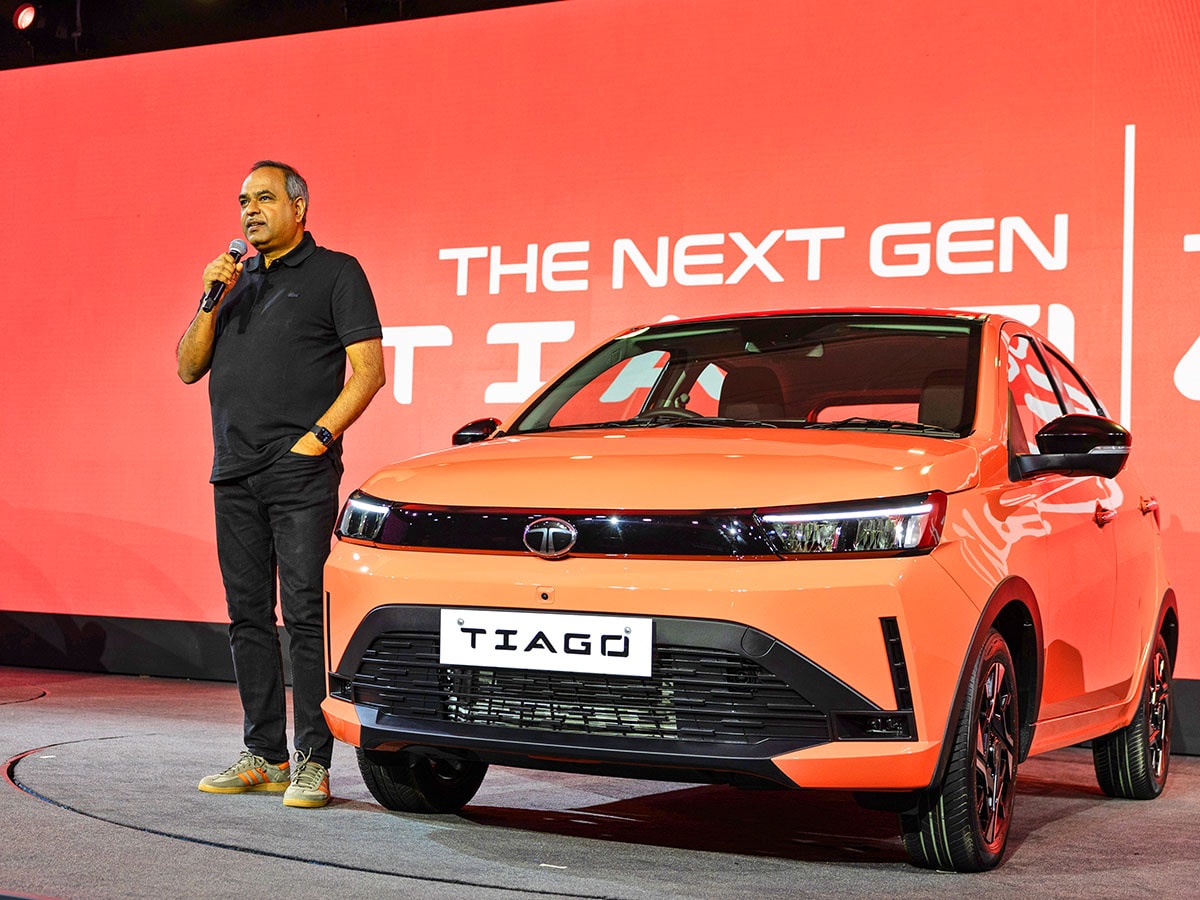
Eight months after the government cut the goods and services tax (GST) on cars, homegrown automaker Tata Motors has emerged as the clear winner.The Mumbai-based automaker’s share of the passenger vehicle (PV) market has climbed from 11.84 percent in August—the month before the cuts took effect—to 13.80 percent in May, the sharpest gain among the country’s major carmakers.After the GST cuts, the market has rewarded original equipment manufacturers (OEMs) that could convert tax-led affordability into high-volume products, says Harshvardhan Sharma, head of auto retail practice at Nomura Research Institute.“Tata benefited because Punch and Nexon sit in the sweet spot of the market: Compact, SUV-styled, relatively affordable, and available across petrol, CNG and EV propositions,” he says. “Tata’s gain is, therefore, a mix of GST-led affordability, sharper compact-SUV momentum and better conversion in the mass-premium price bands.”Another thing that helps Tata is that it's the only manufacturer serving all key segments, says Puneet Gupta, director at S&P Global Mobility. “It has multiple products in all fuel types.” The Tata Nexon, for instance, comes in over 60 variants. It’s one of Tata's best-selling cars.The government reduced GST on small cars to 18 percent from 28 percent previously, while that on big cars was brought down to 40 percent from around 48 percent earlier.The subcompact segment came back aggressively after the GST cuts, which is where Tata is strong, adds Gupta.Four of the five top-selling subcompact SUVs in May were from Tata and Maruti Suzuki: The Fronx (20,686 units), Punch (20,208), Nexon (19,100) and Brezza (13,425), shows data compiled by CarDekho, an online automotive platform. Hyundai’s Venue placed fifth at 11,714 units.The electric vehicle (EV) tailwind has amplified that advantage. “On a segment basis, EVs have grown well during the last two months, and Tata has benefited because of that,” says V G Ramakrishnan, managing partner at Avanteum Advisors.Electric PV sales grew 75 percent YoY in April and 81 percent in May, taking penetration to 6.6 percent. Tata is the country’s leading EV maker with a market share of 38.75 percent in May.Also Read: JLR drags Tata Motors PV revenue down 8 percent for FY26Rest of the FieldMaruti Suzuki, India’s largest carmaker, also gained share—from 39.57 percent to 40.97 percent—but at a slower pace than Tata. The primary reason for this was a production constraint as capacity couldn’t keep pace with the orders flooding in after the GST cuts of September 22.Those constraints have begun to ease. On May 18, Maruti started commercial production at the second plant of its Kharkhoda manufacturing facility in Haryana, adding annual capacity of 2.5 lakh units and bringing the site’s total to 5 lakh. Kharkhoda currently builds the Brezza and the mid-size SUV Victoris.Capacity alone doesn’t explain the ceiling on Maruti’s gains. The company has no diesel offering even as the fuel type still commands a 16.23 percent share.“Maruti has been able to substitute diesel losses with the help of CNG in the sub-4 metre segment," says S&P's Gupta, “but in higher segments they might be losing because of their absence from diesel.”While Tata and Maruti have gained, India's SUV king Mahindra has lost market share.The Thar maker, which emerged as India’s second-largest carmaker in CY2025 with a 13.25 percent share—ahead of Tata's 12.68 percent that year—has slipped from 13.50 percent in August to 12.75 percent in May.“Mahindra has not really lost demand; it has lost relative share because its growth is concentrated in larger, higher-ticket SUVs where volumes are more naturally constrained,” says Nomura’s Sharma.Supply-side problems have compounded the problem. “The sustained demand across our portfolio continued in May, constrained by supply chain challenges due to manpower shortages at select suppliers,” said Nalinikanth Gollagunta, CEO of Mahindra’s automotive division, in a statement.The Indian arm of Korean carmaker Hyundai fared worse, with its market share sliding from 13.06 percent to 11.48 percent because of a weak product mix. Analysts say the company has struggled to replicate the success of the Creta and Venue. The automaker is looking to regain its long-held number two position in the domestic market and has lined up capital expenditure of Rs 7,500 crore for FY27.
Go to News Site
 TV9 Marathi
 AajTak
 The Better India
 भारत समाचार
 India Today