 Forbes India
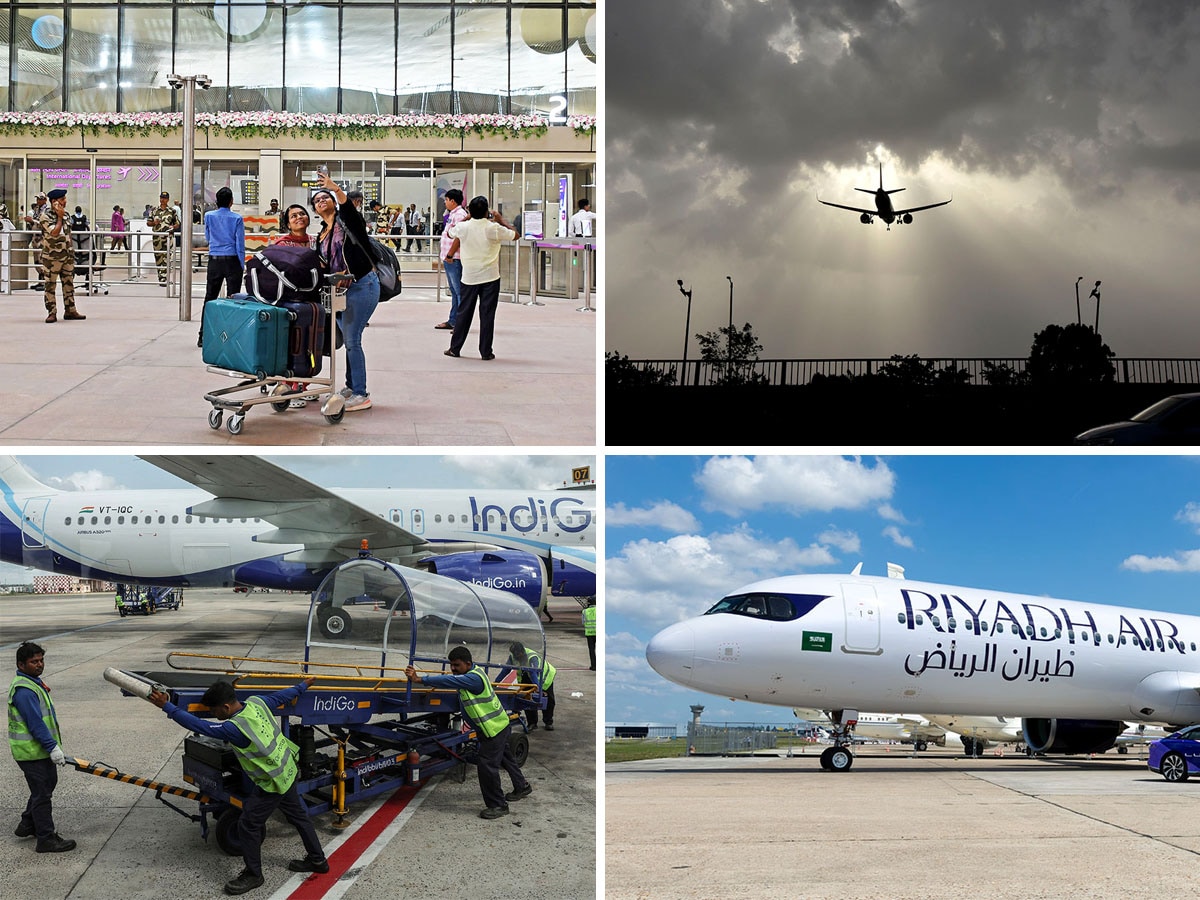
Kajol Bheda, the founder of digital marketing agency Scribbld, went into panic mode in the days leading up to her family holiday to Switzerland in mid-May. Her Mumbai-Zurich flight had a layover of just an hour and a half in Istanbul, and with airspace restrictions induced by the West Asia conflict stretching travel times, Bheda feared that even a minor delay in the first leg could jeopardise the connection.She eventually made it to Zurich without a hitch, but with a lesson: “Short layovers don’t feel efficient any more; there is a huge risk because of airspace closures. I would rather choose a longer layover or a direct flight for peace of mind,” says the 30-year-old.What started as a geopolitical crisis unfolding thousands of kilometres away has quickly turned into a real-life disruption for Indian travellers in a season when outbound travel from the country peaks. According to data by the department of tourism, 42 percent of annual outbound tourism from India in 2024 took place between April and August, with May hitting a high of 29.4 lakh travellers followed by August at 27.5 lakh.Of the May cohort, nearly 11 percent headed to the United States, while about 12 percent of April’s 25.7 lakh travellers went to Canada. Many of these flyers take routes that rely on transit hubs in West Asia and pass through corridors that, this year, have turned volatile as missiles rained on the region.“Close to 40 percent of the traffic that goes into Europe or America travels with Middle Eastern carriers with one of the cities in the region as a layover. When the US-Iran attacks happened, a lot of passengers immediately deferred travel,” says Sajin Nowshad, director, Akbar Travels, a leading travel agency headquartered in Mumbai. As data from the Reserve Bank of India corroborates, travel-related outward remittances fell to $1.09 billion in March, in the immediate aftermath of the US-Israel attack on Iran, from $1.3 billion in February and $1.65 billion in January.The Nasdaq-listed online travel aggregator MakeMyTrip has recently reported an over 2 percent sequential decline in air ticketing revenue, down to $58.73 million from $60.07 million in the previous quarter, which the company attributed to a 6.2 percent decrease in gross bookings. Along with its balance sheets, the numbers also indicated how the geopolitical uncertainty reshaped travel decisions, forcing some to choose caution over wanderlust. For example, a group of friends who were planning a trip to Greece to celebrate a landmark birthday year called it off. “Flying to Europe seemed too risky, with safety fears, abrupt cancellations and longer routes driving up ticket prices. And if those weren’t enough, the bottom fell out of the rupee, and we had to shelve our plan,” says Sriparna Ray, a communications professional from Bengaluru.Budgets CrashlandingThose who still chose to fly had a price to pay, quite literally. A Hyderabad-based businessman, who didn’t want to be named, travelled to San Francisco on a family holiday, shelling out a 50 percent premium on tickets, transiting via Singapore while going and Hong Kong on his way back.The surge in fares was caused not just by longer flying times, as flights were rerouted to skirt the turbulent West Asian skies, but also the rising fuel bill triggered by the Iran and US blockade of the Strait of Hormuz, a critical chokepoint through which about one-fourth of the world’s seaborne oil trade transits. As the price of crude oil soared, briefly surging past $100 per barrel at the peak of the crisis, it had a direct bearing on aviation turbine fuel (ATF), one of the biggest expenses for airlines.World Air Transport Statistics, a global aviation database, estimates that aircraft fuel and oil accounted for 28.7 percent of airline operating costs in 2022. As a result, national carrier Air India was forced to rationalise a number of its international flights till August, suspending key routes like Delhi-Chicago and Delhi-Shanghai, halving Delhi-Paris to 7 flights a week, and reducing flights to destinations such as Zurich, Rome and Melbourne.Says Anil Kalsi, vice president of the Travel Agents Federation of India (TAFI), “A roundtrip to Europe would cost Rs 60,000-70,000 earlier. Now, it’s gone up to somewhere around a lakh. Some of the flights are reducing passenger load to maximise fuel efficiency, while some are adding stopovers.” He adds that the Delhi-New York direct run by Air India now stops at Rome for refuelling, while the San Francisco-Delhi direct flight stops at Kolkata on return. “All these increase flying times and expenses in the form of additional landing charges and the cost of refuelling at foreign airports,” he says.Nowshad of Akbar Travels concurs, adding that the overall price of his travel packages has gone up by 30-35 percent. “Airfares are really where the pain is. That’s been the biggest cost shock this season,” he says. “This is when travellers start adjusting—shortening trips, going down in hotel categories, switching destinations or just delaying the booking.”Query-to-conversion was a hurdle that DreamSetGo, a high-end sports and experiences travel company within the Dream Sports group, faced once the war began. In 2025, the company had booked 1,500-plus packages to Europe between May and July. “By March, our HNI [high net-worth individuals] clients actively book their trips for the European summer. This time, the closing of a deal took much longer than usual,” says Monish Shah, founder and CEO.For the FIFA World Cup beginning June 12, Shah expects 20,000-plus Indian travellers to trek to the US, Mexico, and Canada, where the event is being hosted. That’s about one-third of the 56,000-plus who attended the 2022 event in Qatar, where Indians were the second-largest spectator contingent after Saudi Arabia. “But it reflects the structural realities of a North American World Cup: Longer flights, expensive tickets and hospitality, higher overall trip cost, and a tighter visa funnel for the US in particular,” adds Shah.What, perhaps, has reduced the US footfall even further is the freefall of the Indian rupee against the US dollar. Over the past 12 months, the rupee has fallen nearly 11 percent, and about 5 percent since the conflict in Iran started, hitting an all-time low of 96.96 against the dollar during intraday trading on May 20. “If the rupee falls, travel packages go up with the foreign exchange rates, even though the tariffs might remain the same. This is true for any destination. In one year, the Singapore dollar (SGD) has gone from somewhere around Rs 65 to the current Rs 75 mark—it automatically raises the price of a Singapore package,” says Kalsi of TAFI.The Power of OutbouundEven after a US-Iran deal is signed, ending the war, the travel industry doesn’t expect prices to start cooling off for at least another three months. Even then, airfares may not return to pre-war levels immediately, with inflated fares becoming the new normal, say industry insiders. “One airline partner mentioned that even if fuel prices fall in the next two months, airfares won’t. They don’t see airfares reducing until the beginning of or mid-2027,” the source adds.But that doesn’t mean Indians won’t travel, adds Nowshad; at present the demand may have softened, but it hasn’t fallen off the cliff. “What we are seeing is more of a shift and deferment," he explains.Because outbound travel is like the stock market, which falls on bad news but recovers eventually, says Naveen Kundu, the former managing director of the EbixCash travel group and an industry veteran for over three decades, “The Iran war anyway has had the least impact on international travel if you consider the entire scale of the past emergencies, like the 2008 Wall Street crash, Covid-19 pandemic, etc. And I don’t expect it to impact outbound travel over the long term,” he says. He cites the 2013 currency crisis in India, when the rupee plummeted around 20 percent in a matter of a few months and pushed up a roundtrip economy ticket to London from Rs 35,000-40,000 to around Rs 60,000. “But people didn’t stop travelling to London,” adds Kundu, who founded tourismfutures.ai in 2025. “The demand for outbound travel is resilient and survives shocks like these.”That outbound is the key driver of the tourism industry is evident from the fact that, in 2025, 3.27 crore Indians travelled abroad, up 5.9 percent from the previous year, while the number of inbound tourists dropped 9.4 percent to 90.2 lakh. Which is why, despite the restive politics and economics, Indians are still packing their bags, but for a different destination.For Booking.com, an online travel booking platform, seven of the top 10 most-searched destinations this summer lie in the Asia-Pacific. Japan has gained strong momentum, with two of its cities—Osaka and Kyoto—climbing into the top 10 of destinations most searched by Indians. Two more Oriental getaways—Phu Quoc in Vietnam and Seoul in South Korea—have seen a 40 percent surge in searches during the season, with the former climbing to rank 14 from 33 last year, and the latter from 30 to 13. “There is a growing preference among Indian travellers for shorter-haul, intra-regional travel, pivoting to closer and more accessible destinations,” says Santosh Kumar, regional head, South Asia, Booking.com.Data from Airbnb, an online marketplace for home-sharing, also reveals a growing interest in East Asia and Southeast Asia as Busan (South Korea), Tokyo and Osaka (Japan) lead the charge with search growths of over 95, 90 and 85 percent, respectively, while Kuala Lumpur (Malaysia) and Bangkok (Thailand) see steady demand. Online travel aggregator Cleartrip has recorded a 3x rise in bookings for the Philippines. “What we are seeing is a stronger preference for flexibility at the point of booking. Travellers are planning ahead but leaving room to adjust based on evolving conditions. This is reflected in the increased adoption of Cleartrip’s products that offer greater flexibility on changes and cancellations,” says a company spokesperson.But even as travellers recalibrate where they are headed, they’ve also become more intentional. As a result, the headwinds of the US-Iran crisis have propelled a company like DreamSetGo, as customers line up for organised experiential travel. “If someone is travelling to watch the FIFA World Cup, an event that comes once in four years, friction points like visa delays don’t make them cancel—it makes them start planning earlier,” says Shah.The company’s packages span from an entry range of Rs 3.5 lakh to Rs 20 lakh for ultra-premium hospitality, and Shah says they’re noticing the mix to be shifting upwards. “About 72 percent of our clients this year are opting for premium hospitality packages rather than tickets-only, a signal that when Indians commit to expensive experiential travel, they're going all-in rather than trading down.” Which means that as the mix skews towards premium, even with somewhat lower volumes, its business value is significantly higher.Even as the war redraws flight paths, India’s appetite for outbound travel continues to take off.
Go to News Site