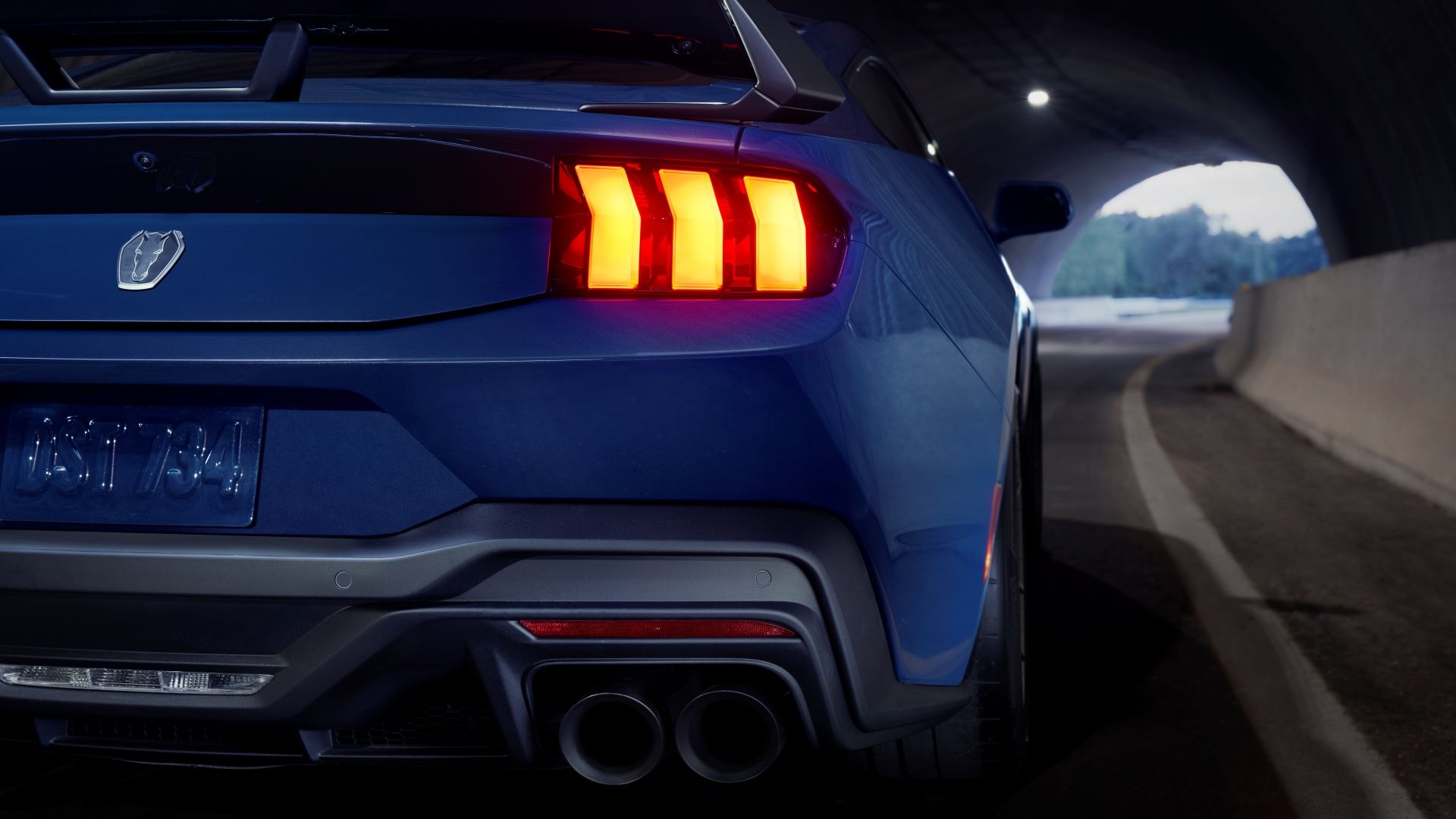
New Ford Bronco RTR - pictures
Images of the new Ford Bronco RTR
Ninth model from Chinese car maker will offer up to 53 miles of engine-off range BYD will undercut the Kia Sportage and Ford Kuga with a new plug-in hybrid SUV called the Sea Lion 5, available to order now from just under £30,000. The Sea Lion 5 is BYD's ninth cars in the UK, and its fourth PHEV, joining the technically related Seal-U, Seal 6 and Atto 2 'DM-i'. Measuring 4.74m long – putting it about halfway between the Kia Sportage and Sorento, for reference – the Sealion 5 is equipped with a PHEV powertrain which combines a 1.5-litre petrol engine with an EV motor for 215bhp and a 0-62mph time of as little as 7.7 seconds. Electric energy is stored in either a 13kWh or 18.3kWh battery, the latter of which is good for 53 miles of EV range, and helps the SUV achieve 134.5mpg and combined CO2 emissions of just 48g/km on the WLTP cycle. It's available in two trims: entry-level Comfort, at £29,995, includes vegan leather upholster, a 12.8in rotating touchscreen, smartphone mirroring, six-way adjustable driver's seat and a rear-view camera. Top-spec Design trim – with the largest available battery – adds £3000 and brings welcome lights, an electric boot lid, front parking sensors, a 360deg camera, wireless phone charger and heated front seats. The first cars are due in UK showrooms from 7 February, with customer deliveries to begin shortly after.
Trump touted his openness to Chinese automakers in the U.S. as they eye the American market. The post ‘Let China Come In’ to US Auto Industry Trump Says While in Detroit: TDS appeared first on The Drive .
Dacia’s second budget EV will be built in Europe, offering an alternative to Chinese imports with unique styling, local incentives, and a compact electric drivetrain
A New Jensen inspired by the old Interceptor will arrive in 2027 with a bespoke V8 engine.
The original Interceptor was a simmering blend of Italian design, English coachbuilding, and American power, and we're looking forward to the modern version.
The new muscle car has been created by Jensen International Automotive and will be built in Banbury The Jensen Interceptor is to be reborn as a new British-built, V8-powered GT, 50 years after production of the iconic original ended. It has been created by Banbury-based Jensen International Automotive (JIA), the engineering firm which specialises in restoring and modernising Interceptors, creating restomods such as the Interceptor R . However, unlike previous builds, this new model is its first clean-sheet design and creation and will arrive next year in “ultra-low” numbers – and, therefore, likely a very high price. It is claimed to be an “ultra-high-performance” and luxury proposition that will offer a fully analogue driving experience – the latter, while not yet confirmed, likely referencing that it will use a manual gearbox and the cabin will be flooded with physical controls and switches, similar to the original car. While further details have yet to be revealed, Autocar understands it will be powered by the same engine as used by the Chevrolet Corvette C8 , pointing to the fact that JIA will give its new model the same muscle car positioning as the original. While the Corvette’s 6.2-litre unit puts out 495 bhp and 452 lb ft, JIA note that its powertrain is “bespoke” suggests it may have pushed this output further. The original Interceptor used a 6.3-litre big-block Chrysler engine giving it more than 250bhp and a top speed of nearly 140mph. The as-yet-unnamed tourer will also sit on a lightweight aluminium chassis, JIA confirmed, likely part of an effort to give the model the highest power-to-weight ratio possible. JIA said the new model is “inspired” by the “iconic” Interceptor of the 1960s. While i ts design has yet to be revealed, t he first picture released by the firm looks to confirm that it will follow a similar philosophy to the original with a long bonnet, raked roofline and set low to the ground. Each car will be hand-made, said JIA. JIA managing director David Duerden said the new model was about “taking the theme of the luxury British GT to fresh, thoroughly modern heights” with a car that “will stand proudly as a completely all-new car in its own right.” A release date has yet to be confirmed, but given JIA are keen to push across the car’s British roots, a reveal at Goodwood’s Festival of Speed in July seems very plausible
New-era ‘junior’ Lambo has Ferrari squarely in its sights Picture ‘a Lamborghini’ and the brain drifts to visions of some vast V12-propelled supercar from another planet. The Sant’Agata flagships are monumental in both attitude and performance; in so many ways they embody the brand. But since 2003, the company’s commercial bedrock has always been found elsewhere.In recent times, the Urus SUV has taken up this critical role. These days, one in every two Lamborghinis is a Urus. But for nearly 20 years – since Audi took over – financial security was provided by a ‘junior’ supercar that combined 4WD with a sensational naturally aspirated V10 engine.Some variations on this theme were far better than others but, broadly speaking, were it not for the combined efforts of the Gallardo and its progeny, the Huracán, there is a fair chance the world would be one Italian supercar maker poorer.These cars democratised (we use the word loosely) the Lamborghini experience. In handling terms, they also took the fight to Ferrari and Porsche. By the time it bowed out with the RWD Tecnica in 2024, the Huracán could legitimately claim to be a finely honed driving tool – one that carried by far the most enthralling engine in the class.But that engine is now dead, finished off by drive-by noise and emissions regulations. Its successor is the ‘L411’ twin-turbo V8, whose performance is boosted by a trio of e-motors. It spins to 10,000rpm. The car that houses this heady set-up is the new Temerario – understudy to the hulking, V12 hybrid Revuelto but, as we’ll discover, to all intents and purposes no slower.The Temerario joins the PHEV club, alongside the Ferrari 296 GTB and McLaren Artura. It is the most powerful of the three supercars and could be dynamite from a handling perspective, if the agility and poise of the Revuelto (which uses an identical layout) is anything to go by. Could Lamborghini, for the very first time, become the class leader?
A new Bentley-fighting ‘ultra-luxury’ Jensen Interceptor will be developed in the UK
US Tesla drivers will soon be forced to shell out $99 dollars per month if they haven’t already purchased Full Self-Driving software outright
Range-extender is axed after just 678 examples were sold in the UK; pure-electric MX-30 is already long gone Mazda has discontinued the MX-30 R-EV in Europe, bringing an end to the lifespan of its first electric car. The pure-electric MX-30 had been removed from the brand’s line-up last summer, after five years on sale, and the rotary-engined range-extender version has now followed it after just two years. A spokesperson for Mazda told Autocar that the R-EV had been cancelled for a “combination of reasons”, including “consumer trends” and “production priorities”. The R-EV was “a relatively small seller in Europe”, they said, with 678 having been registered in the UK, compared with 1872 examples of the pure EV. The model also struggled outside Europe: in the US, the pure-electric MX-30 was sold exclusively in California, the nation’s biggest EV market, but Mazda pulled the plug on it in 2023 after selling only around 600 examples. Among the MX-30’s key limitations were a short range for the EV (124 miles), practicality compromised by the half-sized rear doors and high prices against longer-legged alternatives (£27,995 for the EV and £32,505 for the R-EV ). The MX-30 remains on sale in Japan, where it's offered with a petrol engine. Production of the R-EV for the Japanese market has been paused but will resume this summer. Mazda said the MX-30’s removal from its UK line-up is “permanent” and the model won't be replaced directly. However, it will bring two new EVs to the UK this year, both based on cars built by Chinese firm Changan. First to arrive will be the 6e saloon , replacing the combustion-engined 6 that was axed in 2023. That will be followed by the CX-6e SUV, positioned as an electric equivalent to the CX-60 . Mazda said it remains committed to its rotary range-extender powertrain, having used the design in the Iconic SP and Vision X-Coupé concept cars. In the latter concept, a turbocharged twin-rotor engine was allowerd to drive the wheels as well as top up the battery, unlike the MX-30 R-EV’s single-rotor engine, which worked only as a generator. Mazda is also working on its first in-house bespoke EV to exploit the advantages offered by electric power. All its previous EVs have either been converted from ICE car platforms (as in the case of the MX-30) or licensed from other manufacturers (such as the 6e). This model, recently spotted testing for the first time , is due to be launched next year.
We've been running the Czech brand's compact SUV to see if it's the ideal electric car for beginners I’ve never been so excited to not be excited. Don't get me wrong: I feel privileged to have lived with such gems as an Audi TT RS and a top-drawer Cupra Leon Estate in recent months, and I had many a cheery trip in the wonderfully extroverted Volkswagen ID Buzz and Abarth 500e that I ran last year. But sometimes you just want a car. A no-nonsense, practicality-focused, family-friendly mobility device that does the whole A-to-B thing really, really well and then still doesn't feel like a chore to take onwards from C to D and beyond. Step forward my gloriously grey Skoda Elroq , a car so anonymously specified that I could trip over it when walking out of my front door. It's the absolute antithesis of extroverted and is unlikely to set the pulse of any petrolhead racing. But stay with me, because it's far more interesting than it looks. A brief recap: the Elroq is Skoda's second bespoke electric car, riding on the same MEB platform as the Volkswagen ID 3 , Cupra Born , Audi Q4 E-tron and Skoda's own Enyaq — effectively the same car with about 200mm more metal behind the rear axle. Dimensionally, the Elroq is a good match for the likes of the Ford Explorer , Renault Scenic and BMW iX1 , and it can be had with a range of different batteries, powertrains and trims in a price bracket that spans from the very low £30,000s up towards the mid-£50,000s. My car is an 85 Edition, the number referring to the total capacity of its battery in kilowatt-hours. Someone should tell Skoda that doesn't have the same ring to it as when cars are named after their power figures, like the Aston Martin DBX 707 or McLaren 765LT, but let's not get caught up in that because what that 85 really means is 354 miles per charge, and that's a far more alluring statistic. And what that means, simply, is that I should need to spend very little time over the coming months scrolling through Zap-Map, trying to scan tattered QR codes on lamp-posts, hanging around the back of motorway services and running extension cables out of windows. In fact, all being well, I should get at least a couple of weeks of motoring out of a full charge — a rare perk of living deep inside the M25, where the speed limit is almost universally 20mph. Painfully frustrating but fantastic for efficiency. And when I do need to fill up, a 175kW maximum charging speed means it won't take up too much of my day. Of course, that figure pales in comparison to the lightning rates plenty of other electric cars offer, but more important in the real world is the average speed, and the Elroq managed a Scenic-beating 112kW from 10-90% capacity in our testing, which will do me just fine. It's not slow on the move, either. I won't disingenuously paint this as a Q-car with the dynamic chops to lure you away from a sports saloon or hot hatch , but with 282bhp from its rear-mounted motor, it really gets going when you want it to — and like many EVs it can outstrip some much meaner-looking metal away from the lights. It's unlikely to be the car that finally persuades me to book that long-mooted North Coast 500 trip, but its peppiness is already making my grim commute through choked-up suburbs slightly more bearable. In fact, it's shaping up to be one of the most easily drivable and least aggravating new cars I've tested of late. The steering is nice, it rides really well, all the digital bits work quickly and intuitively and the physical controls are all sensibly integrated — as our road testers found to be the case earlier this year when awarding the Elroq a highly coveted four-and-a-half-star verdict and marking it out as one of the most practical and least compromised cars in its class. All the signs certainly point to it being an excellent companion over the coming months — and especially so because this particular example probably represents the Elroq at its very best. Not only do we have the punchiest motor and juiciest battery at our disposal but we've also spilled a load of ink all over the options list, bumping up the car's price by more than 20% with extra equipment. I'm not sure the clinical Graphite Grey metallic paint was £680 well spent and, as it's currently hot outside, I'd happily forgo the Winter Pack's heated screen and rear seats. But the Driver Pack was a smart buy at £650 — adding regen control paddles, adaptive suspension and a drive mode selector — and the £600 Lodge interior pack is far more homely than the drab, all-black standard arrangement. But the big money went on a heat pump — an £1100 expense I wouldn't think twice about when speccing an EV anywhere north of, say, Valencia — and the Maxx Pack, which does cost the same as a clean Mk6 VW Golf but adds such indispensables as a top-down parking camera, a head-up display, a variable boot floor, park assist, tri-zone climate control and massaging front seats. Yes, I did say indispensable. What I've ended up with is the EV I would feel confident about recommending to the most ardent of EV-sceptics. It's quick, comfortable, well equipped, long-legged and — crucially — oh so normal. So many of the compromises associated with electric cars since their genesis are simply absent in the Elroq, and I'm looking forward to proving to some of my more reticent friends and family members that you can now make the 'landmark' switch without even having to think about it. Assuming I don't lose it in a car park first. Update 2 The Elroq is full of fun little 'Simply Clever' features that aim to make it as easy to live with as possible, and for the most part they're great - but who on earth signed off these front cupholders? There are two in the centre console, sensibly placed and easily reached - so far, so good - but I can't help wondering if Skoda's R&D engineers managed to cover hundreds of thousands of miles around the world without once stopping to grab a cappuccino or a Coke. Because if they had, they would know that the movable central divider doesn't move far enough to accommodate a standard travel mug or water bottle in either of the two holders (much less both at the same time), and they might even have clocked that a tall bottle on the passenger side blocks access to the crucial ADAS menu button. It might sound like I'm scrabbling for things to complain about in an extremely well-rounded package, but it is genuinely a real pain when I have to chug my scalding coffee down before getting in so my partner can have her trusty water bottle to hand. Happily, that's the only real gripe I've had with the interior over the past few months. Maybe excepting the touch slider for controlling the volume, which I can't believe has survived a whole generation of Volkswagen Group products, so tricky is it to use. Fortunately there's a nice clicky roller on the steering wheel for me to use instead. My favourite of Skoda's practicality-boosting Easter eggs is the pair of shelves that are neatly integrated into the sides of the boot - perfect for stopping loose bottles or breakables from rattling around the boot on the way home from the shop. But the hammock-esque secondary parcel shelf deserves a shoutout too: I was struggling to find a use for it until I needed to separate some flowers from some heavy shopping bags the other day, and now I think every car should have one. And how many cars do you know that come with a full-size plant pot in the back? It might not have been conceived as such, but the deep tray in the middle of the rear footwell was absolutely perfect for bringing my new Devil's Ivy home and then keeping it alive for a few days until I found somewhere in the house for it. Update 3 My local Chinese takeaway is a hidden gem: great value, authentic flavours and rapid service with a smile. Generous with the complimentary prawn crackers too. The only problem is they don't deliver, and it's just outside of viable walking distance; I shudder to think of my cashew chicken being exposed to the crisp autumn evening air for more than a few minutes. So I tend to order over the phone then trundle over in the car, embarrassing as that is to admit for a 1.5-mile round trip. But I don't feel all that bad about doing it in the Elroq. Partly, of course, because it's electric, but also because it's so undemanding and fuss-free (especially important when I have to return because my partner has accidentally ordered a prawn dish she doesn't recognise). Yes, at 4.5m long and weighing more than two tonnes, it's hardly the ideal suburban runabout on the face of it, and indeed I would think twice about using an ICE-powered equivalent for so short a journey, but it's just so supremely manoeuvrable and energetic that you can forget all about its size and heft. It's amusingly rapid off the mark, never scrabbling for traction or chirping the tyres, and handles impressively neatly for a car with no sporting aspirations whatsoever. It feels much smaller and lighter than it is, courtesy of its responsiveness and commendable body control through corners, so it's genuinely quite a good laugh to zip around the suburbs in - even below 30mph. Sixties multi-storey car parks are a formidable proving ground for such attributes. Misjudge an apex on a dizzying, narrow, spiral ramp, and at best you draw the ire of the drivers behind you as you fumble your way stressfully through a corrective manoeuvre. At worst it's a sickening graunch as your alloys dig into the high concrete kerb or a heart-stopping thump as a mirror clatters into an unseen pillar. I don't worry about either eventuality in the Elroq (he wrote, frantically knocking on every piece of wood within reach), because its predictable and quick steering together with its excellent visibility and short overhangs mean it's no more difficult to negotiate tighter environments than it would be in a supermini. An industry colleague in a BMW iX followed me down from the fifth floor of Gatwick airport's short-stay car park the other day, and by the time he had cautiously descended halfway, wincing at the thought of dinging one of those monster 22in rims, I was already haring off towards the M23. It helps that the Elroq's parking sensors and 360deg camera are among the more competent I've tried, but even without the technological aids it's a supremely easy car to get used to - getting one over on its innumerable rivals by virtue of being just, well, fantastically drivable. Easy to slot into a tight space too. It will never be a car that tempts you into a carefree Sunday drive for no reason, but it does its best to make the most humdrum of trips easy and enjoyable, and that will be one of my most important takeaways from our time together. That and the excellent mushroom fried rice I grabbed on the way home last Friday. Skoda Elroq road trip: did I find it as easy as an ICE car? Final report I'm 38,000ft in the air, halfway through a delayed and extremely busy flight home from a frantic, tiring work trip abroad. In about five hours, I will stumble, dazed and deflated, through the gloomy drizzle from the airport exit to the short stay car park, my pace quickening and my mood lightening as I edge closer to the happy reunion I've been craving for days. It's been a pretty hardcore week and the prospect of home comfort is tantalisingly close. But I don't even have to wait until I actually get back to my house. Sure, I'm looking forward to whipping up a carbonara, throwing on my favourite slippers and watching a bit of Attenborough - but, first and foremost, I'm thrilled to be getting back behind the wheel of my trusty Skoda Elroq. It will be the final time we reunite like this - late in the evening in some godforsaken multi-storey ahead of a nail-biting half-lap of the M25 - and I will make sure to treasure it all the more because I'm truly sad to be seeing the back of this deeply dependable crossover. When it arrived a few months ago, I predicted the Elroq would excel on many fronts but would be unlikely to show anything remotely approaching a 'fun side'. And I was right. A couple of thousand miles later, I still think this is among the most rational and least frivolous cars on sale but the harsh fact of the matter is that usually I don't want my car to be 'fun'. I want it to be a car. And here, the Elroq is frankly peerless: it just got on with its core job of comfortably conveying me and all my rubbish from A to B and well beyond without fuss. It didn't pretend to be anything it wasn't, it didn't irritate me with lashings of unnecessary frippery and it didn't seem to really fall short of its rivals in any key metric which is to say the attributes you actually care about in a daily driver. But that should in no way be taken as a suggestion that the Elroq merits acclaim merely by virtue of being the least irksome or compromised car in its class, because to recognise it on those grounds alone would be to do a massive disservice to its towering list of trump cards. It's not even just 'good for an EV' but easily one of the most recommendable and well-rounded family cars on sale - one that just happens to be electric. In fact, I often forgot it even was, with this bigger-battery 80 variant returning a real-world range of 282 miles - comfortably enough for a couple of weeks' commuting in London, or the monthly return trip to see my in-laws in the Midlands. That's with the caveat that temperatures never got much below mild in my time with the car. I'd expect that to have dropped nearer to 250 miles now the frost has set in. But, ultimately, the attribute I couldn't stop remarking on was just how lovely the Elroq is to drive, with dynamic and performance characteristics that made it an absolute dream for daily drudgery. Its progressive power delivery, sure-footed handling and remarkably well-resolved ride meant that it was as comfortable lapping up long stretches of motorway as it was conveying me through nightmarish city traffic. The seats are cosseting, the driving position feels natural, visibility is great and its excellent manoeuvrability belies its generous footprint and chunky kerb weight. That pervading sense of no-nonsense usability is augmented by a cabin that brilliantly splits the difference between functionality, ergonomics and quality - better than any Volkswagen Group car has managed in years. The touchscreen is a big old thing, sure, but its menus are laid out sensibly, it responds quickly, its graphics are slick and - most importantly - it connects to your phone without hesitation. It doesn't serve as the all-out replacement for physical controls, either, with nice clunking buttons, switches and rollers scattered throughout the cockpit to give easy, eyes-off access to the functions you'll most often use on the move. I handed our car back with more than 4000 miles on the clock and had yet to detect any untoward rattles or squeaks and several passengers commented on how plush and modern the cockpit felt, even if it was a little generic and devoid of character in its minimalist treatment. I was glad we plumped for the £600 Lodge interior package, as the two-tone seats, orange seatbelts and contrasting stitching went some way to livening the cabin up and giving it a more homely vibe. That was one of a few optional extras on our car, which added up to nearly £8500. The heat pump was a chunky £1100 and I didn't really feel the benefit, having run the Elroq mostly over summer, but I think you would welcome the efficiency boost in the colder months, so it gets a pass. Same goes for the £350 Winter Pack: I didn't have much call for the heated rear seats and windscreen, but I know I'd use them if I were heading out today with some mates. I'm much colder on the £650 Driver Pack - which adds a questionably useful Dynamic Chassis Control suite based on the Golf GTI, of limited utility here - and the Maxx Pack, which adds £950 on top of the usefully specified Advanced Pack for nothing of any real use, such as a naff massage function for the front passenger and remote park assist. That's money far better ringfenced for a lovely electric-fuelled European road trip, which I wish I'd had the chance to do with the Elroq. I know it would smash it. I'm gushing, I know. But so be it: we should celebrate cars that do such a good job of... well, doing such a good job, and being genuinely quite difficult to criticise without nit-picking. And so, in answer to the question I posed when the Elroq arrived: yes, I do think the Elroq is probably the perfect 'starter' EV - but it's a whole lot more than that. The only real problem is that it looks so dull, it will take me 15 minutes to find it at Heathrow. Skoda Elroq Edition 85 Prices: List price new £38,660 List price now £38,660 Price as tested £47,140 Options: Maxx Pack £5100, Heat pump £1100, Graphite Grey metallic paint: £680, Driver Pack £650, Lodge interior design selection £600, Winter Pack: £350 Economy and range: Claimed range 354 miles Battery 82/77kWh (total/usable) Test average 3.6mpkWh Test best 4.2mpkWh Test worst 3.3mpkWh Real-world range 282 miles Max charging rate 175kW Tech highlights : 0-62mph 7.0sec Top speed 96mph Engine Permanent magnet synchronous motor Max power 282bhp Max torque 402lb ft Gearbox 1-spd reduction gear, RWD Boot 470 litres Wheels 19in, alloy Tyres 235/55 R19 (f), 255/50 R19 (r), Hankook Ventus S1 Evo3 EV Kerb weight 2181kg Service and running costs: Contract hire rate £357.39 CO2 0g/km Service costs None Other costs None Fuel costs £125 Running costs including fuel £125 Cost per mile 6.7 pence Faults None
The Mazda3 is a practical, entry-level compact car, with lots of premium touches. But after five years, you may be curious how its value has held up.
American car maker last month announced huge EV investment cut in response to slowing consumer demand Ford boss Jim Farley insists that the firm isn’t moving away from electric vehicles , despite making a massive £14.5 billion write-down after scrapping much of its future EV plans. The huge investment cut announced last month was in response to slowing consumer demand for EVs in the US, along with the scrapping of EV incentives and emission mandates by US president Donald Trump. Ford has also axed the F-150 Lightning , the EV version of its perennially best-selling US model. Although the F-150 Lightning has proven to be the most popular electric pick-up in North America, Ford sold only around 27,000 of the EV model last year, compared with around 700,000 of the petrol F-150. Despite that, Farley said: “We’re not going backwards on EVs.” Speaking at the Detroit Auto Show, he added: “We're actually accelerating the amount of EVs we're bringing to market. We're just going to do less than we had originally planned. That's why we had to do the write-down.” Farley said Ford is focused on offering greater powertrain choice for consumers, with different options based on the type of use case for each vehicle. Ford is developing three electrified platforms, including the critical new Universal EV (UEV) architecture that will be used for a range of models, starting with a sub-$30,000 (£22,000) EV. Farley said the first affordable EV on the UEV platform “is, to me, a Model T moment”. He added: “This is us going back to our roots, innovating the development, manufacturing and supply chain. It's really a challenger project, and we're deep into execution now. “I am more proud of that vehicle than almost any vehicle I've worked in my career. As Wolfgang Puck said, a lot of people could run a four- or five-star restaurant; not many people can do a good buffet in Las Vegas.” Farley insisted that, despite the write-down, Ford has a “full plan” for electric models. He said: “UEV is a full plan that we’ll build in Louisville – 300,000 units. We were number two to Tesla [in EV sales] for many years, and we’re accelerating our pure EVs with UEV, but we're focusing it on the most affordable EV. “Where we're really accelerating our investment is EREVs [extended-range electric vehicles] and hybrids. We've been really successful with the F-150 hybrid and now we want to go across the range with hybrid and EREVs. “We're really focused on choice for customers, expanding across our whole line based on duty cycle. We learned so much being an early mover in EVs and a full-line manufacturer. We learned a lot about where we need to put our capital.” The UEV platform is a zonal architecture built on new software and will be highly flexible thanks to the use of megacasting to manufacture entire sections of cars as single units. It has also been designed to offer level-three autonomy – meaning hands-off driving on certain highways – on all vehicles. Ford is also developing a new electric architecture for its multi-energy vehicles, along with a third electrified platform. Key to all those platforms will be lowering production costs to increase profit margins. Farley said: “Our leadership team’s objectives and compensation is tied to landing the plane on cost and qualities of electric architecture, not just the vehicles themselves.” He added that developing the UEV platform has “really helped us and taught us a lot as a company” and Ford’s “biggest focus” is on the execution of those new architectures. “One of the big reasons why we had our best sales in a decade is because our affordable models are really hot-selling," he said. "So part of our write-down is that we're retooling for affordable vehicles."
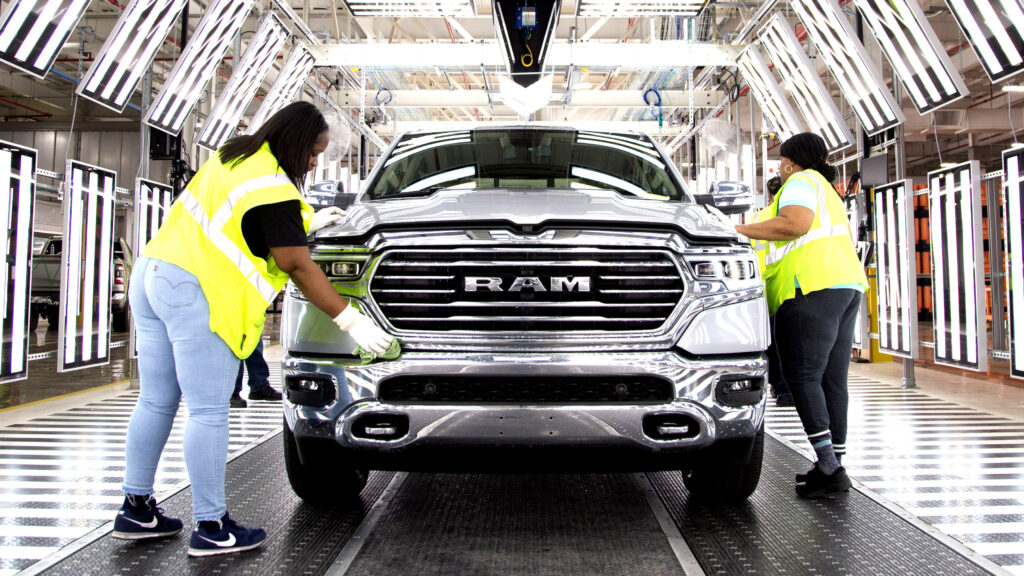
We sample a Ram 2500 Power Wagon and a Ram 1500 Rebel EcoDiesel equipped with numerous options we either couldn’t or didn’t order to see what we’re missing.
Jensen International Automotive will unveil a successor to the classic Interceptor this year