


 The Advocate
Record-breaking ‘No Kings’ protests expected as nationwide marches near
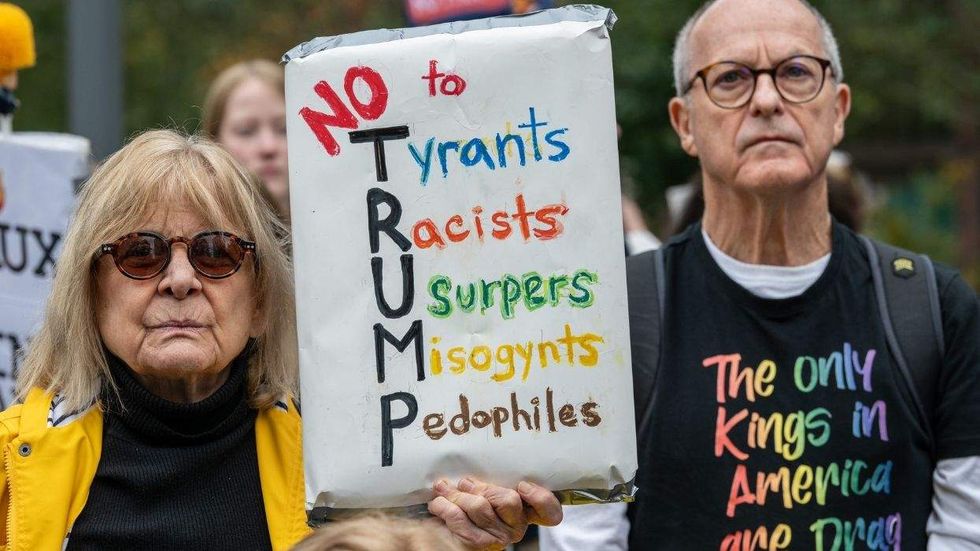
A nationwide wave of “No Kings” protests is set for this weekend, with organizers planning thousands of demonstrations across the United States on Saturday in what they expect will be one of the largest coordinated days of action yet against President Donald Trump’s second administration. Keep up with the latest in LGBTQ + news and politics. Sign up for The Advocate's email newsletter. More than 1,000 events have already been confirmed, with additional protests being added in the days leading up to the mobilization. The effort is being led by the 50501 Movement and a coalition of partners, who say the protests are a response to what they call rising authoritarianism, aggressive immigration enforcement, and threats to democratic institutions. The March 28 actions build on earlier “No Kings” demonstrations that drew massive crowds. Organizers estimate that 7 million people participated in events last October alone, and they expect turnout this weekend to exceed that number. Related : How No Kings aims to build 'protest muscle' for the long term Related : No Kings: What to know about the October protests against Trump “We’re definitely expecting that the numbers are going to be larger,” Rebecca Winter, a Massachusetts-based organizer with the 50501 movement, said in an interview with The Advocate. “We already have more events on the map than we had last time, and there’s a lot of really amazing energy behind this.” Organizers say demonstrators are mobilizing around a wide range of issues, including immigration enforcement, foreign policy decisions, and economic pressures, as well as what they describe as “the billionaire class’s repeated attempts to dismantle our democracy.” Winter said the demonstrations are less about immediate political outcomes than about building visible, sustained opposition. “We know that we’re not going to come out and protest, and magically, the Trump regime is going to give up that day,” she said. “But what we do is we show our power by standing up together and saying, this is not the democracy that we want.” Trans Day of Visibility ties into protests In Washington, D.C. , the protests will intersect directly with LGBTQ+ advocacy efforts tied to the Transgender Day of Visibility, observed annually on March 31. A rally hosted by the Christopher Street Project is scheduled for 11 a.m. to 1:30 p.m. on the National Mall, featuring elected officials, activists, and speakers, including NCAA champion CeCé Telfer and Cook County Commissioner Precious Brady-Davis. The event will include performances and keynote addresses, followed by a march aligned with the broader No Kings demonstrations. “The way that this administration is attacking specifically transgender individuals is so targeted,” Winter said. “So that’s a community that we really, really have to protect.” The Christopher Street Project, which organized the rally, said the event comes at a time when “trans people’s rights are being threatened and their identities questioned” across the country. Related : As LGBTQ+ people go back into the closet under Trump, the Human Rights Campaign reveals plan to fight back Related : Activists hold 'die-in' at HHS to protest Trump health care cuts: in photos A “big tent” movement While LGBTQ+ rights are a key focus, organizers stress that the movement is intentionally broad, drawing participants from across ideological and geographic lines. “We have Republicans and Libertarians who come out and protest with us,” Winter said. “We’re looking at authoritarianism as a whole.” That coalition includes activists, scientists concerned about research funding, immigrants’ rights advocates, and voters worried about election access and the rule of law , event hosts say. A central goal this year is converting turnout into sustained engagement. In the weeks leading up to March 28, activists have hosted nationwide trainings, including “Eyes on ICE” sessions, to prepare participants to monitor enforcement actions, understand their rights, and plug into longer-term organizing. “You don’t need a lot of experience to be an activist,” Winter said. “Maybe an hour a week. There are roles for every ability.” For many involved, the urgency of the moment is driving participation. “I think people are just really, really motivated to use their First Amendment rights while we have them,” Winter said.
Go to News Site