


 Daily Finland
US sends Iran 15-point plan aimed at month-long ceasefire
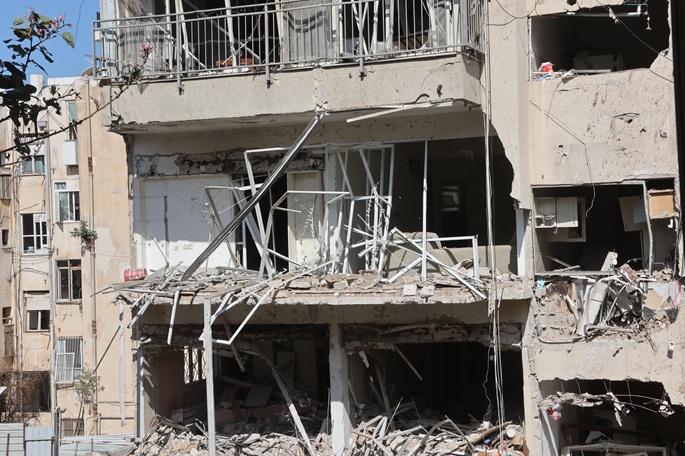
Washington has delivered Iran a 15-point plan for a month-long ceasefire deal, Israel's Channel 12 reported Tuesday night, reported Xinhua. The report, citing sources familiar with the matter, said U.S. President Donald Trump's advisors Jared Kushner and Steve Witkoff are promoting a plan for an immediate pause in hostilities, using a 30-day window to finalize a 15-point agreement. The plan reportedly demands that Iran dismantle its nuclear capabilities, cease all uranium enrichment, and provide a permanent commitment to never seeking nuclear weapons. Additionally, Tehran would be required to end the funding and arming of allied groups in the region and ensure the Strait of Hormuz remains an open international waterway. The plan also demands that Iran limit its missile production and restrict future use strictly to self-defense. In exchange, Washington is offering full sanctions relief, assistance in developing a civilian nuclear energy project at southern Iran's Bushehr, home to the Bushehr Nuclear Power Plant, and the removal of the "snapback" mechanism threat that enables the reimposition of previously lifted UN sanctions on Iran. Israeli Prime Minister Benjamin Netanyahu, a vocal opponent of any deal with Iran, has not issued an official comment. He warned on Monday of a diplomatic agreement with Iran, claiming Iran's "current regime" must not be trusted. Meanwhile, The New York Times reported on Tuesday, citing two unidentified officials that the United States has sent Iran a 15-point peace plan, via Pakistan, in an attempt to end the war with Iran, now in its fourth week, The Trump administration is eager to "find an off-ramp from the conflict as it grapples with its economic fallout," said the report. The plan addresses Iran's ballistic missile and nuclear programs and discusses maritime routes, referring to the Strait of Hormuz, it said. However, it was unclear how widely the plan, delivered by way of Pakistan, had been shared among Iranian officials and whether Iran was likely to accept it as a basis for negotiations, said the report. Meanwhile, Israel's military said on Tuesday that it had struck Iran's "most central explosives production facility" in Isfahan as part of a series of airstrikes targeting dozens of sites. The Israeli military said its air force targeted military-industrial production facilities, including a site where explosive materials for various weapons are developed and produced. The facility had previously been bombed during a 12-day Israel-Iran conflict last summer, but Israeli officials said efforts had been made in recent months to restore it. According to the military, more than 120 munitions were used in the strikes, hitting ballistic missile launch sites, weapons production facilities, and air defense systems. Also on Tuesday, a rocket attack from Lebanon killed a woman in northern Israel, the Israeli Magen David Adom ambulance service said. The military said it had attempted to intercept the rocket before it struck. Meanwhile, a missile fired from Iran struck Tel Aviv on Tuesday, injuring several people and damaging buildings and vehicles, Israeli authorities said. Loud explosions were heard across the city, with eyewitnesses reporting large plumes of smoke rising from both northern and southern parts of the country's commercial hub. Israel's Army Radio, citing security officials, reported that it was apparently a cluster-type missile containing several bomblets, each weighing about 100 kg, with the bomblets or their fragments impacting several sites. At an impact site in northern Tel Aviv, a missile struck between buildings, "causing a powerful blast wave that heavily damaged three buildings," Miki David, commander of the Tel Aviv district in the Home Front Command, told reporters at the scene. He said shelters in the buildings remained intact, and those inside were unharmed. Images shared on social media showed that the impact left a crater. In a statement, the Israeli military said search and rescue teams were operating at "several sites" in central Israel after impacts were reported. The Magen David Adom ambulance service said six people were lightly injured and did not require hospital treatment. Air raid sirens were activated seven times across Israel overnight and into Tuesday morning amid continued missile fire from Iran. The last missile attack activated sirens in southern Israel, including in Dimona, where Israel's nuclear facility is located. The strike came as the regional conflict entered its 25th day, with tensions remaining high despite U.S. President Donald Trump's claim of ongoing negotiations, which Iran dismissed as "fake news." Meanwhile, U.S. President Donald Trump claimed on Tuesday that negotiations between the United States and Iran are continuing, though Tehran has denied the existence of any direct or indirect talks between the two sides. U.S. Vice President JD Vance, Secretary of State Marco Rubio, White House envoy Steve Witkoff and Trump's son-in-law Jared Kushner are involved in the talks with Iran, Trump told reporters at the White House, adding that Tehran would like "to make a deal." Asked what led him to weigh diplomacy with Iran, he said, "They're talking to us and they're making sense." Trump also said that Iran has given Washington a "very big present, worth a tremendous amount of money," but refused to say what it was exactly. "They gave it to us, and they said they were going to give it, so that meant one thing to me: we're dealing with the right people," he said. The "present" was "oil and gas related ... it was related to the flow, to the Strait," Trump said, referring to the Strait of Hormuz, a waterway crucial to world oil transportation. There had been "outreach" between Washington and Tehran, and Iran is willing to listen to "sustainable" proposals to end the war, said a CNN report on Tuesday, citing an Iranian source. On Monday, Trump said Washington had "major points of agreement" with Iran during talks over the weekend, but refused to name the Iranian negotiator the United States talked with, saying Washington had spoken to a "top person" in Iran. The Iranian Foreign Ministry on Monday denied having negotiations with the United States, the country's official IRNA news agency reported. Ships need Iran approval to transit Hormuz Strait The Navy Commander of Iran's Islamic Revolutionary Guard Corps (IRGC), Alireza Tangsiri, said on Tuesday that any vessel transiting the Strait of Hormuz must fully coordinate with Iranian maritime authorities. Writing on X, Tangsiri said IRGC naval forces had blocked a foreign container ship, identified as the "SELEN," after it failed to comply with required protocols and obtain a transit permit. The remarks come amid heightened tensions following joint U.S.-Israeli strikes on Iran starting Feb. 28 that targeted Tehran and other cities, prompting Iranian retaliatory missile and drone attacks against Israel and U.S. targets in the region. Iran has since tightened control over the Strait of Hormuz, restricting passage for vessels linked to the United States and Israel. Foreign Minister Abbas Araghchi said Tuesday that insecurity in the waterway stems from the U.S. and Israeli attacks, adding that Iran's measures are in line with international law and aimed at defending its sovereignty. In a phone call with Malaysian Foreign Minister Mohamad Hasan, Araghchi said the strait is closed to vessels linked to the United States, Israel or parties involved in the attacks, according to a Foreign Ministry statement. He added that other vessels may transit the waterway in coordination with Iranian authorities to ensure safe passage. 15 Iraqi paramilitary members killed in US airstrike A U.S. airstrike killed 15 members of Iraq's paramilitary Popular Mobilization Forces (PMF), including a senior commander in the western province of Anbar early Tuesday, a security source told Xinhua. The PMF said in a statement that the attack was a "flagrant violation of Iraqi sovereignty," stressing that the action shows no respect for international law or humanitarian norms. It also urged Iraq's political forces to adopt a clear and firm position to preserve the country's sovereignty and put an end to these serious violations. UAE steps up diplomatic outreach amid continuous attacks The United Arab Emirates said its air defense systems intercepted five ballistic missiles and 17 drones launched from Iran on Tuesday. Since Feb. 28, the UAE has intercepted a total of 357 ballistic missiles, 15 cruise missiles and 1,806 drones, according to the Ministry of Defense. In recent days, UAE leaders have held discussions with officials from multiple countries and international organizations on regional developments, the state news agency WAM reported. UAE President Sheikh Mohamed bin Zayed Al Nahyan held a phone call Monday with Mark Rutte, secretary general of NATO, to discuss the ongoing regional military escalation and its impact on regional and international security, shipping and the global economy. They condemned Iranian attacks targeting civilians, infrastructure and critical facilities. The UAE president also met French Minister of the Armed Forces Catherine Vautrin on Monday to discuss bilateral defense cooperation and regional security amid the escalation. UAE Foreign Minister Sheikh Abdullah bin Zayed Al Nahyan also held calls with counterparts from Spain, Vietnam, Mauritania and the Netherlands, underscoring the role of diplomacy in maintaining regional and international security, WAM reported. 17 killed in Israeli strikes across Lebanon At least 17 people were killed and several others wounded in a series of Israeli airstrikes and ground operations across southern Lebanon, Mount Lebanon, and Beirut's southern suburbs overnight and early Tuesday, according to Lebanon's Health Ministry. The Israel military on Tuesday confirmed its strikes, saying that it had completed another wave of airstrikes across Lebanon, targeting fuel stations belonging to a Hezbollah-controlled company. An Israeli airstrike targeted the village of Bchamoun in the Aley district, killing two and wounding five others, according to Lebanon's Health Ministry Emergency Operations Center. In southern Lebanon, four people were killed and four others injured in an airstrike that targeted a house in the village of Selaa. Another two people were killed and five others wounded after Israeli warplanes conducted three air raids at dawn on the village of Tayr Debba in the Tyre district. In the Arqoub area, an Israeli infantry force entered the village of Halta after midnight, raided a house, and opened fire on its residents, killing one and wounding several others. Later, an Israeli airstrike targeted a pickup truck at the junction of the village of Chehabiyeh, killing one Syrian national. Two people were also killed and two others wounded in an airstrike that targeted the area between Adloun and Abu al-Aswad. An Israeli drone targeted a motorcycle in the town of Maaroub, killing one person, while another person, identified as Mahmoud Hamad, was killed in an Israeli airstrike on the town of Kfar Tebnit. Three people were also killed in an airstrike that targeted a house in the Mieh Mieh camp east of Sidon. The latest Israeli attacks, coming after Israel bombed five bridges over the Litani River, were part of Israel's attempt to weaken Hezbollah's financial infrastructure. Lebanon orders Iranian envoy to leave Lebanon declared Iran's ambassador persona non grata Tuesday and ordered his departure by Sunday, citing violations of diplomatic norms in a significant escalation of tensions between Beirut and Tehran that drew swift condemnation from Hezbollah, which called the decision reckless and demanded it be reversed. The ministry said the Iranian diplomat, Mohammad Reza Sheibani, had made statements on Lebanon's internal politics, assessed government decisions and met with unofficial Lebanese parties without prior coordination. It summoned Iran's charge d'affaires, Toufic Samadi Khoshkhoo, to convey the decision and asked that the ambassador leave by Sunday. Lebanon also recalled its ambassador to Iran for consultations over alleged violations of diplomatic norms. The ministry said the measures do not amount to a break in relations and that Lebanon seeks ties with Iran based on mutual respect and noninterference. The move marks a significant escalation in Beirut's stance toward Tehran amid rising tensions between the two countries. Hezbollah condemned the decision and called on Lebanese authorities to reverse it. In a statement, the group said the move lacked legal basis and described it as reckless, arguing it does not serve Lebanon's interests, sovereignty or unity. It dismissed accusations that the ambassador interfered in internal affairs as unfounded, calling the decision politically motivated. Hezbollah warned the timing was dangerous and urged officials to adopt a unified position to confront Israeli attacks and press Israel to withdraw from Lebanese territory. The group also accused the foreign minister of taking positions that serve Israel while ignoring U.S. interference, warning the move could deepen internal divisions. Separately, Lebanese President Joseph Aoun called for increased international pressure on Israel to halt its attacks and support ceasefire efforts, local media reported. "Lebanon cannot fight others' wars on its territory," Aoun said, stressing that state authority over weapons and decisions of war and peace is nonnegotiable and in line with the constitution and the Taif Agreement. He said a negotiation initiative he launched days ago remains in place and has regional and international backing but requires an Israeli response to ceasefire calls. Lebanon's Health Ministry said the death toll from Israeli attacks since March 2 has reached 1,072, with 2,966 wounded, including 33 killed and 90 injured in the past 24 hours. Hezbollah entered the confrontation March 2 by firing rockets from southern Lebanon toward Israel for the first time since a Nov. 27, 2024, ceasefire, prompting intensified Israeli strikes across the country.
Go to News Site