


 Dawn.com
Heritage sites at risk of landing on Unesco ‘danger list’
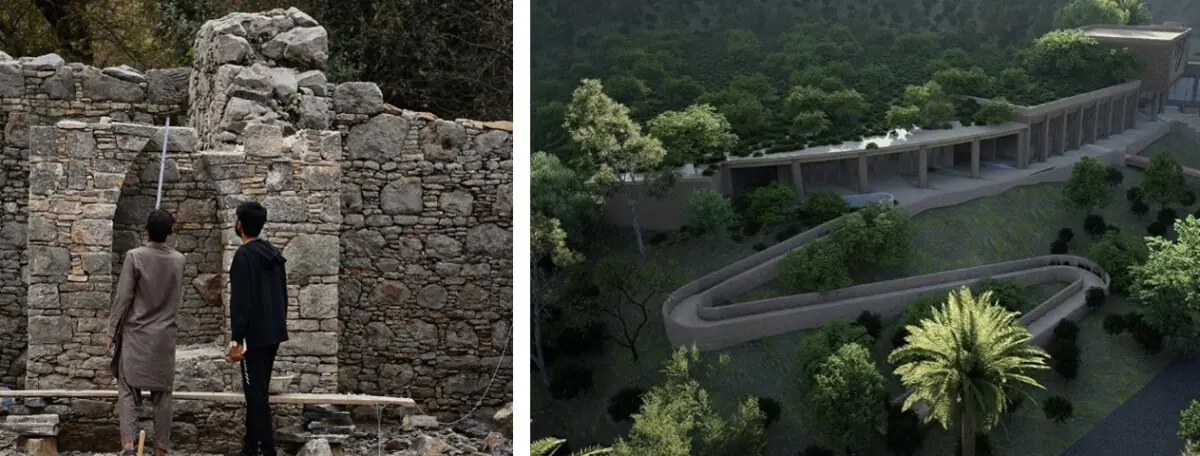
• Complaint shared with Pakistan’s delegate in Paris highlights demolition, repair work at Mohra Moradu and Sirkap • DOAM official terms use of cement a serious violation of rules • Punjab archaeology dept rejects claims, says it restored ‘at risk’ sections ISLAMABAD: Following restoration work by the Punjab archaeology department at two World Heritage sites in Taxila, which has allegedly compromised their authenticity and integrity, the sites are at risk of being placed on Unesco’s ‘List of World Heritage in Danger’. According to Unesco, this list is designed to inform the international community of conditions which threaten the very characteristics for which a property was inscribed on the World Heritage List, and to encourage corrective action. The caution comes after a third party recently shared information and photos with Pakistan’s Permanent Delegate to Unesco in Paris regarding two such sites in Taxila. The concern highlights how interventions may affect the authenticity and integrity of the Gandhara sites at Mohra Moradu and Sirkap. Specifically, the concern centres around the demolition or repair of original walls, the new construction being carried out in their place, or their height being raised. “The [third party] urges Unesco to intervene to protect the site’s integrity for future generations,” the permanent delegate to Unesco said in a letter to the Department of Archaeology and Museums (DOAM), Islamabad, seen by Dawn . Citing its concern and seeking an immediate response regarding the condition of the World Heritage sites, DOAM wrote to the Punjab Archaeology Department, stating: “If sane action is not taken in the matter, it could lead to placing the two sites on Unesco’s ‘Danger List’.” However, no response has been forthcoming. “It has been nearly a month and the archaeology department, Punjab, has not responded,” an official told Dawn . Threat to heritage The Taxila archaeological complex was designated a Unesco World Heritage site in 1980. It is a serial site comprising 18 specific locations, including Mohra Moradu and Sirkap, which represent the evolution of urban settlement and Buddhist culture in the subcontinent from the Neolithic period through the 5th century CE. “Restoration and the use of cement to erect walls at World Heritage sites is a serious violation of Unesco rules for the conservation of archaeological monuments of historical value,” the DOAM official said. This is particularly concerning as Pakistan has been struggling since 1997 to have 24 sites of historical significance included in Unesco’s World Heritage List. According to the official, Unesco has accepted DOAM’s request to nominate Rani Ghat and Bhambhore. “A country can push for one site every two years and must wait that long before suggesting another site or monument for inclusion,” the official said. “Such irresponsible actions of restoring a site with cement and compromising authenticity reflect poorly on Pakistan’s case.” This is not the first time a historically significant site has faced the threat of being placed on the ‘danger list’. In 1998, Bhir Mound, adjacent to the Taxila Museum, was placed on the list after then-PML-N MNA Chaudhry Nisar Ali Khan approved the construction of a stadium at the site. However, the proposed project was scrapped after a public outcry. ‘Essential’ conservation When contacted, director general of the Punjab archaeology department, Zaheer Abbas Malik, rejected the claim that his department was concreting over monuments of historical value. “The sites needed immediate attention or else they would have degraded. All conservation efforts follow evidence, international rules, and the same processes after reviewing Sir John Marshall’s dossiers. No alteration has taken place besides the development of facilities, which are vital for visitors, especially monks. We are also reviving hidden features, such as a water well once believed to have healing powers. Hopefully, it will provide fresh consumable water — you never know, it could be beneficial for health,” he said. The senior official added that he had removed concrete that was blocking access to a Healing Buddha statue, blaming the move on his predecessors. “We are not ignorant enough to compromise ancient monuments. Our focus is conservation, protection, and the rehabilitation of facilities, including temperature-controlled spaces, after reviewing archival history, material analysis, and consultations with archaeologists and historians,” Mr Abbas said. He also shared an Instagram link, showcasing a comprehensive transformation of Taxila, combining conservation of major heritage sites with new visitor facilities, upgraded campus infrastructure, and improved regional access. Regarding Mohra Moradu, the department’s presentation stated that the conservation included restoration of the sacred water well, removal of later concrete additions, and revival of the original water pond in front of the monastery. Similarly, development outside the buffer zone at Mohra Moradu includes construction of a restaurant, a dedicated Dharma room, and guest lodges to support tourism and site management. Published in Dawn, March 26th, 2026
Go to News Site