


 Business Recorder
Terror on the rise
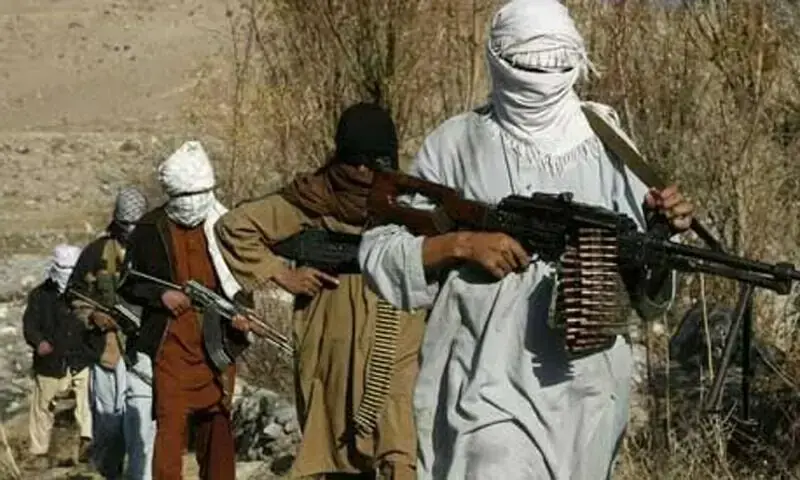
EDITORIAL: Pakistan ranking first out of 163 countries in the Institute for Economics and Peace’s (IEP’s) Global Terrorism Index for the first time ever in 2025, alongside recording the highest number of terror-related deaths since 2013 – 1,139 – marks a sobering inflection point in the country’s security trajectory. This outcome has been years in the making, with the TTP steadily expanding its operational footprint in recent times – initially concentrated in KP, then radiating outwards – culminating in increasingly audacious attacks in the federal capital, from the November bombing outside the District Judicial Complex that killed 12 to last month’s mosque attack that claimed 32 lives, one of the deadliest sectarian incidents in recent years. The TTP, in fact, has emerged as the country’s deadliest terror group, and the third-deadliest globally according to the index, accounting for 67 percent of the 1,045 terror-related incidents that Pakistan witnessed last year. The IEP also notes how Pakistan’s strained ties with its neighbours, particularly Afghanistan, have played a seminal role in bolstering the reach of militant networks, with the TTP repeatedly using Afghan territory as a staging ground for attacks within Pakistan. Trailing the TTP is the BLA, whose growing audacity was demonstrated in the Jaffar Express incident last March, when it hijacked a train, held hundreds of passengers hostage for 30 hours, and caused numerous civilian deaths, underscoring the widening spectrum of threats facing the nation. What one must acknowledge here is the immense burden on Pakistan’s law enforcement and security apparatus, encompassing both civilian police and the military. Over the past year, these forces have borne the brunt of terror-related violence, with statistics showing that the TTP targeted the police most frequently, followed by assaults on military personnel. These attacks have not only tested the resilience of the country’s security institutions but have also exacted a heavy human toll, with countless personnel making the ultimate sacrifice in the line of duty. Their bravery and dedication are central to containing a threat that continues to evolve in scale and sophistication. From frontline counterterrorism operations to rapid response efforts during attacks, their vigilance has repeatedly prevented even greater loss of life. Recognising their sacrifices is crucial as they operate under constant threat, often in conditions that stretch resources and morale to the limit. It is also important to note that the challenge confronting Pakistan is compounded by the differing nature of terrorism across its most affected provinces. In Balochistan, the terror menace is largely rooted in separatist insurgency and long-standing political grievances, while in KP it is driven by religious extremism and cross-border militancy. The situation is further complicated by external factors, including India fomenting trouble by supporting terror elements, and the rise of the Afghan Taliban, which the report notes has “profoundly impacted Pakistan’s security and stability” and “provided the TTP with the means and motivation to significantly expand their geographic reach”. Understanding these distinct strands of militancy is vital, as effective responses require targeted, region-specific strategies rather than a one-size-fits-all approach. The country has truly paid a heavy price in blood and sacrifice, and the moment calls for decisive, comprehensive action. While Pakistan’s efforts to strike terror infrastructure across the border in Afghanistan must be seen in this context, it is equally crucial to confront the homegrown dimensions of the threat. Central to this is an intelligence-driven framework that fosters seamless inter-agency coordination, leverages modern technology and empowers civilian counterterrorism bodies. Beyond military measures, success also demands a broader, holistic strategy that tackles governance gaps to alleviate political and economic marginalisation, and challenges the ideological currents that fuel extremism. Such a multifaceted approach will be critical to breaking the cycle of violence and securing some semblance of stability. Copyright Business Recorder, 2026
Go to News Site