


 RTHK English
One-stop immigration clearance set for Huanggang Port
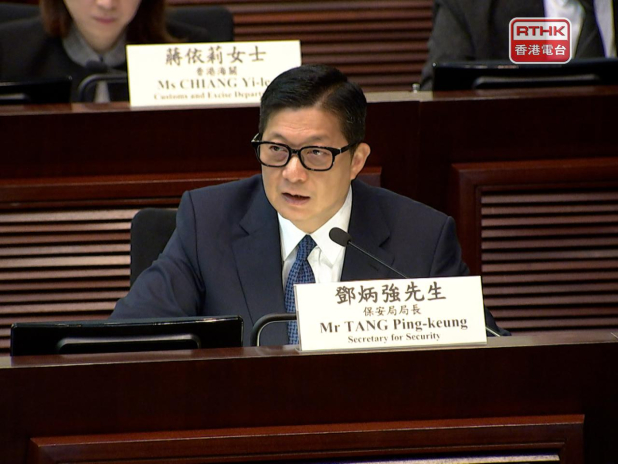
The new Huanggang Port will introduce a "collaborative inspection and joint clearance" model that allows travellers to complete both Hong Kong and mainland immigration procedures in a single stop, Secretary for Security Chris Tang said on Friday. Speaking at a Legislative Council panel meeting, he said the new system was expected to cut the average crossing time from 30 minutes to roughly five. Of the 134 automated e-channels, he said, travellers can choose between document-reading or face-scanning clearance. The document-reading mode will see users – Hong Kong residents aged seven or above, home-return permit holders, mainland travel-permit holders and those registered for the mainland e‑channel – place their travel papers on a reader at the channel entrance, then provide facial and fingerprint verification inside the channel, in which immigration authorities on both sides are then able to verify identities simultaneously. "Residents holding a Hong Kong identity card and a home-return permit will need to present their permit when travelling north to Shenzhen," Tang said. "When travelling back to Hong Kong, they just need to present their Hong Kong identity card. "We will continue to discuss these arrangements with the relevant mainland authorities and explore the possibility of optimising the arrangements." The face-scanning mode, available to Hong Kong residents aged 14 and above after a one-time registration, requires no physical travel document. All travellers need to do, Tang said, is look into a camera at the entrance for information retrieval and then go through a second scan along with fingerprint capture inside the channel. For travellers who prefer assistance with making the crossing, there will be 68 counters along the boundary line. Drivers, Tang said, will follow a different procedure, with vehicles entering a “joint one-stop” lane equipped with an integrated information collection device on the outbound side. Drivers undergo a single, simultaneous collection of body temperature, travel document data, facial image and fingerprints, which is instantly transmitted to both Hong Kong and Shenzhen authorities for concurrent inspection. Passengers in cars and cross-boundary coaches will generally disembark and go to the clearance halls while the driver handles vehicle clearance. Tang said the new port would not have sufficient on-site parking for cars and tourist coaches. "However, we are planning to find a site near by. The location has yet to be confirmed, possibly the existing San Tin Interchange, where we could maybe build a carpark," he said. "People can park, and then take a shuttle bus service that will take a few minutes to reach the new Huanggang Port. From there, they can transfer to transportation facilities on the mainland. "This is part of what we are planning. The details are still being worked out." Tang also said the government will strive to achieve the goal of having the port ready for commissioning within the term of the current administration. The exact commissioning timeline and operational details, he said, remain subject to further discussion between the two governments. Edited by Altis Wong
Go to News Site