


 Wanted in Rome
This week in Italy: A roundup of the main news headlines
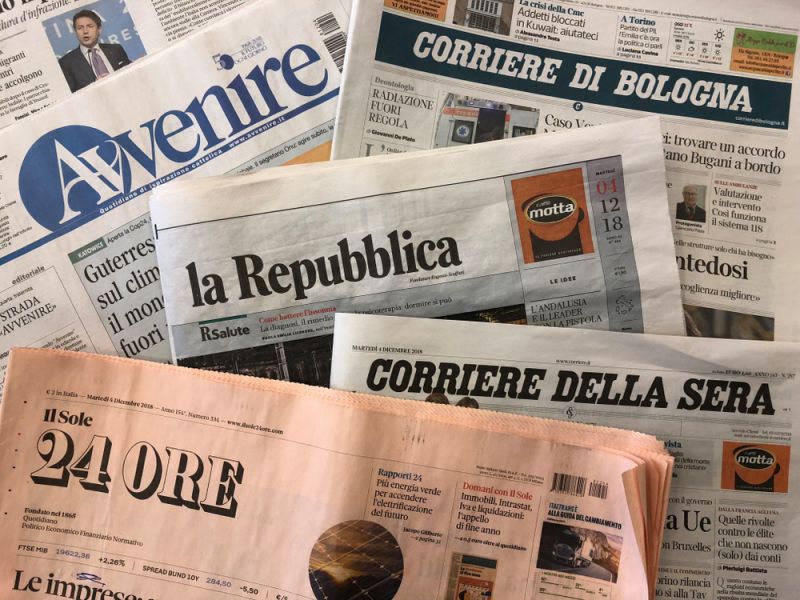
Top news stories from Italy this week. Italy's main news headlines from 20 - 27 March 2026. Forza Italia: Leadership Change and Internal Pressure. Forza Italia is undergoing a leadership transition after the referendum defeat. Maurizio Gasparri has stepped down as Senate group leader and has been replaced by Stefania Craxi, in what party leadership describes as an orderly and long-planned rotation. However, the move comes amid growing internal pressure for renewal, fuelled in part by Pier Silvio Berlusconi’s calls for a stronger liberal identity and greater media visibility. Tensions persist, with increasing demands to also replace Paolo Barelli as group leader in the Chamber, a move backed by Marina Berlusconi but currently blocked by Antonio Tajani, who remains firmly in control of the party. Government Stability After Referendum DefeatPrime Minister Giorgia Meloni has ruled out a cabinet reshuffle following the defeat of the justice reform referendum, choosing instead to maintain tight control over the government and project stability. While she temporarily assumes additional ministerial powers and frames recent resignations as part of a controlled reset, political pressure has intensified. Tourism Minister Daniela Santanchè ultimately resigned after resisting calls to step down, while other figures, including Undersecretary Delmastro and senior officials within the justice ministry, have also left their posts. Despite opposition claims of a government in crisis, Meloni’s allies insist the coalition remains solid, and President Sergio Mattarella has maintained institutional neutrality. Justice Referendum Fallout and Political RepositioningThe rejection of the justice reform, with 53.2% voting No on a high turnout, marks the first major political setback for Meloni’s government. The result has triggered both internal recalibration within the majority and renewed momentum for the opposition. Calls for dialogue have emerged from institutional figures such as Constitutional Court president Giovanni Amoroso, who has urged Parliament to restart reform efforts through ordinary legislation. At the same time, debates on broader constitutional reform and a new electoral law have resurfaced, with both centre-left and centre-right actors acknowledging the need for structural changes. Opposition Divisions and Leadership UncertaintyThe centre-left has postponed any immediate leadership contest, arguing that a common political programme must come first. However, deep divisions are already visible, particularly on foreign policy issues such as military aid to Ukraine. While figures like Elly Schlein and Giuseppe Conte recognise that leadership selection will ultimately require primaries, others warn that such a process could deepen fragmentation. The referendum result has strengthened the opposition politically, but has not resolved its internal contradictions. Board Renewals in State-Owned CompaniesThe government is preparing a major round of appointments across 18 state-owned companies, in a context shaped by the referendum outcome and the need to consolidate political control ahead of the 2027 elections. Key chief executives, including Claudio Descalzi at Eni, Flavio Cattaneo at Enel, Matteo Del Fante at Poste Italiane and Roberto Cingolani at Leonardo, are expected to be reconfirmed. However, several key presidencies remain open, indicating ongoing negotiations within the governing coalition. Internal and Institutional TensionsPolitical tensions have also surfaced around judicial and ethical issues. The Delmastro case has triggered clashes within the Antimafia Commission, with opposition parties demanding greater transparency over alleged undeclared business ties linked to organised crime figures. At the same time, Justice Minister Carlo Nordio briefly considered resignation but ultimately chose to remain in office, avoiding a broader government reshuffle. These developments highlight ongoing friction between politics and the judiciary. Foreign Policy and Energy StrategyOn the international front, Meloni has strengthened Italy’s energy partnership with Algeria, securing commitments to expand gas supplies and cooperation on renewables amid volatility in global energy markets. At the same time, her more cautious positioning towards the Trump-aligned conservative movement contrasts with Matteo Salvini’s more visible engagement, signalling potential shifts in the balance within the centre-right’s international alliances. Political Climate and CommentaryCommentators broadly interpret the referendum as a turning point. Some view it as a sign of renewed democratic engagement and defence of constitutional principles, particularly among younger voters. Others see it as a warning to the government, exposing weaknesses in its political narrative and internal cohesion. While Meloni retains control, the vote has opened a new phase marked by stricter attention to credibility, institutional balance, and political strategy on both sides. Society and Domestic IssuesRecent events have also reignited debates on social issues. A violent incident in a Bergamo school, where a student stabbed a teacher, has raised concerns over youth behaviour and the influence of social media, prompting calls for stricter regulation. Meanwhile, a controversial family custody case and public appearances in the Senate have sparked discussion over institutional intervention and parental rights. Economy, Media and EducationIn the media sector, Exor has sold the Gedi group, including La Repubblica, to Greece’s Antenna Group, ending a long-standing presence of the Agnelli-Elkann family in Italian publishing and raising concerns over editorial independence. In academia, Sapienza University has confirmed its global leadership in Classics and Ancient History for the sixth consecutive year, alongside strong performances from other Italian institutions. Culture and SportItaly’s cultural and sporting landscape has also seen notable developments. Italian music legend Gino Paoli has died, prompting widespread tributes to his artistic legacy. In football, Italy secured a win against Northern Ireland, with second-half goals ensuring progression to the next stage of World Cup qualification. Symbolic and Political MomentsThe funeral of Umberto Bossi became a politically charged event, with secessionist slogans re-emerging and highlighting unresolved tensions within the right, particularly between regionalist and nationalist visions. The moment underscored the enduring symbolic weight of historical political figures in shaping current dynamics. Overall AssessmentItaly enters a phase of political adjustment following the referendum defeat. While the government remains in control and avoids immediate instability, internal pressures, institutional tensions, and strategic recalibrations are evident across both majority and opposition. The next key battleground is likely to be electoral reform, which will test coalition unity and shape the broader political trajectory ahead of future elections. Italy's main news headlines from 27 Feb - 6 March 2026. Italy Navigates the Iran Crisis While Ruling Out Direct War. Italy has found itself drawn into the geopolitical fallout from the escalating conflict involving Iran, the United States and Israel, though Prime Minister Giorgia Meloni has insisted the country “is not at war and will not be.” Rome has confirmed that no requests have been made for the use of Italian bases beyond logistical support, and any broader military involvement would require parliamentary approval. Defence Minister Guido Crosetto acknowledged that Washington’s actions fall outside international law, while warning that the situation signals a wider “crisis of international law.” Despite ruling out direct combat involvement, Italy is preparing a concrete contribution to regional security. A SAMP-T air-defence system may be deployed to the Gulf and Rome is considering providing anti-missile systems and anti-drone jammers to allied countries. Requests for military support have already arrived from several Gulf states including Kuwait, the UAE, Qatar and Bahrain. At the same time, the government is focusing on protecting Italian citizens in the region and preparing for potential economic repercussions, including the risk of disruptions to LNG supplies from Qatar. The political debate in Italy has intensified. Democratic Party leader Elly Schlein has called on the government to refuse any use of American bases and “choose Europe, not Trump,” while former prime minister Matteo Renzi argued that Italy must stand by its allies, stressing that attacks linked to Iran affect European security directly. Justice Reform Referendum Divides the Political Landscape. As Italy approaches a referendum on justice reform, the political climate is becoming increasingly tense. According to the latest Ipsos polling, the “No” camp is ahead if turnout remains low, a scenario that is worrying the centre-right government. The Middle East crisis is expected to further depress voter participation, making turnout the key factor that could determine the outcome. Meloni has personally taken the lead in the final phase of the campaign, urging Italians to vote “Yes” and warning that there may be “no other chance” to reform the judicial system. Opposition leaders, however, argue that the reform risks undermining judicial independence and primarily seeks to reshape the governing bodies of the judiciary. The campaign has also been marked by controversy after accusations that government communication strategies used inappropriate messaging related to gender violence. Spyware Mystery and Security Concerns. A major investigation into the use of Paragon’s Graphite spyware has ruled out direct involvement by Italy’s intelligence services. Magistrates found no evidence linking the attack to the domestic intelligence agency AISI. However, the simultaneous hacking of two activists and a journalist remains unexplained. Investigators believe the three incidents were part of a single coordinated campaign, but the origin of the intrusion remains unknown. Political and Cultural Tensions Across Italy. Elsewhere in Italian politics, cultural and institutional tensions have emerged. A dispute has erupted over Russia’s participation in the Venice Biennale, with Culture Minister Alessandro Giuli publicly opposing the decision while the Biennale Foundation maintains its institutional autonomy. Meanwhile, billionaire investor Peter Thiel is expected to host a series of invitation-only conferences in Rome focusing on themes such as apocalyptic theology and the ideological foundations of the techno-right, highlighting Italy’s growing role as a meeting point for international political networks. Major Events: Paralympics and the Biennale. Italy is also hosting major cultural and sporting events. The Paralympic Games have opened in Verona with a record 612 athletes from 56 countries, though the ceremony has been overshadowed by controversy surrounding the readmission of Russia and Belarus. Several nations staged symbolic protests, while organisers called for the focus to return to sport and inclusion. Preparations are also underway for the next Venice Art Biennale, which will feature 99 national pavilions and participation from several countries for the first time. Curators have emphasised the exhibition’s role as a space for dialogue despite global tensions. Domestic News: Crime, Environment and Local Politics. In domestic developments, notorious Cosa Nostra boss Nitto Santapaola, responsible for the 1992 Capaci bombing, has died in prison after more than three decades under the strict 41-bis regime. Authorities have ordered an autopsy. Environmental justice also made headlines as a Naples court ordered the seizure of €205 million from waste-management entrepreneurs linked to illegal trafficking in the Terra dei Fuochi area, confirming convictions tied to environmental disaster. In local politics, Venice is preparing for a mayoral race between centre-right candidate Simone Venturini and Democratic Party senator Andrea Martella. Meanwhile, in Milan, prosecutors have opened an investigation after a tram derailment killed two people and injured dozens, with authorities examining whether a medical episode involving the driver contributed to the accident. Europe and International Fallout International developments are also reverberating in Italy. In the UK, Labour leader Keir Starmer faces growing political pressure after a humiliating by-election defeat and a spying scandal that forced the resignation of a government minister. The Greens’ unexpected victory in Manchester signals a shift in British politics, with analysts noting growing dissatisfaction among progressive voters. Italy's main news headlines from 16-30 January 2026. Sicily Landslide and Political Clash Over Funds. A massive landslide is threatening the town of Niscemi, in Sicily, where unstable ground has already destroyed roads, damaged buildings and forced more than 1,500 residents from their homes. The landslide now encircles the town for over four kilometres, with experts warning that further movement could make hundreds of homes permanently uninhabitable. Authorities are monitoring the area from the air as emergency measures continue. The disaster has reignited a political clash over funding priorities. Opposition parties, Sicily’s regional assembly and local leaders are calling for money earmarked for the Strait of Messina Bridge, estimated at over €5 billion, to be redirected towards reconstruction and prevention in Niscemi and other areas hit by Cyclone Harry. The government has rejected the proposal, with Matteo Salvini insisting the funds are tied to strategic infrastructure, while promising separate emergency resources. Prime Minister Giorgia Meloni visited Niscemi, announcing an initial €100 million allocation, as prosecutors in Gela investigate possible criminal responsibility linked to the disaster. Milan–Cortina Olympics: Security, Protests and Diplomatic Tensions. Security preparations for the Milan–Cortina 2026 Winter Olympics are intensifying amid protests and political controversy. Demonstrations in Milan are expected to escalate in early February, driven by anarchist, pro-Palestinian, environmentalist and anti-police groups, as well as opposition to the presence of US ICE agents. Italian authorities have tightened security, deploying 6,000 officers, establishing red zones, five no-fly areas, drone surveillance and a dedicated cyber-security control room. The government has stressed that Italy will retain full control over public order, clarifying that ICE agents will provide intelligence support only for US delegations and will not operate independently on Italian streets. Milan mayor Beppe Sala has openly opposed their presence, while opposition parties accuse the government of compromising sovereignty. Olympic organisers insist the Games will be secure and inclusive, with Milano-Cortina executive Diana Bianchedi highlighting strong public enthusiasm, record volunteer numbers and the long-term legacy in infrastructure and sport. Defence and Armed Forces Reform. Defence Minister Guido Crosetto has announced an urgent reform of Italy’s armed forces, with a bill expected before the Cabinet by March. The plan includes creating a 10,000-strong volunteer reserve, increasing military personnel to 160,000 by 2033, and establishing a unified cyber-security command to address hybrid threats and daily foreign cyberattacks. Italy is also pushing for deeper European defence cooperation, including a shared battle tank project and expanded satellite production, while strengthening technology partnerships with the UK and Japan on next-generation fighter jets. Vannacci and the Growing Crisis Inside the Lega. Internal tensions within the Lega have escalated sharply after MEP Roberto Vannacci registered the symbol of his new movement, Futuro Nazionale, effectively launching an ultra-sovereigntist party. Senior figures, particularly northern governors such as Luca Zaia, are pushing for his expulsion, warning that his project threatens the entire Italian right by siphoning voters from both the Lega and Brothers of Italy. Salvini has so far resisted expelling Vannacci, seeking to contain the crisis, even as compromise proposals—such as incorporating Vannacci’s logo into the party symbol—have sparked backlash. Political commentators warn that Vannacci’s move could open space for a radical, anti-EU, pro-Russia flank outside the governing coalition. EU and International Relations. EU Parliament President Roberta Metsola, visiting Rome, praised Giorgia Meloni’s strategy of keeping communication channels open with both EU institutions and US President Donald Trump. Metsola also met Pope Leo XIV to discuss peace through dialogue and addressed Italy’s parliamentary leaders. President Sergio Mattarella, returning from a state visit to the UAE, spoke positively about Emirati openness to Italian business and interfaith dialogue, viewing Italy’s push for structured EU-UAE cooperation as a political success amid rising Middle East tensions. Justice Reform and Referendum Battles. The administrative court has upheld the government’s decision to hold the justice reform referendum on 22–23 March, rejecting an appeal by its promoters. While the governing majority welcomed the ruling, critics continue to warn that separating magistrates’ careers could weaken judicial independence and the fight against organised crime, particularly in public procurement and financial crimes. Tensions have also flared after Justice Minister Carlo Nordio condemned a social media post by a magistrates’ union leader linking a US police killing to Italy’s reform, prompting calls for disciplinary action. Holocaust Remembrance and Antisemitism: On Holocaust Remembrance Day, Giorgia Meloni condemned the Fascist regime’s role in racial persecution and reaffirmed Italy’s rejection of antisemitism. President Mattarella warned that democracy has “no place for the poison of racial hatred” and called for firm European action. Survivors, including Liliana Segre, urged vigilance against the resurgence of hatred while cautioning against instrumentalising current conflicts. Meanwhile, Parliament is debating a new antisemitism law, with divisions over adopting the IHRA definition, introducing criminal sanctions, and the scope of protections. Crime, Security and Social Tensions: Two police shootings in Milan have sparked scrutiny of law-enforcement conduct, including the killing of a 28-year-old man carrying a replica weapon during an anti-drug operation. Prosecutors have opened investigations to fully assess claims of self-defence. Youth violence remains a growing concern, with nearly 24,000 adolescents investigated in 2025 and a sharp rise in weapons-related offences. Experts warn that the government’s focus on repression and detention is undermined by cuts to prevention, education and social programmes. Migration and Humanitarian Crisis. A migrant boat capsizing between Tunisia and Sicily has left around 50 people missing, with only one survivor rescued. Authorities fear a much larger tragedy linked to Cyclone Harry, as hundreds more migrants may have been lost at sea after smugglers launched boats despite severe weather conditions. Politics, Media and Society. The Senate has approved tougher sentences for sexual violence, but the removal of the word “consent” has divided opinion, with critics calling it a step backwards for women’s rights. Mediaset has taken legal action against Fabrizio Corona over alleged defamatory content. Polling shows a society marked by distrust, with seven in ten Italians expressing low trust in others, particularly among younger generations—a trend increasingly exploited by populist movements. Italy's main news headlines from 16-23 January 2026. Security and youth crime. Prime Minister Giorgia Meloni convened a high level security summit to accelerate a new package of measures after a fatal stabbing in La Spezia. The focus is on youth crime and baby gangs. The Lega is pushing for tougher rules on young foreign offenders, including limits on family reunification, welfare cuts and faster repatriations. Education Minister Giuseppe Valditara called for justice and transparency, launching a school inspection while urging targeted, not alarmist, responses. Security decree delayed. The government’s new security decree, containing around 65 provisions on knives, youth violence, theft and parental liability, will not be approved at today’s Cabinet meeting as work continues. Proposals such as metal detectors in schools have been set aside. Further delays followed constitutional concerns raised by the Quirinale, with ministers now working on a revised decree and parallel bill. Political strategy on security. Commentators note that the accelerated security package is also a political move by Meloni and Interior Minister Piantedosi to pre empt Matteo Salvini’s hard line narrative, neutralising the Lega leader’s attempt to regain visibility on law and order. Data protection authority under fire. Italy’s data protection authority rejected calls to resign despite a prosecutors’ investigation and fresh allegations aired on Report. The board denies wrongdoing, insisting the accusations are media driven. Investigators allege lavish spending, including luxury hotels, business class flights and favours to major companies such as Meta. The opposition is pressing for resignations, while Report host Sigfrido Ranucci accuses the authority of incompetence and political bias. Nightclub safety crackdown. After the Crans Montana tragedy, authorities intensified inspections nationwide. In Rome, the historic Piper nightclub was sealed due to overcrowding, unauthorised alterations and evacuation risks. Similar closures followed in Milan, Cremona and Crema, where a ceiling fire was triggered by indoor pyrotechnics. Judicial reform and tensions. CGIL secretary Maurizio Landini attacked Justice Minister Nordio’s reform, accusing it of subordinating magistrates to politics. Nordio strongly denied this, aligning with Sergio Mattarella, who reiterated that judicial independence is inviolable. The clash deepened political polarisation. Mattarella to trainee magistrates. Addressing 354 trainee magistrates at the Quirinale, Mattarella stressed the delicate nature of their role and the centrality of independence guaranteed by the single competitive exam and the self governing CSM. He warned against external pressures, without mentioning the upcoming justice referendum. Justice referendum. The referendum drive has passed 500,000 signatures, opening the way to filing with the Court of Cassation. Internal clashes have emerged over the wording of the question and campaign tactics, while tensions grow between pro Yes and pro No fronts. Forza Italia figures, including Marina Berlusconi, are calibrating their involvement. Antisemitism legislation. The Senate is speeding up work on new measures against antisemitism. Additional bills from the PD and M5S have joined those already filed. The Constitutional Affairs Committee will decide whether to adopt a single base text or set up a drafting committee. Ukraine and coalition rifts. Tensions are growing within the governing coalition over Ukraine. Several Lega MPs voted against or abstained from a resolution supporting Kyiv. Defence Minister Crosetto insisted the government line is unchanged, declaring he would send more weapons if he could. Commentators describe the Lega split as small but unprecedented, exposing pro Russia ambiguities and weakening coalition unity. Foreign policy, Japan. Meloni visited Japan for the third time as prime minister, meeting new premier Sanae Takaichi and signing a broad strategic partnership covering technology, defence, space and high value industries. The pact aims to strengthen supply chain security and reaffirm a shared commitment to a rules based global order. Meloni’s birthday. From Japan, Meloni thanked followers in a video message on her birthday, saying she was travelling from Oman to South Korea and felt their affection. Consob appointment stalled. The appointment of Federico Freni as Consob president has been delayed after objections from Forza Italia. Tajani insists the post must go to an independent technical figure, exposing growing tensions within the centre right as the legislature enters its final phase. Valentino Garavani. Fashion designer Valentino Garavani has died in Rome at 93. Born in Voghera in 1932, trained in Milan and Paris, he founded his atelier in via Condotti and rose to global fame after the 1962 Palazzo Pitti show. President Mattarella praised him as a visionary who shaped global fashion, while Meloni called him a timeless symbol of Italian haute couture. Rome paid tribute as ten thousand people attended the camera ardente ahead of the funeral. Social and economic concerns. Speaking in Turin, Mattarella urged institutions to confront new forms of poverty affecting young people and migrants, from job insecurity to housing shortages. Separately, Bank of Italy governor Fabio Panetta warned that Italy risks long term stagnation without serious investment in education and productivity, a call largely ignored by politics. Crime and legislation debates. A new rape bill has sparked controversy by replacing the concept of consent with dissenso and lowering basic penalties, prompting accusations that the government is undermining the “only yes is yes” principle. Other news. A 3.6 magnitude earthquake struck near Militello Rosmarino in Sicily, part of an ongoing seismic swarm. Severe weather battered the South, with cyclone Harry causing hundreds of millions of euros in damage. In Bologna, the regional court annulled the city wide 30 km per hour limit, prompting political reactions but not a policy reversal by the mayor. A feminicide case shocked the country as Federica Torzullo was killed by her husband, now charged accordingly. Italy's main news headlines from 12-19 December 2025. Salvini acquitted in Open Arms case. Italy’s supreme court has acquitted deputy premier Matteo Salvini over the Open Arms case, ruling that the alleged offences did not exist. Prime minister Giorgia Meloni described the verdict as a vindication of border defence, while critics denounced it as politically motivated. The case related to Salvini’s 2019 decision, as interior minister, to block the disembarkation of 147 migrants in Lampedusa. Justice reform referendum timing dispute. The government is considering holding the constitutional referendum on justice reform on 1 March, despite legal experts warning that procedural rules would push the vote to late March or April at the earliest. Opposition leaders accuse the government of accelerating the timetable to offset falling poll numbers and to exploit recent judicial scandals. Turin Imam: Release, appeals and political clash. Imam Mohamed Shahin has been released after 21 days in a detention centre, with judges ruling that new evidence shows he poses no current danger. In a separate ruling, the Turin court of appeal halted his expulsion and suspended the rejection of his asylum claim, citing insufficient proof of radicalisation and his level of integration. Interior minister Matteo Piantedosi defended police actions and warned against what he called “ideological conditioning” in court decisions, while Giorgia Meloni and government allies criticised the judiciary. The interior ministry will appeal to the supreme court. Atreju festival: Meloni in campaign mode. Giorgia Meloni closed Fratelli d’Italia’s Atreju festival with a combative speech attacking the left and accusing Elly Schlein of avoiding debate. She praised coalition unity, reaffirmed plans for institutional and judicial reforms, and projected confidence ahead of the 2027 elections, signalling a permanent campaign atmosphere. Fratelli d’Italia: Arianna Meloni interview. In an interview, Arianna Meloni said the right-wing Fratelli d’Italia party led by her sister premier Giorgia Meloni “is the party of the nation” and could grow beyond 30 per cent. She reaffirmed support for premiership reform and described FdI as a guarantor of stability. She criticised centre-left opposition Partito Democratico (PD) leader Elly Schlein for skipping Atreju and dismissed accusations of post-fascism as detached from reality. Forza Italia signals leadership shift. Foreign minister and deputy premier Antonio Tajani announced that Forza Italia will hold a national congress in January 2027, opening the door to competitive leadership bids and marking a break from the party’s traditional structure. Calabria governor Roberto Occhiuto has emerged as a leading figure, backed by members of the Berlusconi family and online grassroots campaigns. Centre-left strategy and leadership. Former culture minister Dario Franceschini said the country is “at a standstill” and confirmed that the PD alliance with the Movimento 5 Stelle is effectively secured. He credited Elly Schlein with consolidating unity and confirmed she will be the centre-left’s candidate for prime minister, describing 2026 as the year to prepare a clear alternative to the right. PD national assembly: Unity with frictions. At the PD national assembly, Elly Schlein attacked Giorgia Meloni over rising living costs, the economy and defence spending, accusing the government of lacking a growth strategy. While a broad majority backed Schlein’s leadership, high abstention rates and internal tensions highlighted ongoing difficulties in consolidating the party’s base. Family living in the woods: court decision pending. Social services reported poor hygiene and social isolation among children living with their parents in a forest home in Palmoli. A court in L’Aquila will soon decide whether the children can return home for Christmas after parents agreed to homeschooling, tutoring and temporary housing improvements. Political figures, including senate speaker Ignazio La Russa, urged a swift decision. Immigration and public debate. Research by LaPolis–University of Urbino, Demos and Carta di Roma shows immigration accounts for nearly 10 per cent of Italy’s population and is crucial to the economy. The study finds that political and media attention on immigration peaks during election periods, often amplifying fears, though concern has eased recently as other crises have dominated public anxiety. Ipsos–Ispi survey on global threats. An Ipsos–Ispi survey shows declining trust in the United States among Italians. Russia remains the main perceived global threat at 31 per cent, followed by the US and Israel at 12 per cent each. Economic recession in Europe is the top concern for 2026, while peace in Ukraine is the most hoped-for outcome, with significant support for territorial concessions. Mattarella warns on Europe and global order. President Sergio Mattarella, speaking at the Conference of Italian ambassadors, urged Europe to remain united in defending democracy and human rights against Russia’s attempt to redraw borders by force. He condemned Moscow’s aggression, criticised threats to international courts, and warned that US tariffs and isolationist policies could destabilise the EU. Russian embassy intervenes on Gedi newspaper sale. The Russian embassy in Italy commented on the planned sale of newspapers La Repubblica and La Stampa, accusing them of acting as “megaphones of anti-Russian propaganda” and expressing hope that new owners would restore professional journalism. The statement triggered strong bipartisan condemnation in Italy. Terrorism alert and security measures. Italy has increased security around Jewish sites and public events following the Sydney attack, while avoiding alarmism. A meeting at the interior ministry will review surveillance for Christmas and New Year events, focusing on lone-wolf threats and extremist networks amid warnings of rising anti-semitic propaganda. For daily News from Italy in English see the News section of our website. Italy's main news headlines from 6-12 December 2025. Italian cuisine recognised by UNESCO. Italian cuisine has been officially recognised by UNESCO as intangible cultural heritage, the first time an entire national culinary tradition has received this status. The decision highlights Italy’s sustainable food practices, biodiversity and the transmission of culinary knowledge across generations. The recognition was celebrated nationwide, with prime minister Giorgia Meloni calling it a historic achievement for “Made in Italy”. The goal is also to protect authentic traditions from global imitation and reinforce Italy’s cultural identity. Ukraine aid and coalition tensions. Divisions have emerged within the governing coalition over military aid to Ukraine. Meloni's Fratelli d’Italia party is calling for unity and responsibility, while the Lega is pushing to delay the new arms decree. Lega leader Matteo Salvini argues that the war cannot be won and that resources should instead be redirected towards domestic priorities such as healthcare. Prison conditions under fire. President Sergio Mattarella has strongly criticised the state of Italian prisons, describing conditions as “totally unacceptable” during a visit to Rome's Rebibbia jail on Human Rights Day. Pointing to overcrowding and a rise in suicides, he called for urgent reforms to safeguard human dignity and restore the constitutional, re-educational purpose of prison sentences. Atreju and the politics of entertainment. Atreju, Fratelli d’Italia’s annual festival, featured prominent TV figures such as Mara Venier and Carlo Conti, warmly received by party leaders. The presence of mainstream media personalities reflects FdI’s strategy to appear inclusive and popular, blending entertainment with politics ahead of Meloni’s closing speech.
Go to News Site