


 Axios
Axios
Fiery Ethics Committee hearing ends in guilty ruling for Rep. Sheila Cherfilus-McCormick
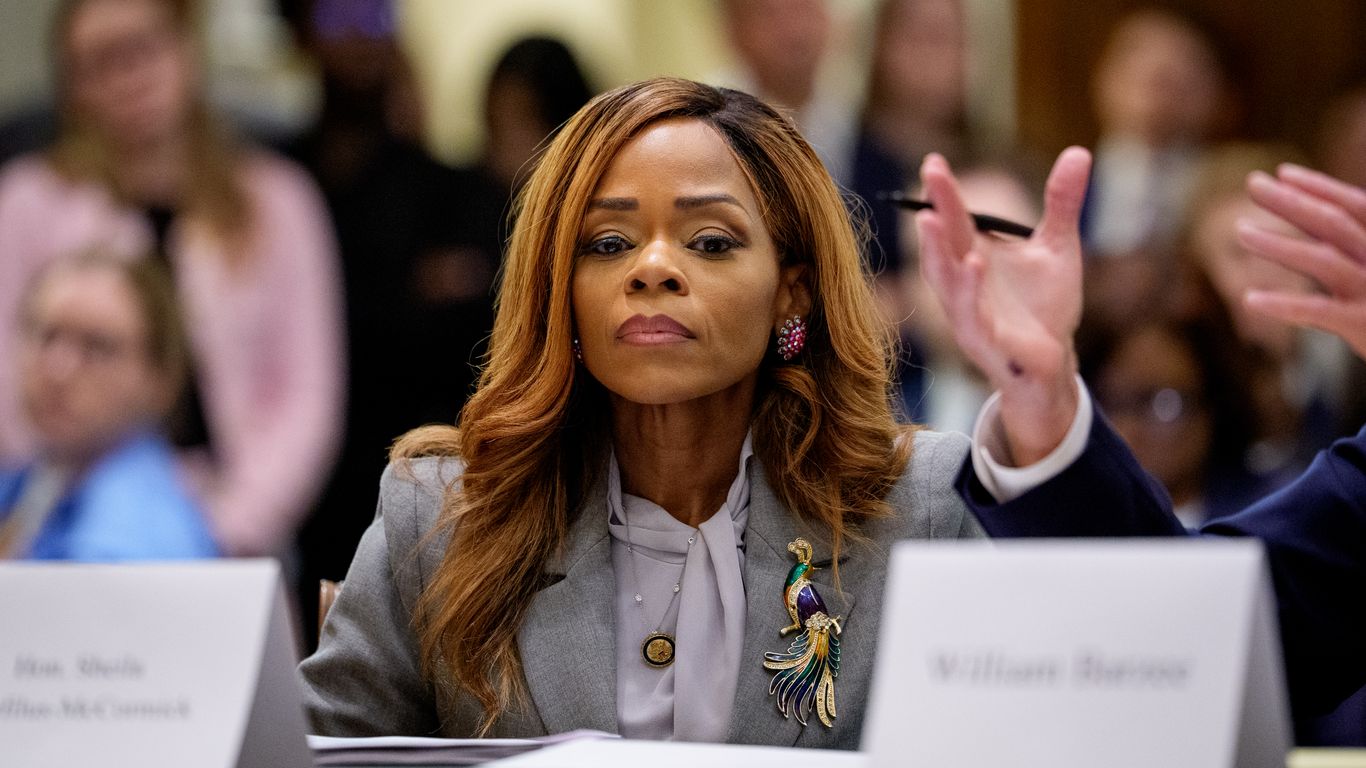
A bipartisan panel of House Ethics Committee members found Rep. Sheila Cherfilus-McCormick (D-Fla.) guilty of financial misconduct and other charges on summary judgment following a testy, hours-long hearing. Why it matters: The Ethics Committee will meet in mid-April to decide on appropriate punitive action, which could include fines, censure or even expulsion. Rep. Greg Steube (R-Fla.) has said he plans to force a vote on expelling Cherfilus-McCormick as soon as the Ethics Committee process wraps up. House Democratic leadership has argued such a step should not be taken until Cherfilus-McCormick's criminal trial is resolved — though their members are growing increasingly uncomfortable with the situation. Cherfilus-McCormick, for her part, has maintained her innocence and pleaded not guilty to the charges against her in her criminal campaign finance case. What happened: The committee said in a statement Friday that 25 of the 27 counts Cherfilus-McCormick was accused of were "proven by clear and convincing evidence." The allegations include 18 counts of campaign finance violations, five counts of false financial disclosures, three counts of misusing official funds and one count of "lack of candor" with the Ethics Committee. The charges center on a $5 million government overpayment to Cherfilus-McCormick's family health care company, which was allegedly funneled through conduits and family members to her 2022 House campaign. The summary judgment comes after a two-year investigation into Cherfilus-McCormick that has dogged her for much of her congressional tenure. Between the lines: The hearing got testy at times, with committee members venting that Cherfilus-McCormick spent years dodging their requests for testimony and evidence and repeatedly switching up her legal team. William Barzee, Cherfilus-McCormick's attorney hired weeks ago after her previous lawyer withdrew from the case , argued he was given insufficient time to adequately represent the Florida congresswoman. He made the case that she could not be properly defended while her criminal trial was ongoing, saying it precluded her from testifying and potentially tainted a future jury. The committee rejected a motion for a delay, however, with Ethics Committee Chair Michael Guest (R-Miss.) telling Barzee: "For you to sit here and make the claim that we, the committee is trying to trample upon the rights of your client, I take offense to that." What happened: Barzee argued that Cherfilus-McCormick wasn't personally responsible for her campaign's finances, citing an affidavit from a staffer who testified she "did not participate in administrative or financial tasks." He said Cherfilus-McCormick was legitimately paid by her family's company, Trinity Health Care Services, for her work to increase vaccine rates among minority communities. "Trinity did what businesses do when they get a large influx of money ... they often pay it out in profit to their owners," Barzee said, arguing the company, not the congresswoman, was responsible for misallocating taxpayer funds. As for the lack of material evidence from Cherfilus-McCormick, Barzee argued Trinity is a family business and that "in the Haitian American community, it is not unusual for these types of agreements to be made orally, to be made with a handshake." The intrigue: Cherfilus-McCormick "previously earned $86,000 a year," Ethics Committee director of investigations Brittney Pescatore told the panel. "Suddenly there is an overflow of money and it all goes to her for reasons that are not dictated," she added. Rep. Mark DeSaulnier (D-Calif.), the panel's ranking member, said Barzee's arguments about the lack of a paper trail "strained credibility." Rep. Nathaniel Moran (R-Texas) called the scant evidence Barzee did present to the committee "frankly offensive."
Go to News Site