


 Axios
Axios
What to know about Iran's military as the U.S. weighs ground operations
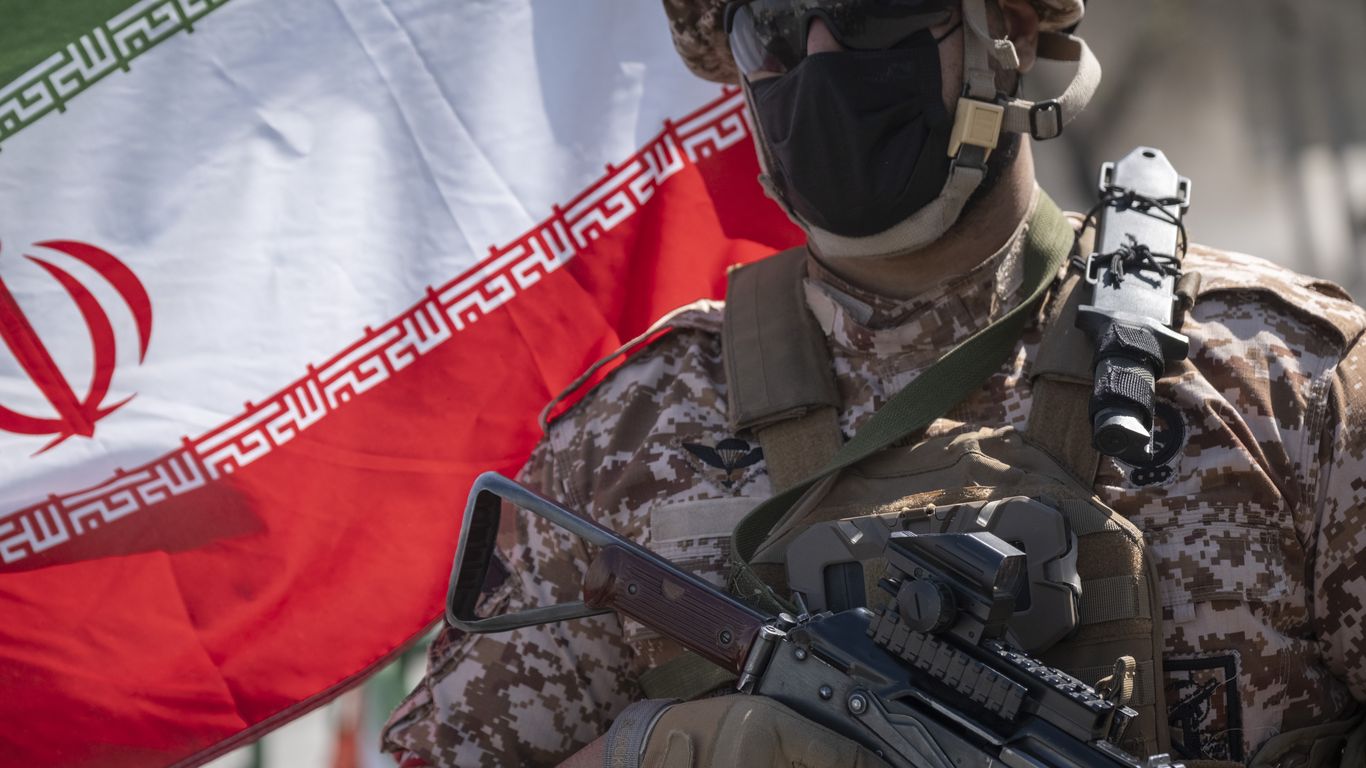
Iran's military has taken a significant beating in the opening weeks of the U.S.-Israeli offensive — but Tehran continues to demonstrate a defiant disruptiveness. The big picture: The U.S. is developing military operations for a "final blow," Axios' Barak Ravid reported, but some hypothetical next steps, like the use of ground forces, could risk intensifying the fight. Context: Trump has repeatedly claimed that the war is essentially over, but Iran continues to launch strikes against Israel and other Gulf countries. The nation is also maintaining the closure of the Strait of Hormuz, impacting oil and gas prices worldwide. The White House and the Pentagon are considering sending at least 10,000 additional combat troops to the Middle East in the coming days, a senior U.S. defense official told Axios. The Islamic Revolutionary Guard Corps (IRGC) ground forces number more than 150,000 troops, per the Council on Foreign Relations, on top of the Basij paramilitary force and Iran's larger conventional Army. Read on for more on what's known about the state of Iran's military: Leadership Israel said its opening strikes took out seven senior defense and intelligence officials and targeted 30 top military and civilian leaders, including Islamic Revolutionary Guard Corps (IRGC) Cmdr. Mohammad Pakpour . Several IRGC leaders have since been killed , and on Thursday, Israel said it had killed Iranian Navy Cmdr. Alireza Tangsiri. It's left behind what Behnam Ben Taleblu, Foundation for Defense of Democracies' Iran Program senior director, described as a "zombie regime." Missiles and drones U.S. officials have repeatedly touted Iran's plummeting missile and drone attack volume and the number of strikes on military targets, which have hit 10,000. But Kelly Grieco, a senior fellow at the Stimson Center, says those two metrics are "problematic," emphasizing that launch rates are a hazy metric to demonstrate diminished capability. The fall could signal that the U.S. and Israel have successfully constrained Iran's ability to hit back, but "the problem is, it's not the only hypothesis," she says. "If it's not that we've destroyed capability, capacity ... it means that they have more in reserve, which means that at some point they could decide to use that," she said. Israel says it has destroyed or disabled 330 of Iran's estimated 470 ballistic missile launchers. But Iranian responses have persisted. A recent report from the Jewish Institute for National Security of America found that while U.S., Israeli and Arab air defenses have intercepted over 90% of Iranian missiles and drones, Iranian strikes on radar systems have eroded the detection network. Threat level: Iran's Shahed drones are cheap and easy to produce, as well as harder to "detect and defeat than its missiles, and produced more than double the hits," per JINSA. Open-source estimates on Iran's capacity of those drones vary widely, Grieco says, adding "it's really hard to be able to track" the amount they've built as production can be decentralized. Air and ground forces U.S. intelligence assessed last year that Iran's ground and air forces were among the largest in the region but had limited training and outdated equipment. Notably, the war could signal Iranian F-14s' final days, per NPR . The U.S. sold the crafts to the Iranians in the 1970s before the Islamic Revolution. As the Trump administration weighs a potential ground attack on Kharg Island, CNN reports from sources familiar that the Iranians are moving additional military personnel and air defenses to the island. U.S. forces could be vulnerable to a range of missile and drone threats if a ground escalation ensued, given the island's proximity to the mainland. Iran's Navy Defense Secretary Pete Hegseth says that more than 150 Iranian Navy vessels have been sunk since military strikes began in late February. U.S. forces have targeted Iranian minelaying vessels, with CENTCOM saying 16 were taken out near the Strait of Hormuz on March 10. Reality check: While the U.S. and Israel have pummeled Iranian naval vessels and known ballistic missile sites, it would be impossible to fully wipe out Iran's military capacity from the sky. Iran uses hundreds of smaller speed boats to harass larger ships in the Gulf, and has networks of underground bunkers on land that have likely survived the bombing campaign. A 2017 U.S. report described naval mines as a " critical component" of Iran's Strait of Hormuz strategy. Marie-Louise Westermann, a research associate at the Stimson Center, writes that Tehran's mine-laying reflects its "willingness to escalate" by deploying difficult-to-remove weapons capable of sustaining disruption. Go deeper: Pentagon weighs sending 10,000 more combat troops to the Middle East
Go to News Site