Get one month of the Disney+ and Hulu bundle for only $10

Get one month of the Disney+ and Hulu bundle for only $10

The peak time for deals on streaming services — the holiday shopping season — has come and gone, but Disney is back with a fresh offer for the new year. New and eligible returning subscribers can get one month of the ad-supported Disney+ Hulu bundle for just $10. That's $3 off the usual monthly rate for the bundle, and more than 58 percent off if you consider the prices for each service individually (Disney+ at $12 per month and, separately, Hulu also at $12 per month). We'd be remiss if we didn't mention that this isn't quite as good as the Black Friday deal we saw last year, which offered the same bundle for $5 per month for one year. However, if you missed that offer or just want to try out Disney+ and Hulu for a brief period of time, this is a good way to do so. Disney+ and Hulu make one of the most balanced streaming pairs available, blending family-friendly favorites with acclaimed originals and network TV staples. Disney+ brings a vast library of animated classics, blockbuster franchises and exclusive content from Marvel, Pixar, Star Wars and National Geographic. It’s the place to stream nearly every Star Wars film and series, plus the full Marvel Cinematic Universe lineup and Disney’s most recent theatrical releases. Hulu balances things out with a more adult-oriented lineup of current TV shows, next-day network episodes and a growing roster of award-winning originals. The platform hosts series like The Bear, The Handmaid’s Tale and Only Murders in the Building , alongside comedies, thrillers and documentaries that regularly feature in awards conversations. It’s also the home for next-day streaming of ABC and FX shows, making it especially useful if you’ve already cut the cable cord but still want to keep up with primetime TV. The Duo Basic bundle ties these two services together under a single subscription, offering a simple way to expand your library without juggling multiple accounts. This tier includes ads on both platforms, but the trade-off is significant savings compared with paying for each service separately. For many households, that’s an acceptable compromise when it means access to such a wide range of content. Follow @EngadgetDeals on X for the latest tech deals and buying advice . This article originally appeared on Engadget at https://www.engadget.com/deals/get-one-month-of-the-disney-and-hulu-bundle-for-only-10-192814218.html?src=rss

AI agents can talk — orchestration is what makes them work together

AI agents can talk — orchestration is what makes them work together

Rather than asking how AI agents can work for them, a key question in enterprise is now: Are agents playing well together? This makes orchestration across multi-agent systems and platforms a critical concern — and a key differentiator. “Agent-to-agent communications is emerging as a really big deal,” G2’s chief innovation officer Tim Sanders told VentureBeat. “Because if you don't orchestrate it, you get misunderstandings, like people speaking foreign languages to each other. Those misunderstandings reduce the quality of actions and raise the specter of hallucinations, which could be security incidents or data leakage.” Allowing agents to talk and coordinate Orchestration to this point has largely been around data, but that’s quickly turning to action. “Conductor-like solutions” are increasingly bringing together agents, robotic process automation (RPA), and data repositories. Sanders likened the progression to that of answer engine optimization, which initially began with monitoring and now creates bespoke content and code. “Orchestration platforms coordinate a variety of different agentic solutions to increase the consistency of outcomes,” he said. Early providers include Salesforce MuleSoft, UiPath Maestro, and IBM Watsonx Orchestrate. These “phase one” software-based observability dashboards help IT leaders see all agentic actions across an enterprise. The critical element of risk management But coordination can only add so much value; these platforms will morph into technical risk management tools that provide greater quality control. This could include, for instance, agent assessments, policy recommendation and proactive scoring (such as, how reliable agents are when they call on enterprise tools, or how often they hallucinate and when). Enterprise leaders have become wary of relying on vendors to minimize risks and errors; many IT decision-makers, in fact, do not trust a vendor's statements about the reliability of their agents, he said. Third-party tools are beginning to bridge the gap and automate tedious guardrail processes and escalation tickets. Teams are already experiencing “ticket exhaustion” in semi-automated systems, where agents hit guardrails and require human permission to proceed. As an example: The loan process at a bank requires 17 steps for approval, and an agent keeps interrupting human workflows with approval requests when it runs into established guardrails. Third-party orchestration platforms can manage these tickets and nay, yay, or even challenge the need for approval altogether. They can eventually eliminate the need for persistent human-in-the-loop oversight so organizations can experience “true velocity gains” measured not in percentages but in multiples (that is, 3X versus 30%). “Where it goes from there is remote management of the entire agentic process for organizations,” Sanders said. ‘Human-on-the-loop’ versus ‘human-in-the-loop’ In another critical evolution in the agentic era, human evaluators will become designers, moving from human-in-the-loop to human-on-the-loop, according to Sanders. That is: They will begin designing agents to automate workflows. Agent builder platforms continue to innovate their no-code solutions, Sanders said, meaning nearly anyone can now stand up an agent using natural language. “This will democratize agentic AI, and the super skill will be the ability to express a goal, provide context and envision pitfalls, very similar to a good people manager today.” What enterprise leaders should be doing now Agent-first automation stacks “dramatically outperform” hybrid automation stacks in almost every attribute, he noted: satisfaction, quality of actions, security, cost savings. Organizations should begin “expeditious programs” to infuse agents across workflows, especially with highly repetitive work that poses bottlenecks. Likely at first, there will be a strong human-in-the-loop element to ensure quality and promote change management. “Serving as an evaluator will strengthen the understanding of how these systems work,” Sanders said, “and eventually enable all of us to operate upstream in agentic workflows instead of downstream.” IT leaders should take inventory today of all the different elements of their automation stack. Whether these elements are rules-based automation, RPA, or agentic automation, they must learn everything going on in the organization to optimally use emerging orchestration platforms. “If they don't, there could actually be dis-synergies across organizations where old school technology and cutting edge technology clash at the point of delivery, oftentimes customer-facing,” Sanders said. “You can't orchestrate what you can't see clearly.”

Polymarket is hosting a growing number of contracts related to military conflicts, including China invading Taiwan; possible US strikes in Iran has $18M+ volume (Denitsa Tsekova/Bloomberg)

Polymarket is hosting a growing number of contracts related to military conflicts, including China invading Taiwan; possible US strikes in Iran has $18M+ volume (Denitsa Tsekova/Bloomberg)

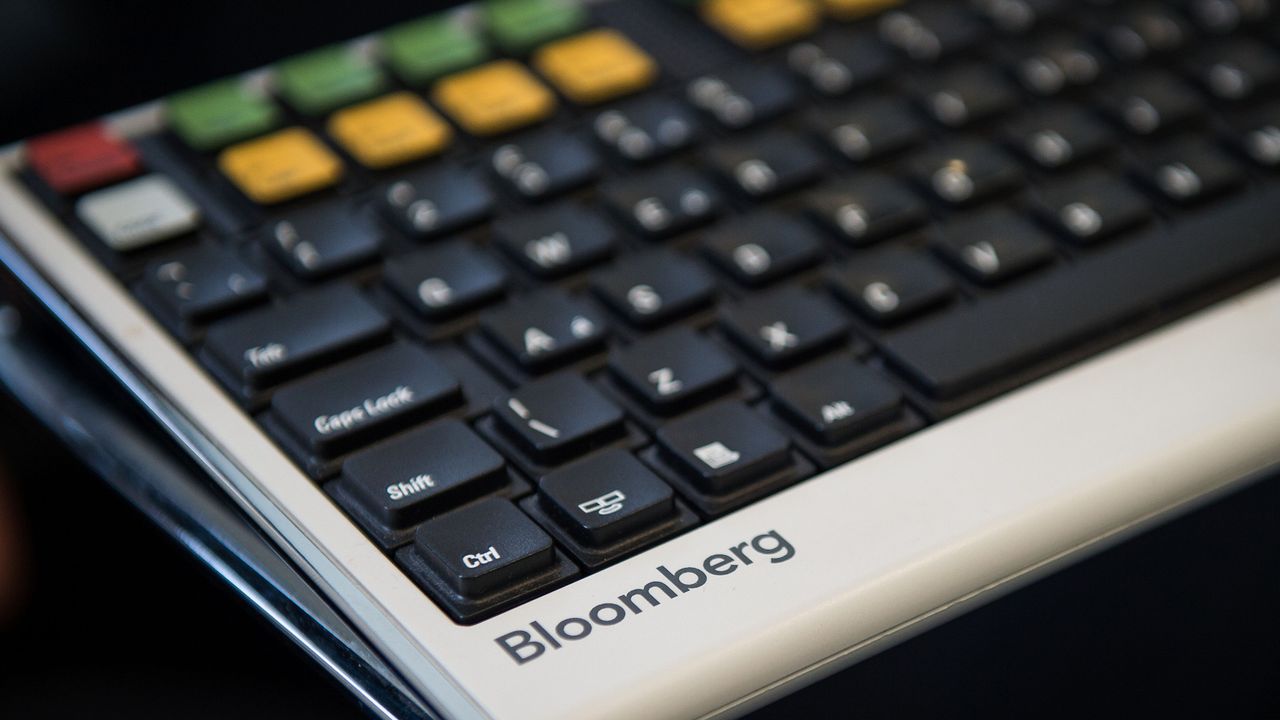
Denitsa Tsekova / Bloomberg : Polymarket is hosting a growing number of contracts related to military conflicts, including China invading Taiwan; possible US strikes in Iran has $18M+ volume —  Even as prediction-market platforms have tested legal and regulatory norms like never before, most have drawn a line at one category: direct wagers on war.

How to change your Windows PIN for better security

How to change your Windows PIN for better security

Windows PINs are a secure and convenient way to log into your device. They are particularly useful for Microsoft accounts, as they are tied to the account and provide a quick and easy way to access your device. If you’re worried that your Windows PIN has been compromised, it’s best to change it for security reasons. You can change your PIN with a few simple steps in Windows. Here’s what to do: Right click the Windows icon and select Settings . Now on the left panel click Accounts then click Sign in options and click on PIN . If you forgot your PIN, select I forgot my PIN and click continue. Now follow the prompts. But if you just want to change your PIN select Change PIN . First it will ask you to enter your old PIN. Next enter your desired new PIN. Then reenter your new PIN to confirm it. Now click Ok . Dominic Bayley / Foundry Note: You can also include letters and symbols in your new PIN, just select the box include letters and symbols beneath where you confirmed your new PIN. That’s all we have for this Try This. For more PC tricks and tips, be sure to subscribe to our PCWorld Try This newsletter.

Matthew McConaughey fights unauthorized AI likenesses by trademarking himself

Matthew McConaughey fights unauthorized AI likenesses by trademarking himself

Matthew McConaughey filed trademark applications to prevent his likeness from being used by AI companies without permission, and the US Patent and Trademark Office has approved eight so far. According to the Wall Street Journal , the trademarks were for video and audio clips featuring the actor staring, smiling and talking. One was for a video of him standing on a porch, while another was for an audio recording of him saying “alright, alright, alright,” his signature catchphrase from the movie Dazed and Confused . Under the law, it’s already prohibited for companies to steal someone’s likeness to sell products. However, McConaughey is taking a proactive approach due to the nebulous rules around the use of someone’s likeness for artificial intelligence and what’s considered commercial use involving the technology. His lawyer, Kevin Yorn, admits that they don’t know how the court would decide if an offender challenges the trademarks. But they’re hoping that the threat of a lawsuit would deter companies from using McConaughey’s likeness for AI in the first place. Actors have been trying to protect themselves from AI since the technology blew up, and it was one of the sticking points in the negotiations between SAG-AFTRA and Hollywood studios when the labor union went on a strike in 2023. McConaughey isn’t anti-AI by any means: He is an investor in ElevenLabs and has partnered with the AI startup to create a Spanish version of his newsletter. He said in a statement sent to The Journal that he just wants to make sure that if his voice or likeness is ever used, it’s because he approved and signed off on it. “We want to create a clear perimeter around ownership with consent and attribution the norm in an AI world,” he added. This article originally appeared on Engadget at https://www.engadget.com/ai/matthew-mcconaughey-fights-unauthorized-ai-likenesses-by-trademarking-himself-130000567.html?src=rss

JP Morgan took a profit hit to set aside money to run Apple Card

JP Morgan took a profit hit to set aside money to run Apple Card

JP Morgan Chase's Q4 profits dropped 7%, chiefly because of it starting the funding process to take over running Apple Card . Apple Card is moving to JP Morgan Chase After years of Goldman Sachs losing money on the Apple Card, JP Morgan Chase has taken over the deal, and consequently taken a hit to its profits. According to the Wall Street Journal , JP Morgan Chase's profits fell 7% to $13 billion, for the fourth quarter of 2025. There were reasons including an unexpected fall in investment banking fees, but the single largest issue was Apple Card. Continue Reading on AppleInsider | Discuss on our Forums