Sources: TSMC urges clients to apply for N2 production allocation as far out as Q2 2027, with large capacity allotments nearly sold out for the next two years (Tim Culpan/Culpium)

Sources: TSMC urges clients to apply for N2 production allocation as far out as Q2 2027, with large capacity allotments nearly sold out for the next two years (Tim Culpan/Culpium)

Tim Culpan / Culpium : Sources: TSMC urges clients to apply for N2 production allocation as far out as Q2 2027, with large capacity allotments nearly sold out for the next two years —  [Exclusive] Clients are being asked to finalize their requirements into mid 2027, with larger customers already booking capacity over the next two to three years.

Anthropic vs. The Pentagon: what enterprises should do

Anthropic vs. The Pentagon: what enterprises should do

The relationship between one of Silicon Valley's most lucrative and powerful AI model makers, Anthropic, and the U.S. government reached a breaking point on Friday, February 27, 2026. President Donald J. Trump and the White House posted on social media ordering all federal agencies to immediately cease using technology from Anthropic, the maker of the powerful Claude family of AI models, after reportedly months of renegotiating a less than two-year-old contract. Following the President’s lead, Secretary of War Pete Hegseth said he was directing the Department of War to designate Anthropic a "Supply-Chain Risk to National Security," a blacklisting traditionally reserved for foreign adversaries like Huawei or Kaspersky Lab. The move effectively terminates Anthropic's $200 million military contract and sets a hard six-month deadline for the Department of War to scrub Claude from its systems. But Anthropic's business has been booming lately, with its Claude Code service alone taking off into a $2.5+ billion ARR division less than a year after launch, and it just announced a $30 billion Series G at $380 billion valuation earlier this month and has, more or less singlehandedly spurred massive stock dives in the SaaS sector by releasing plugins and skills for specific enterprise and verticalized industry functions including HR, design, engineering, operations, financial analysis, investment banking, equity research, private equity, and wealth management. Ironically, SaaS companies across industries and sectors such as Salesforce, Spotify, Novo Nordisk, Thompson Reuters and more are reporting some of the biggest benefits in productivity and performance thanks to Anthropic's top benchmark-scoring, highly capable and effective Claude AI models. It's not a stretch to say Anthropic is among the most successful AI labs in the U.S. and globally. So why is it now being considered a "Supply-Chain Risk to National Security?" Why is the Pentagon designating Anthropic a 'Supply-Chain Risk to National Security' and why now? The rupture stems from a fundamental dispute over "all lawful use." The Pentagon demanded unrestricted access to Claude for any mission deemed legal, while Anthropic CEO Dario Amodei refused to budge on two specific "red lines": the use of its models for mass surveillance of American citizens and fully autonomous lethal weaponry. Hegseth characterized the refusal as "arrogance and betrayal," while Amodei maintained that such guardrails are essential to prevent "unintended escalation or mission failure." The fallout is immediate; the Department of War has ordered all contractors and partners to stop conducting commercial activity with Anthropic effectively at once, though the Pentagon itself has a 180-day window to transition to "more patriotic" providers. The vacuum left by Anthropic is already being filled by its primary rivals. OpenAI CEO Sam Altman just announced a deal with the Pentagon that includes two similar sounding "safety principles," though whether they are the same type of contractual language is still not clear. Earlier in the day, OpenAI announced a staggering $110 billion investment round led by Amazon, Nvidia, and SoftBank. Elon Musk’s xAI has also reportedly signed a deal to allow its Grok model to be used in highly classified systems, having agreed to the "all lawful use" standard that Anthropic rejected, but is said to rate poorly among government and military workers already using it. Meanwhile, Anthropic has stated its intention to fight the designation in court and has encouraged its commercial customers to continue usage of its products and services with the exception of military work. What it means for enterprises: the interoperability imperative For enterprise technical decision-makers, the "Anthropic Ban" is a clarion call that transcends the specific politics of the Trump administration. Regardless of whether you agree with Anthropic’s ethical stance (as I do) or the Pentagon's position, the core takeaway is the same: model interoperability is more important than ever. If your entire agentic workflow or customer-facing stack is hard-coded to a single provider's API, you aren't going to be nimble or flexible enough to meet the demands of a marketplace where some potential customers, such as the U.S. military or government, want you to use or avoid specific models as conditions of your contracts with them. The most prudent move right now isn't necessarily to hit the "delete" button on Claude—which remains a best-in-class model for coding and nuanced reasoning—but to ensure you have a "warm standby." This means utilizing orchestration layers and standardized prompting formats that allow you to toggle between Claude, GPT-4o, and Gemini 1.5 Pro without massive performance degradation. If you can’t switch providers in a 24-hour sprint, your supply chain is brittle. Diversify your AI supply While the U.S. giants scramble for the Pentagon's favor, the market is fragmenting in ways that offer surprising hedges. Google Gemini saw its stock spike following the news, and OpenAI's massive new cash infusion from Amazon (formerly a staunch Anthropic ally) signals a consolidation of power. However, don't overlook the "open" and international alternatives. U.S. firms like Airbnb have already made waves by pivoting to lower cost, Chinese open-source models like Alibaba’s Qwen for certain customer service functions, citing cost and flexibility. While Chinese models carry their own set of arguably greater geopolitical risks, for some enterprises, they serve as a viable hedge against the current volatility of the U.S. domestic market. More realistically for most, the move toward in-house hosting via domestic brews like OpenAI's GPT-OSS series, IBM's Granite, Meta’s Llama, Arcee's Trinity models, AI2's Olmo, Liquid AI's smaller LFM2 models, or other high-performing open-source weights is the ultimate insurance policy. Third-party benchmarking tools like Artificial Analysis and Pinchbench can help enterprises decide which models meet their cost and performance criteria in the tasks and workloads they are being deployed. By running models locally or in a private cloud and fine-tuning them on your proprietary data, you insulate your business from the "Terms of Service" wars and federal blacklists. Even if a secondary model is slightly inferior in benchmark performance, having it ready to scale up prevents a total blackout if your primary provider is suddenly "besieged" by government reprisal. It’s just good business: you need to diversify your supply. The new due diligence As an enterprise leader, your due diligence checklist has just expanded thanks to a volatile federal vs. private sector fight. The takeaway is clear: if you plan to maintain business with federal agencies, you must be able to certify to them that your products aren't built on any single prohibited model provider — however sudden that designation may come down. Ultimately, this is a lesson in strategic redundancy. The AI era was supposed to be about the democratization of intelligence, but it’s currently looking like a classic battle over defense procurement and executive power. Secure your backup and diversified suppliers, build for portability, and don't let your "agents" become collateral damage in the war between the government and any specific company. Whether you’re motivated by ideological support for Anthropic or cold-blooded bottom-line protection, the path forward is the same: diversify, decouple, and be ready to swap in and out fast. Model interoperability just became the new enterprise "must-have."

Anthropic's dispute with the DOD raises critical questions for US military partners like Nvidia, Google, Amazon, and Palantir, which work closely with Anthropic (Wired)

Anthropic's dispute with the DOD raises critical questions for US military partners like Nvidia, Google, Amazon, and Palantir, which work closely with Anthropic (Wired)

Wired : Anthropic's dispute with the DOD raises critical questions for US military partners like Nvidia, Google, Amazon, and Palantir, which work closely with Anthropic —  Anthropic says it would be “legally unsound” for the Pentagon to blacklist its technology after talks over military use of its artificial intelligence models broke down.

Top Stories: Apple's 'Big Week' Ahead, iPhone Colors, and More

Top Stories: Apple's 'Big Week' Ahead, iPhone Colors, and More

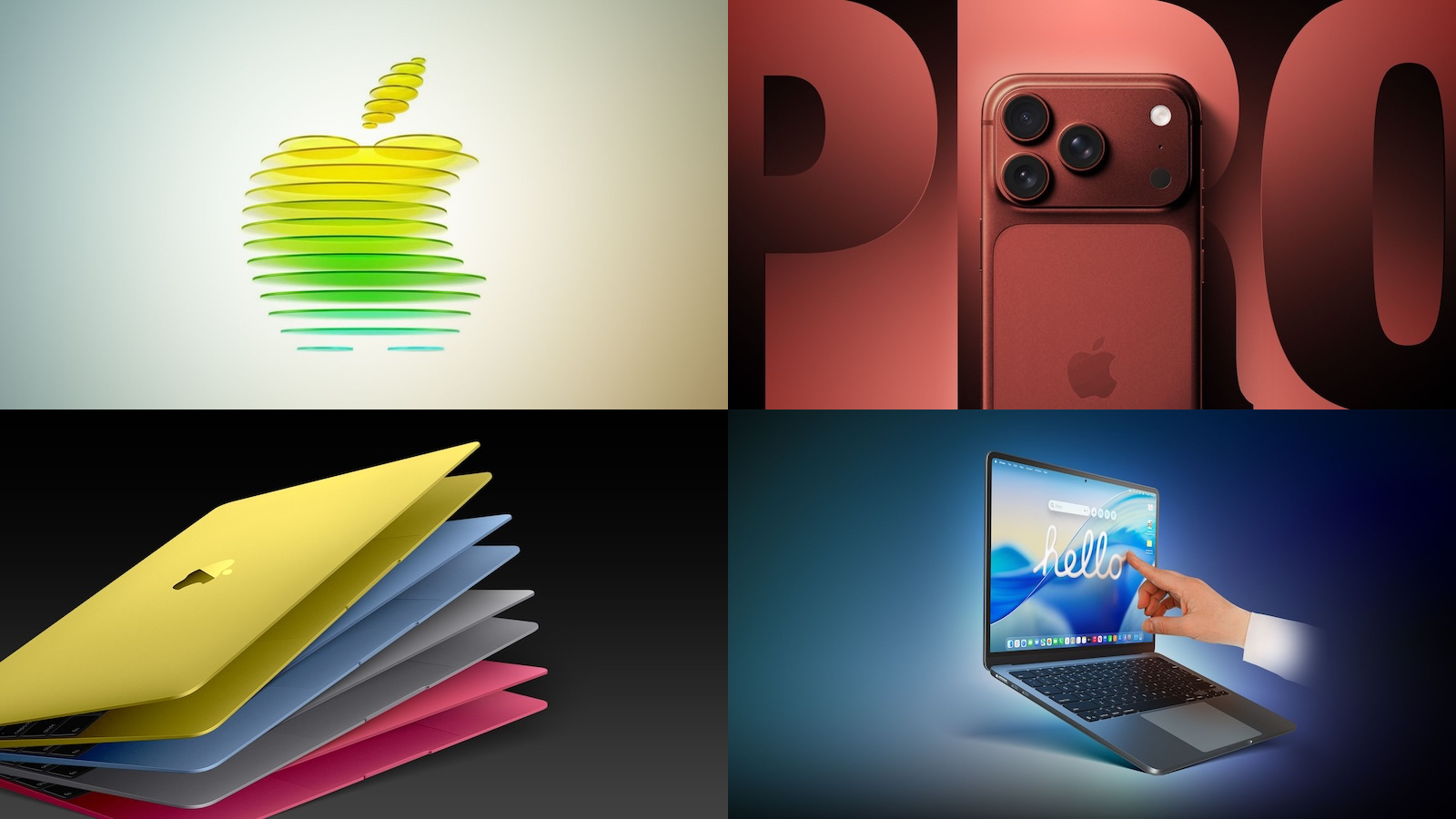
Get ready for an onslaught of Apple news! Ahead of a "special Apple experience" for the media on Wednesday, there will be several days of announcements coming from the company with Tim Cook confirming that things will kick off on Monday. We're expecting a number of product announcements next week, but we're also continuing to look ahead at what we can expect with iPhone and Mac updates later this year. Software development is also continuing with iOS 26.4 proceeding through beta testing, so read on below for all the details! Top Stories Apple Teases 'A Big Week Ahead' With Announcements Starting Monday Apple CEO Tim Cook has teased "a big week ahead," with announcements starting Monday . His post on X this week included an #AppleLaunch hashtag with a colorful Apple logo, along with a short video that ultimately reveals an Apple logo on the lid of a Mac. Apple is reportedly planning a three-day stretch of product announcements from Monday, March 2, through Wednesday, March 4, with up to five new products expected to be unveiled, including a lower-cost MacBook, new high-end MacBook Pro models , an iPhone 17e , and more. Apple's Low-Cost Colorful MacBook: All the Rumors With the new, more affordable version of the MacBook rumored to be launching next week representing a new product offering for Apple, we recently rounded up everything we know about the device ahead of its launch. Even since that roundup, additional details have continued to surface, including rumors about mass production and pricing as well as a number of expected limitations that will help maintain differentiation between this new MacBook and the MacBook Air. Apple is Testing These iPhone 18 Pro and Foldable iPhone Colors The special new color that Apple is considering for the iPhone 18 Pro and iPhone 18 Pro Max this year is a "deep red," according to Bloomberg 's Mark Gurman. The first foldable iPhone that we're expecting to see debut in the same September time frame will, however, reportedly "stay away from fun colors" and be offered in more traditional space gray/black and silver/white finishes. The iPhone 18 Pro is said to have entered trial production , and it is expected to feature a smaller Dynamic Island and a variable aperture for the main camera . Touchscreen OLED MacBook Pro Coming in 2026 With Dynamic Island and Redesigned macOS Controls Looking beyond the M5 Pro and M5 Max MacBook Pro models we're expecting as soon as next week, Apple appears to have a much bigger update in store with the following generation coming before the end of the year. The redesigned M6 Pro and M6 Max models will reportedly feature OLED touchscreens with macOS optimizations for touch input, a hole-punch camera and Dynamic Island to replace the current camera notch, and more. iPhone Fold: Launch, Pricing, and What to Expect From Apple's Foldable Apple is expected to launch a new foldable iPhone this year, based on multiple rumors and credible sources. The long-awaited device has been rumored for years now, but signs increasingly suggest that Apple will release its first foldable device in 2026, and it will feature industry-leading performance for the tricky foldable screen . We've collated an updated set of key details that have been leaked about Apple's foldable iPhone so far. Apple will allegedly call the device the "‌iPhone‌ Fold," which is the name the media has already adopted when sharing rumors about the product. iOS 26.3.1 Update for iPhones Coming Soon as 'Apple Experience' Nears Apple's software engineers are testing iOS 26.3.1 , according to the MacRumors visitor logs, which have been a reliable indicator of upcoming iOS versions. iOS 26.3.1 should be a minor update that fixes bugs and/or security vulnerabilities, and it will likely be released within the next two weeks. We did already receive a visionOS 26.3.1 bug fix update on Thursday, but we are also seeing signs of iOS 26.3.1 for iPhone in our logs. This week also saw the release of the second round of developer betas of iOS 26.4 and related updates, and they include a number of tweaks and new features compared to the first betas. MacRumors Newsletter Each week, we publish an email newsletter like this highlighting the top Apple stories, making it a great way to get a bite-sized recap of the week hitting all of the major topics we've covered and tying together related stories for a big-picture view. So if you want to have top stories like the above recap delivered to your email inbox each week, subscribe to our newsletter ! Tag: Top Stories This article, " Top Stories: Apple's 'Big Week' Ahead, iPhone Colors, and More " first appeared on MacRumors.com Discuss this article in our forums

OpenAI strikes a deal with the Defense Department to deploy its AI models

OpenAI strikes a deal with the Defense Department to deploy its AI models

OpenAI has reached an agreement with the Defense Department to deploy its models in the agency’s network, company chief Sam Altman has revealed on X. In his post, he said two of OpenAI’s most important safety principles are “prohibitions on domestic mass surveillance and human responsibility for the use of force, including for autonomous weapon systems.” Altman claimed the company put those principles in its agreement with the agency, which he called by the government’s preferred name of Department of War (DoW), and that it had agreed to honor them. The agency has closed the deal with OpenAI, shortly after President Donald Trump ordered all government agencies to stop using Claude and any other Anthropic services. If you’ll recall, the government US Defense Secretary Pete Hegseth previously threatened to label Anthropic “supply chain risk” if it continues refusing to remove the guardrails on its AI, which are preventing the technology to be used for mass surveillance against Americans and in fully autonomous weapons. It’s unclear why the government agreed to team up with OpenAI if its models also have the same guardrails, but Altman said it’s asking the government to offer the same terms to all the AI companies it works with. Anthropic, which started working with the US government in 2024, refused to bow down to Hegseth. In its latest statement, published just hours before Altman announced OpenAI’s deal, it repeated its stance. “No amount of intimidation or punishment from the Department of War will change our position on mass domestic surveillance or fully autonomous weapons,” Anthropic wrote. “We will challenge any supply chain risk designation in court.” Altman added in his post on X that OpenAI will build technical safeguards to ensure the company’s models behave as they should, claiming that’s also what the DoW wanted. It’s sending engineers to work with the agency to “ensure [its models’] safety,” and it will only deploy on cloud networks. As The New York Times notes, OpenAI is not yet on Amazon cloud, which the government uses. But that could change soon, as company has also just announced forming a partnership with Amazon to run its models on Amazon Web Services (AWS) for enterprise customers. Tonight, we reached an agreement with the Department of War to deploy our models in their classified network. In all of our interactions, the DoW displayed a deep respect for safety and a desire to partner to achieve the best possible outcome. AI safety and wide distribution of… — Sam Altman (@sama) February 28, 2026 This article originally appeared on Engadget at https://www.engadget.com/ai/openai-strikes-a-deal-with-the-defense-department-to-deploy-its-ai-models-054441785.html?src=rss

Coupang reports Q4 revenue up 11% YoY to $8.8B, below $8.9B est., and a net loss of $26M, versus $131M net profit in Q4 2024, hurt by fallout from a data breach (Reuters)

Coupang reports Q4 revenue up 11% YoY to $8.8B, below $8.9B est., and a net loss of $26M, versus $131M net profit in Q4 2024, hurt by fallout from a data breach (Reuters)

Reuters : Coupang reports Q4 revenue up 11% YoY to $8.8B, below $8.9B est., and a net loss of $26M, versus $131M net profit in Q4 2024, hurt by fallout from a data breach —  E-commerce giant Coupang (CPNG.N) swung to a fourth-quarter loss on Thursday and reported revenue below analysts' estimates …

Pentagon Designates Anthropic Supply Chain Risk Over AI Military Dispute

Pentagon Designates Anthropic Supply Chain Risk Over AI Military Dispute

Anthropic on Friday hit back after U.S. Secretary of Defense Pete Hegseth directed the Pentagon to designate the artificial intelligence (AI) upstart as a "supply chain risk." "This action follows months of negotiations that reached an impasse over two exceptions we requested to the lawful use of our AI model, Claude: the mass domestic surveillance of Americans and fully autonomous weapons," the

Source: India issued a blocking order on February 24 to restrict access to developer database service Supabase; the government did not publicly cite a reason (Jagmeet Singh/TechCrunch)

Source: India issued a blocking order on February 24 to restrict access to developer database service Supabase; the government did not publicly cite a reason (Jagmeet Singh/TechCrunch)

Jagmeet Singh / TechCrunch : Source: India issued a blocking order on February 24 to restrict access to developer database service Supabase; the government did not publicly cite a reason —  Supabase, a popular developer database platform, is facing disruptions in India — one of its key markets — has been blocked in India, TechCrunch has learned.