


‘Bridgerton’ Season 4’s Post-Credits Scene Has A Season 5 Tease
Bridgerton season 4 part 2 has a post-credits scene you don't want to miss, and it has a season 5 tease in there.
Bridgerton season 4 part 2 has a post-credits scene you don't want to miss, and it has a season 5 tease in there.
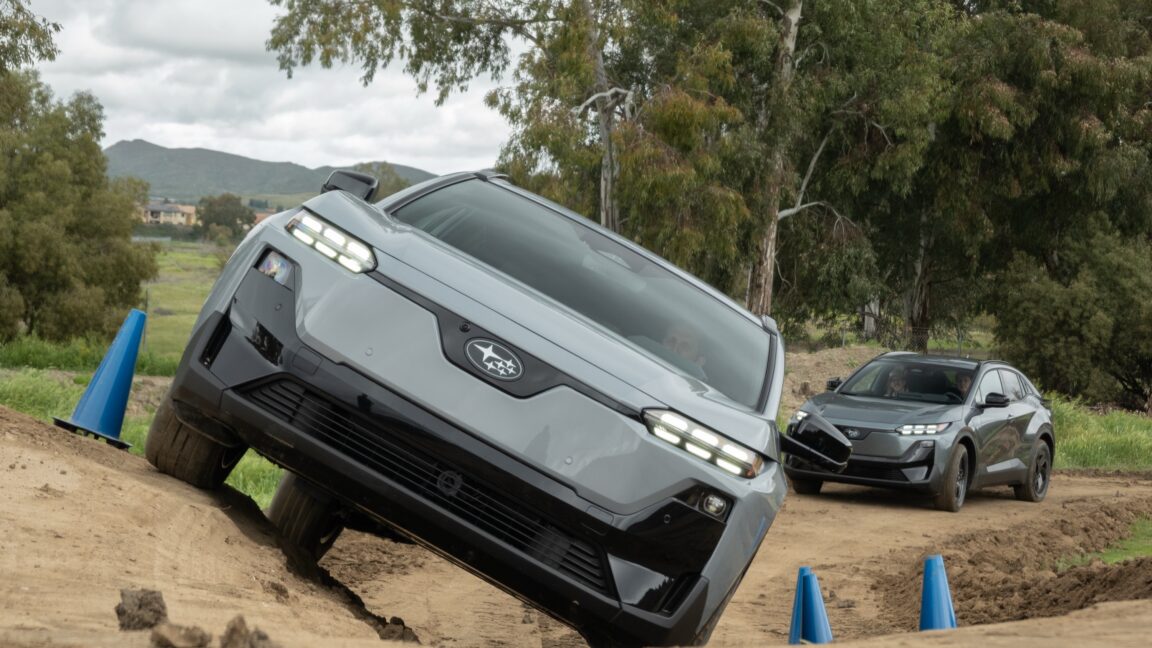
Subaru has a new EV using the platform it shares with Toyota, starting at $34,995.

Wondering if the Samsung Galaxy Buds4 Pro is worth it over the Galaxy Buds3 Pro? Here's what's actually changed. The post Should you upgrade to the Galaxy Buds4 Pro over the Buds3 Pro? appeared first on Phandroid .

Plus, get ready for... Ikea-inspired horror?

Viture raises $100 million led by Legend Capital, topping $200 million in six months, as IDC ranks it No. 1 in U.S. XR glasses shipments amid ongoing Xreal patent litigation

The auto industry is seeing fewer, but larger, factory investments, a new report says

It's no secret that Jonathan Bailey has returned for Bridgerton season 4 part 2 — but how many Bridgertons benefit from it as a result certainly is.
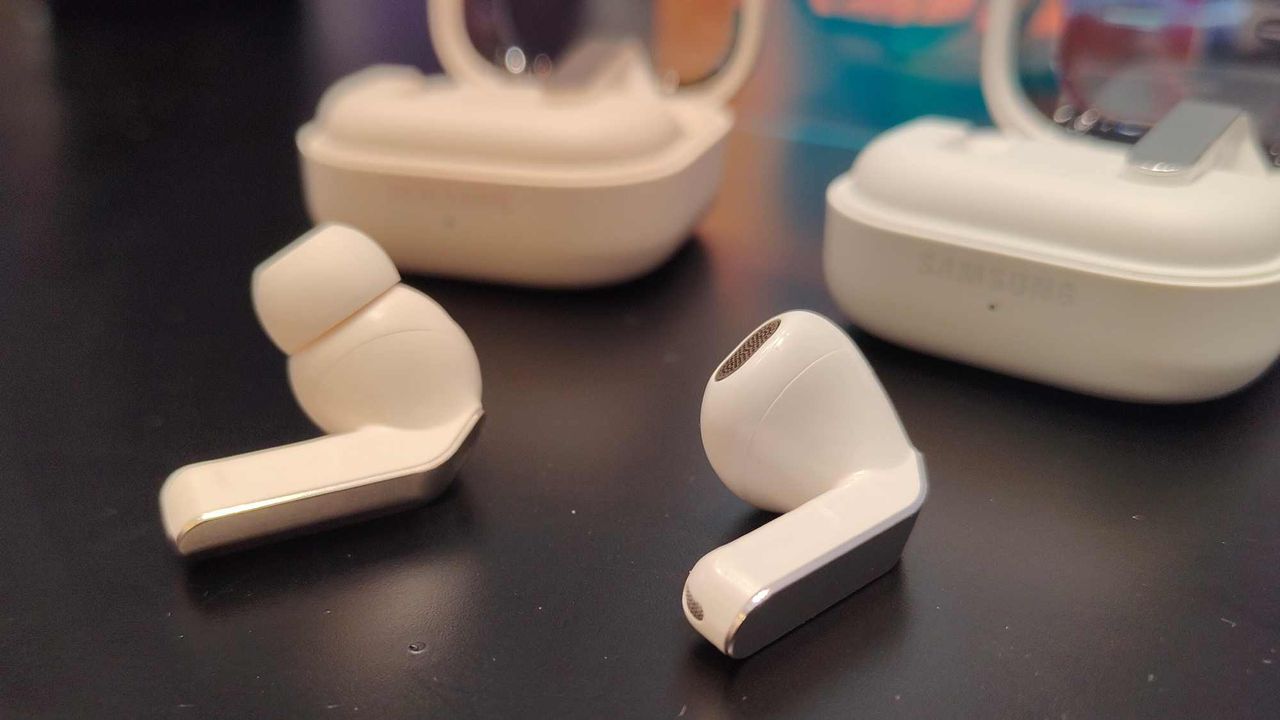
Looks aside, there's plenty that joins these two fourth-gen. Samsung earbuds — but plenty separates them as well.

Jest, a marketplace for messaging games, emerged from stealth with $7 million in seed funding.

On June 9, 1,000+ founders, investors, and decision-makers will gather for TechCrunch Founder Summit 2026. This isn’t just foot traffic. It’s a full day of concentrated deal flow. An exhibit table turns that energy into measurable growth. You don’t need more awareness. You need customers, capital, and strategic partners. Secure your exhibit table and put your startup at the center of the startup universe. Why exhibiting drives real growth Direct access to buyers: […]

Figma is integrating OpenAI's coding assistant Codex a week after it announced a similar integration with Anthropic's Claude Code.

Trace is launching with $3 million in seed funding, including investment from Y Combinator, Zeno Ventures, Transpose Platform Management, Goodwater Capital, Formosa Capital, and WeFunder.

I’m a big fan of OLED monitors. ( I recently upgraded to a 4K OLED for my desktop PC! ) But I can’t help but feel I’m gaming on a stopgap. OLED is incredible for screens, helping to boost contrast and color vibrancy. But just as plasma TVs were eventually trumped by LCDs, I get the sense that Mini-LED is fast catching up to OLED. In 2026, Mini-LED displays aren’t just brighter, but also often cheaper, with better longevity, no risk of burn-in, and improved color accuracy and vibrancy. In short, OLED still has its strengths, but there’s less reason to pay for it now that its successor is almost ready for the prime time. It’s time to look beyond OLED to Mini-LED. Here’s why. Mini-LED wins on brightness I won’t deny that OLED monitors have gotten much brighter recently , and there are even some models that offer 1,500+ nits on smaller sections of the screen. But those tend to be WOLED monitors, which lose out on the color accuracy of QD-OLED. By contrast, the latest Mini-LED monitors offer 2,000+ nits brightness with ease, often over larger sections of the screen. For games, videos, or anything else that you really want to pop off the screen, there’s no beating the sheer vibrancy of Mini-LED. That’s doubly true if you’re looking at it in a brighter room. Sure, some love to game in the dark for the boosted contrast and color, but if you’re like me and mostly use your monitor during the day with the curtains open—or even with harsh overhead lights—then you’ll appreciate Mini-LED. LG In a brightly lit environment, Mini-LED’s extra brightness makes a far bigger difference than OLED’s contrast and colors. It makes it easier to see details, reduces problems with glare, and gives you a more consistent picture quality regardless of the time of day. And then there’s HDR gaming on PC, which is far from smooth sailing even at the best of times. You’ll get a lot of benefits from Mini-LED’s higher brightness there, too. OLED might look better on high-contrast scenes with bright highlights, but the latest Mini-LED monitors have more dimming zones that make blooming far less of an issue. OLED contrast isn’t so standout anymore Yes, OLED still technically offers the best contrast, but it’s not as far ahead of the competition as it once was. The best OLED monitors today are split between WOLED and QD-OLED displays. While the former enjoy the near-infinite contrast that OLED is so well-known for—inky blacks for days—QD-OLED panels are increasingly popular for better bright color support while sacrificing only a little bit of that contrast for the trouble. TCL On the other hand, Mini-LED has grown from strength to strength, and the latest models with 1,000+ local dimming zones don’t suffer from blooming as much as they used to. Yes, OLED contrast will always beat Mini-LED because it has that much better control over the individual pixels, but Mini-LED is getting very close. And in the future, Micro-LED will eliminate the gap entirely. Response time is overrated Look, I’m not trying to annoy anyone, but I know this point is probably going to upset the semi-pro gamers out there. If you’re scrambling for every possible competitive advantage in your favorite esports games, you should absolutely consider OLED. But I’m pretty sure 99% of you reading this don’t care that much about besting other hyper-competitive gamers. For those of us who just play games to relax or hang out with friends, Mini-LED is plenty fast enough. Matthew Smith / Foundry Sure, a 0.03ms response time is going to feel faster than 1ms… by a bit. And yes, the motion clarity of OLED is going to be better because the pixels themselves can change faster… But if you have motion blur enabled, you probably aren’t going to notice it. And if you aren’t playing ultra-fast games and haven’t already maxed out your frame rate and reduced your latency everywhere else, is response time really going to help you win your games? Eh, I don’t think so. There’s an advantage there, but I don’t think it’s worth fretting over—not until you’ve min-maxed everything else first. Text reads better on Mini-LED Outside of subtitles, I’m willing to bet you’re not doing a lot of text reading on your TV. But if you’re using your monitor for anything besides gaming (and even then), I bet you are reading a lot of text! And if you’re reading a lot of text, then text clarity matters. Amazon Mini-LED has clearer text than OLED, period. And if your display has a resolution lower than 4K, the difference is going to be a lot more noticeable (due to the subpixel makeup of OLED and Mini-LED). It may not be a big enough deal to warrant buying one type of monitor over another on its own , but it’s a supplementary point worth considering, especially if you expect to do a lot of reading on your monitor. In that case, Mini-LED will give you an easier time. Burn-in isn’t a concern with Mini-LED Burn-in has been the big boogeyman of OLED monitors and TVs for a long time. Fortunately, the situation is far better today with better pixel refresh and pixel shift technologies to mitigate issues with short-term image retention and long-term brightness control. Foundry But burn-in is still inevitable on OLED. It’s the nature of the technology, and it’s particularly bad on monitors due to always-on user interface elements like taskbars, game HUDs, chat app overlays, browser window outlines, etc. It’s not as bad on TVs where full-screen images are always moving and varied, but certain elements can burn in (like news tickers, channel logos, paused movies, etc.). All of that is going to contribute to OLED burn-in over years of use. Meanwhile, it’s not something Mini-LED owners have to worry about. If you expect to run your system with lots of static images and on-screen HUDs and menus, Mini-LED will definitely last longer. Mini-LED is king for most users I am a firm buyer of the OLED hype. It really is gorgeous, and I’m in the market for high-contrast images and fast response times. I want the nuanced HDR of OLED and I don’t mind tweaking the way I play games to help delay the inevitable onset of burn-in. For most people though, that’s the kind of hassle that just isn’t worth having. Most users want a bright and punchy image that’s going to look great whether the room is dark or bright with lights on or curtains open. Most users aren’t going to notice the limited blooming on modern displays with over 1,000 local dimming zones, and most users won’t notice a 1ms response time, especially when they probably don’t even turn off motion blur in games anyway. Ultimately, Mini-LED is the future. RGB Mini-LED will rival OLED’s best color saturation and brightest pops of color, and Micro-LED will one day replace OLED entirely —it’s self-emissive like OLED but with greater brightness and reduced burn-in risk. Mini-LED is the best choice now and its even-smaller iterations will only make this ever more true in the years to come. Further reading: The best monitors worth buying right now

ServiceNow is handling 90% of its own employee IT requests autonomously, resolving cases 99% faster than human agents. On Thursday it announced the product technology it wants to use to do the same for everyone else. Organizations have spent three years running pilots that stall when AI gets to the execution layer. The agent can identify the problem and recommend a fix, then hand it back to a human because it lacks the permissions to finish the job or because no one trusts it to act autonomously inside a governed environment. The gap most teams are hitting isn't capability. It's governance and workflow continuity. ServiceNow's answer is a new framework called Autonomous Workforce; a new employee-facing product called EmployeeWorks built on its December acquisition of Moveworks; and an underlying architectural approach it calls "role automation." From ticketing system to AI workforce ServiceNow has been building toward this for two decades. The platform started as a ticketing system, evolved into a workflow automation engine, and spent the last two years layering AI onto that foundation through its Now Assist product. What's different is that the new approach stops treating AI as a feature sitting on top of workflows and starts treating it as a worker operating inside them. That shift, from AI that assists to AI that executes, is where the broader enterprise market is headed. ServiceNow is making a specific architectural bet about how to get there. The announcement has three parts: ServiceNow EmployeeWorks lets employees describe a problem in plain language and have it fixed without filing a ticket; Autonomous Workforce executes work end to end; and role automation is the architectural layer that governs how those specialists operate inside existing enterprise permissions. Most enterprise AI assistants including Microsoft Copilot and Google Gemini require employees to know which tool handles which problem. Moveworks, which had 5.5 million enterprise users before the December acquisition, was built around a single entry point that routes across that ambiguity automatically. Bhavin Shah, founder of Moveworks and now SVP at ServiceNow following the acquisition, framed the problem directly in a briefing with press and analysts. "Over the last two years, organizations have raced to adopt AI, but in many cases that rush has created fragmented tools, disconnected AI experiences and employees bouncing between systems just to get simple things done," he said. Why role automation is different from a regular agent ServiceNow is proposing a new architectural layer it calls role automation, and it differs from the agents most enterprises are already running. Conventional AI agents are task-oriented: they're given a goal, they reason toward it and in doing so they figure out what they're allowed to do at runtime. That creates problems in enterprise environments where governance, audit trails and permission boundaries aren't optional. With r ole automation, an AI specialist does not reason its way into permissions. It inherits them. The same access control framework, CMDB(configuration management database) context, SLA (service level agreement) logic and entitlement rules that govern human workers on the ServiceNow platform govern the AI specialist from the moment it is deployed. It cannot exceed its defined scope. It cannot self-escalate privileges based on what it learns mid-task. The company draws a three-tier distinction: task agents handle individual automation steps, agentic workflows mix deterministic and probabilistic execution, and role automation sits above both as a fully virtualized employee role with defined responsibilities and pre-inherited governance. The first product built on this architecture, the Level 1 Service Desk AI Specialist, handles common IT requests end to end — password resets, software access provisioning and network troubleshooting — documenting each resolution and escalating to a human agent only when it hits something outside its defined scope. 'Don't chase butterflies' Alan Rosa has seen what happens when AI governance fails in healthcare. As CISO and SVP of infrastructure and operations at CVS Health, he manages AI deployment across 300,000 employees where compliance isn't optional. Speaking at the same briefing, his framework for scaling AI maps directly onto what ServiceNow is claiming architecturally. CVS Health was already a customer of both ServiceNow and Moveworks before the December acquisition. Rosa said the combination of the two platforms is encouraging and that the potential is "coming to life," though CVS Health has not committed publicly to deploying Autonomous Workforce. "Boring is beautiful," Rosa said. "Predictable. Stable. You have to start with responsible, explainable AI. No bias, no hallucinations, clear guardrails. Everyone understands the rules." On the temptation to chase the newest AI capabilities before governance is in place, he was direct: "Don't chase butterflies. Focus on gritty, unsexy, operational use cases. The ones with real ROI that have an impact on people's lives." Rosa's approach treats AI as a continuously evolving set of capabilities requiring dynamic rather than static testing. CVS Health runs every AI use case through clinical, legal, privacy and security review before it touches production. "Static review doesn't cut it when AI is learning and adapting," he said. "Wash, rinse, repeat." Rosa's framework requires governance to be embedded in the deployment architecture from the start, not retrofitted after a problem surfaces. That is precisely the claim ServiceNow is making about role automation. AI specialists that inherit existing enterprise permissions and workflow logic are structurally less likely to break governance boundaries than agents that determine their own scope at runtime. What this means for enterprises For any organization evaluating agentic AI, regardless of vendor, the practical question is simple: Does your AI governance live inside your execution layer, or is it sitting on top of it as a policy document that agents can reason past? That is what ServiceNow is trying to solve with Autonomous Workforce and EmployeeWorks, baking governance and workflow context directly into the agentic layer rather than bolting it on afterward. For practitioners, the starting point is governance architecture, not capability. Before deploying any agentic AI, map where your permissions, workflow logic and audit requirements actually live. If that foundation isn't in place, no agent framework will hold at enterprise scale. "Scale and trust go together," Rosa said. "If you lose trust, you lose the right to scale."

Neve Campbell, Courteney Cox, Jasmin Savoy Brown, and Mason Gooding return for a good and gutting sequel. Kevin Williamson directs and co-writes, alongside James Vanderbilt and Guy Busick.

007 First Light's gameplay director, Andreas Krogh, has revealed what games inspired IO Interactive's action-adventure James Bond game.
 Forbes Tech
  Ars Technica
  Phandroid
  Gizmodo
  TechRadar
  TechCrunch
  PCWorld
  VentureBeat
  Mashable