



A DJI Pocket 4 might be on its way, but right now the 'class-leading' Pocket 3 is at a new lowest-ever price
A portrait recording option has made this capable cam a major hit with vloggers and content creators.
A portrait recording option has made this capable cam a major hit with vloggers and content creators.

Looking for NYT Connections answers and hints? Here's all you need to know to solve today's game, plus my commentary on the puzzles.
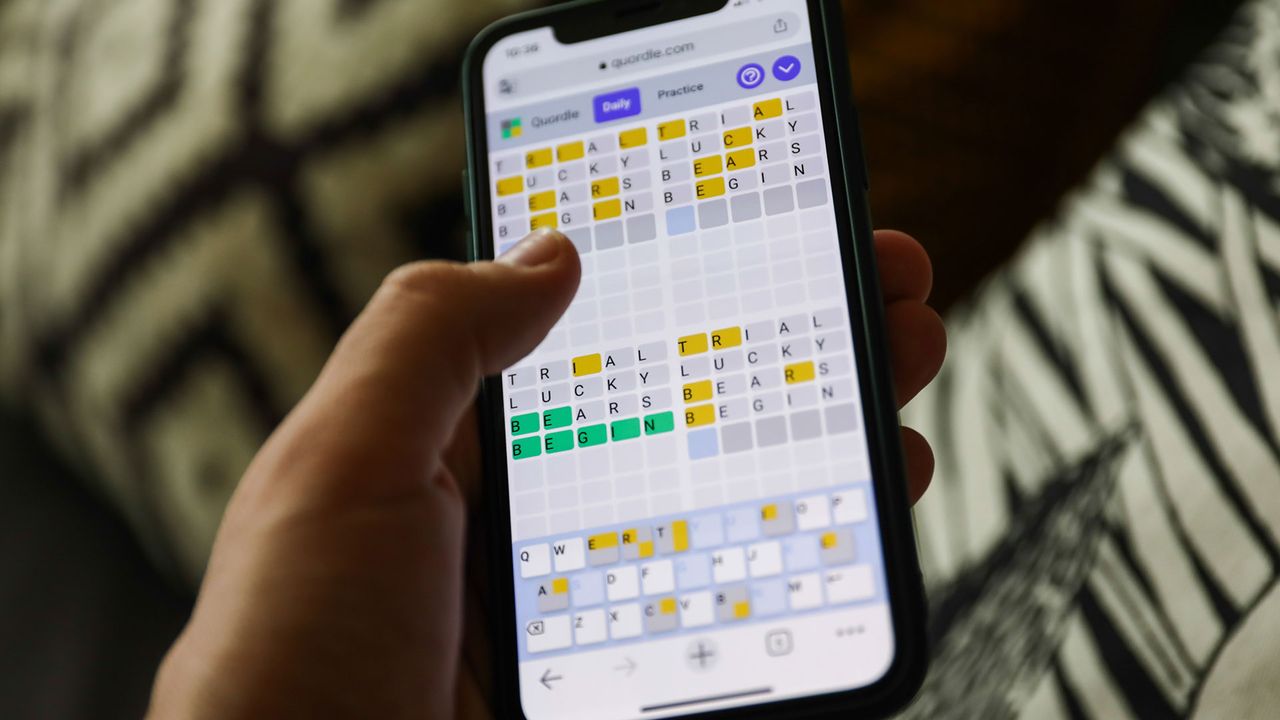
Looking for Quordle clues? We can help. Plus get the answers to Quordle today and past solutions.

The latest iPhone update has arrived and it’s different from previous updates. Here’s why and what to do about it.

After rolling out Search Live to all US Google app users last September , Google is now bringing the feature to every place where it offers its AI Mode chatbot. Search Live, if you need a reminder, allows you to point your phone's camera at an object or scene and ask questions about what you see in front of you. Google debuted the tool at I/O 2025 before it began rolling it out to users. With today's expansion, Search Live is available in more than 200 countries and territories. What's more, Google has updated the feature to run off its Gemini 3.1 Flash model , an upgrade the company says should translate to more natural conversations, in addition to a faster and more reliable experience. The new model is also natively multilingual. You can access Search Live from the Google app on Android and iOS. Tap the "Live" button below the search bar to get started. You can also access Search Live through Google Lens. As in the Google app, look for the "Live" icon, here located near the bottom of the screen, to start chatting. This article originally appeared on Engadget at https://www.engadget.com/ai/google-expands-search-live-globally-150000252.html?src=rss

A tidy PC interior is not only nice to look at, but also makes sense. Good cable management ensures better air circulation, facilitates maintenance, and can even extend the service life of individual components in the long term. Many users underestimate this point, but with a few simple measures, a chaotic tangle of cables can be turned into a well-thought-out system. This starts with assembly: Power supply cables should only be used where they are actually needed — modular power supplies make this much easier. The remaining cables should be routed behind the motherboard tray as far as possible to keep the interior clear. Many cases now offer cable guides, Velcro strips, or rubberized grommets designed specifically for this purpose. It is important to distribute the cable bundles evenly and not pile everything up in one place, otherwise there is a risk of restricting the airflow again. Well-thought-out cable management doesn’t end in the case — cables and PCs can also be elegantly stowed away under the desk (here from Leetdesk). Leetdesk Next, it is worth checking the airflow of the system. Loose cables can significantly impair airflow by blocking the supply of fresh air to the fans or trapping hot exhaust air. You should therefore lay all cables along the edges of the case or secure them with cable ties. If you like things to be particularly tidy, you can use flat, sleeved cables or color-coded extensions. Not only do they look better, they are also easier to lay. The process is similar for existing PCs: First, disconnect the computer completely from the power supply, then loosen all rough cable bundles and rearrange them step by step. You can remove dust at the same time and check that all connections are still secure. It is particularly helpful to prefer short cable routes and stow excessively long cables behind the rear panel. A tidy computer interior not only ensures a clean appearance, but also improves airflow and thus the cooling performance of the entire PC system. Fractal Well-structured cable management pays off in the long run. The components stay cooler, the PC runs more stably and maintenance work becomes easier. In addition, a tidy interior significantly improves the visual impression, especially in systems with glass side panels or RGB lighting. With a little planning, patience, and the right tools, you can turn cable chaos into a system that not only works, but also looks really good. Related content 4 overlooked PC accessories I’m rushing to buy before prices go up I’m obsessed with this perfect Velcro cable tie I use for everything My best desktop organization gadget is a humble carabiner

Your phone screen may look perfectly uniform, but tiny flickering hotspots concentrate energy and could shorten its lifespan, according to researchers at the University of Michigan. The post Researchers spot a nanoscale anomaly that can ruin your phone or TV’s OLED screen appeared first on Digital Trends .

As someone who works with images for almost every part of my job, I really don’t like Google’s WebP format. It’s fine for what it does, but loading it up in an image editor can often be a headache. So, I use a browser extension to download WebP files as JPEG and PNG—or, at least, I’ve been doing so for a few years. Turns out it was the latest Chrome extension to be sold off and turned into spyware. The extension in question is, or was, called “Save image as Type.” It did exactly what it promised, offering alternative format downloads via the right-click menu. But according to an investigation from XDA , this and many other popular extensions have been bought up by bad actors, who take advantage of their existing reputations on popular download hubs like the Chrome Web Store. They then modify the extensions, send the update, and neither Google nor Chrome users are the wiser. Google In this specific case, the extension was hijacking affiliate links. This is a system that’s mostly invisible to web users, but it’s a core element of how advertising and sales work on the web. When you click a store link on a web page, that store may offer a commission to the site that sent the buyer their way. (Yes, this model pays a considerable part of my salary as a web writer.) The extension was monitoring for these links and hijacking them with its own affiliate code. ( PayPal subsidiary Honey was caught doing pretty much the same thing in a high-profile story in 2024.) In other words, the affiliate revenue was being redirected to the extension’s owner—or should I say its new owner. The Chrome Web Store version of the “Save image as Type” extension officially changed hands sometime in November of 2025, presumably after being sold, and after amassing over 1 million users and earning a “Featured” badge from Google. But it may have been compromised a lot earlier than that. Researchers documented this particular ring of extensions in late 2024 , and according to XDA, Microsoft removed this specific extension from its own Edge gallery in early 2025. (Edge is based on Chromium and compatible with Chrome extensions.) Google removed the “Save image as Type” extension from the Chrome Web Store earlier this week, more than a year later than Edge did. It’s now returning a “ This item is not available ” message on the Chrome Web Store. Even though Chrome isn’t my primary browser, the removal also took it out of my Vivaldi installation (also Chromium-based) as I had used the Chrome Web Store to find and install the tool, though I’ve been using it since before I switched off of Chrome. Google To be fair, as a user, I take at least some of the responsibility here. I should be carefully inspecting every software update to make sure it’s safe, including browser extension updates. But on the other hand… I’m not a developer. Even if I was studiously inspecting every software update, parsing code after carefully reading updated terms of service, I doubt I would have the technical expertise to spot the relevant malicious changes—nor would the vast majority of users. I rely on Google to keep the Chrome Web Store at least somewhat safe. Buying and weaponizing popular browser extensions is proving to be a very effective technique for scammers . And while Google is at least somewhat aware of the issue—the latest removal might be following a weekend Reddit post — its enforcement of security seems to be reactionary rather than proactive. How else could you describe being more than a year behind Microsoft, with its much smaller userbase? It’s been a little over a year since Google switched to the Manifest V3 system for Chrome extensions , allegedly for the sake of user security. That commitment to user security is seeming a lot less serious after the company let a malicious extension with over a million users sit on its servers for so long. Further reading: Essential tips to make Chrome more secure

Mega-stars like Alix Earle and MrBeast are relics of a TikTok and YouTube that no longer exists, creator experts tell Mashable.

Polymarket is known for turning world news into tradable probabilities, but now it is trying something similar in the physical… Continue reading Polymarket opens Washington bar for watching geopolitics markets and breaking news The post Polymarket opens Washington bar for watching geopolitics markets and breaking news appeared first on ReadWrite .

Apple has confirmed a new security update for iOS users, but you need to make sure this setting is enabled to get it. Here’s what you need to know and do.

It's the first out of the gate with Arc B-Series support.

Torq's Agentic Builder lets SOC engineers describe security outcomes in plain language and builds the workflows — shifting time from maintenance to security work.

Ahead of the Big Spring Sale on March 25, the best Shark products on sale at Amazon include the Shark StainForce and Shark FlexStyle.

Fintech company Marquis is notifying hundreds of thousands of people that hackers stole their personal and financial information, including their Social Security numbers.

Audi's upcoming A2 e-tron revives a quirky early-2000s model as a modern entry-level EV, and its set to debut this fall. The post Audi A2 e-tron is coming this Fall as the German label’s entry-level EV appeared first on Digital Trends .
 TechRadar
  Forbes Tech
  Engadget
  PCWorld
  Digital Trends
  Mashable
  ReadWrite
  ExtremeTech
  TechCrunch