


The dictionary sues OpenAI
Encyclopedia Britannica and Merriam-Webster say that OpenAI violated the copyright of almost 100,000 articles by using them for LLM training.
Encyclopedia Britannica and Merriam-Webster say that OpenAI violated the copyright of almost 100,000 articles by using them for LLM training.
Encyclopedia Britannica and Merriam-Webster say that OpenAI violated the copyright of almost 100,000 articles by using them for LLM training.

The post Meta Reportedly Planning Fresh Layoffs Amid Surging AI Costs appeared first on Android Headlines .

Stacy Jones / Decrypt : Digital asset wealth management platform Abra plans to go public on Nasdaq via a SPAC merger with New Providence at a $750M pre-money valuation — Abra Financial Holdings, the San Francisco-based digital asset wealth management platform, said Monday it will go public through a business combination …

Recent computing equipment typically supports the 16Gbps PCIe 4.0 protocol as its baseline data transfer/SSD storage technology. While Gen 4 is slowly being supplanted by 32Gbps PCIe 5.0 (most computers mix the two), the difference in real-world performance is not as great as you might think. A lot of software, which unfortunately includes Windows, can’t take full advantage. Alas, PCIe 5.0 still demands a hefty surcharge. As to surcharges… At the time we were bringing this article up to date, SSD prices were soaring and availability shrinking — thanks in large part to the AI gold rush. Hence, the newly researched prices shown below will not match the older ones in the linked reviews. The recommendations below represent the cream of the nearly three dozen PCIe 4.0 SSDs that we’ve reviewed, best suited for a variety of needs. Whether you want to upgrade or add more storage, there’s a PCIe 4.0 NVMe SSD for you. Read on to learn more, including what to look for. Why you should trust PCWorld for PCIe 4.0 SSD reviews and buying advice: We’re not called PCWorld for nothing. Our reviewers have been testing PC hardware for decades. Our storage evaluations are exhaustive, testing the limits of every product — from performance benchmarks to the practicalities of regular use. As PC users ourselves, we know what makes a killer product stand out. Only the best SSDs have made our list of picks. WD Black SN7100 SSD/SanDisk Optimux GX 7100 – Best PCIe 4.0 SSD Pros Top-notch HMB performance Affordable Sexy name Cons Slower random performance than DRAM designs Price When Reviewed: 109 Euro Best Prices Today: Retailer Price 149,90 € View Deal 174,00 € View Deal 174,00 € View Deal 175,54 € View Deal 189,00 € View Deal Sandisk 204,99 € View Deal 241,50 € View Deal 280,65 € View Deal Price comparison from over 24,000 stores worldwide View more prices Product Price Price comparison from Backmarket Who should buy the WD Black SN7100/Optimus GX 7100? Those looking for top sequential performance for a bit less money should be all over the WD Black SN7100, which is still available under that name but will be sold as the SanDisk Optimux GX 7100 going forward. (SanDisk was acquired, then recently divested by WD.) We were wowed by the 2TB SN7100’s host memory buffer (HMB) performance, though it was supplanted as number one by an extremely narrow margin by the Lexar Play 2280 . However, unlike the latter, we were still able to find the Black SN7100 for sale online at the time of this writing, hence it’s our best of pick. WD Black SN7100/SanDisk Optimus GX 7100: Further considerations There’s a trade-off with HMB (host memory buffer) design SSDs, such as the SN7100. They use the host system’s memory for primary caching duties, which can actually result in slightly faster sequential transfers, but weaker random performance. In other words, DRAM drives offer significantly better random/4K file performance if that’s what you’re looking for. Why might you want better random performance? For a slightly snappier OS experience, though this can be very hard to spot with the naked eye. The Black SN7100 carries the industry standard five-year warranty / 600TBW rating (terabytes that can be written) per TB, and you’re looking at probably the best PCIe 4.0 SSD for average users as well as gamers. Read our full WD Black SN7100 review WD SN5100/SanDisk Optimus 5100 – Best budget PCIe 4.0 SSD Pros Good everyday performance Very affordable Fastest NVMe SSD of any ilk we’ve tested writing 450GB Cons Top performance requires HMB support Price When Reviewed: 129,99 Euro Best Prices Today: Retailer Price €359 View Deal €213.9 View Deal Galaxus 129,99 € View Deal 222,85 € View Deal 222,85 € View Deal 259,00 € View Deal 308,58 € View Deal 359,99 € View Deal 359,99 € View Deal Price comparison from over 24,000 stores worldwide View more prices Product Price Price comparison from Backmarket Who should buy the WD Blue SN5100/SanDisk Optimus 5100? It’s hard to describe any SSD these days as “budget,” but you will currently save quite a few bucks with this DRAM-less (HMB/Host Memory Buffer) design. Once available at 2TB for $150, that drive is now $285. Thanks, OpenAI. That said, the SN5100, now remonikered as the SanDisk Optimus 5100, is still available which can’t be said for a lot of the competition. The WD Blue SN5100 is the successor to our former bargain pick — the WD Blue SN5000 . The newer drive does better in most tests, most markedly in sustained/sequential throughput. At the moment, the pricing is exactly the same, so we say go with the faster of the two. WD Blue SN5100/SanDisk Optimus 5100: Further considerations In our testing, the Blue SN5100 ranked third among all the HMB SSDs we’ve tested — and was first by a large margin writing our 450GB file. You lose nothing in sequential performance these days with HMB. The drive sports a five-year warranty limited by a TBW rating (terabytes that may be written) of 600TBW per 1TB of capacity. Read our full SanDisk WD Blue SN5100 2TB review Crucial P310 (2230) – Best PCIe 4.0 SSD for Steam Deck Pros Fastest 2230 SSD we’ve tested Available with up to 2TB of capacity Cons Low TBW endurance rating Price When Reviewed: 174,48 Euro Best Prices Today: Retailer Price €299 View Deal Crucial 154,69 € View Deal 254,66 € View Deal 277,87 € View Deal €280.66 View Deal €283.56 View Deal €283.56 View Deal 286,00 € View Deal 299,00 € View Deal 299,90 € View Deal Price comparison from over 24,000 stores worldwide View more prices Product Price Price comparison from Backmarket Who should buy the Crucial P310 (2230)? If you need a small form-factor, 2230 (22mm wide, 30mm long) NVMe SSD for your Steam Deck or other device, look no further than the Crucial P310. It’s the fastest 2230 SSD I’ve tested, and by a rather large margin. The P310 bested our previous favorite 2230 drive — the WD Black SN770M — in every benchmark save for the 450GB transfer, where the latter lost steam (pun intended) at the 85 percent mark after running out of secondary cache. That said, writes that large are rare for most users, and almost unheard of in a Steam Deck. Crucial P310 (2230): Further considerations As of March 2026, the 1TB P310 2230 was still available and still comparatively (especially to 2280 models) affordable at $169. The TBW rating (terabytes that my be written to the drive) was still quite low at 225TBW per 1TB of capacity. That’s still quite likely enough to last as long as your Steam Deck, and certainly the five-year warranty period. If optimum speed is what you’re after, and you don’t foresee regularly moving large amounts of data, the P310 is the 2230 ticket. Read our full Crucial P310 NVMe SSD (2230) review Seagate Game Drive – Best PCIe 4.0 SSD for PS5 Pros Very good overall performance Excellent 4K performance Low-profile heatsink Twice the TBW rating of the competition Cons A bit pricey No 4TB model Price When Reviewed: 255 Euro Best Prices Today: Retailer Price €289 View Deal 269,51 € View Deal 269,51 € View Deal Galaxus 297,00 € View Deal Price comparison from over 24,000 stores worldwide Product Price Price comparison from Backmarket Who should buy the Seagate Game Drive PS5 NVMe SSD? The Seagate Game Drive PS5 NVMe SSD is a PCIe 4.0 NVMe SSD aimed specifically at next-gen game consoles — the PS5 in particular. It doesn’t disappoint, using DRAM for primary caching duties, which is almost essential to wring top performance out of Sony’s console system. The PS5 doesn’t support HMB, so without DRAM SSD you’re relying exclusively on an HMB SSD’s slower secondary caching. The Game Drive ships in 1TB and 2TB capacities, so you’ll have plenty of space to store all of your games. Note that when I checked recently (March 2026), this drive was still available, but in short supply. Seagate Game Drive PS5 NVMe SSD: Further considerations While the Seagate Game Drive is optimized for a PS5, it’s perfectly viable with any computing device with a PCIe M.2 2280 slot. It did remarkably well in our performance testing, earning the spot as the second-fastest PCIe 4.0 SSD to date with random ops. Seagate provides a generous five-year warranty with the drive and it has an astounding 1,275TBW rating — more than double the industry norm. PS5 owners simply can’t go wrong with the Seagate Game Drive. Read our full Seagate Game Drive PS5 NVMe SSD 2TB review Corsair MP600 Micro – Best 2242 form-factor SSD Pros Direct fit for Lenovo 2242 M.2 slots Good performance Priced affordably Cons Too long for 2230 slots Price When Reviewed: 114,99 Euro Best Prices Today: Retailer Price Corsair 109,99 € View Deal 158,99 € View Deal 158,99 € View Deal 219,99 € View Deal Price comparison from over 24,000 stores worldwide Product Price Price comparison from Backmarket Who should buy the Corsair MP600 Micro? The Corsair MP600 Micro fills a niche for devices that can accommodate an SSD that’s larger than the 2230 form factor used by handheld gaming consoles, but can’t accept a standard 2280 modules that are used in most PCs and laptops. We’re talking about the 2242 form factor — meaning 22mm wide by 42mm long. Corsair MP600 Micro: Further considerations Lenovo started the 2242 trend with its Legion Go and Thinkpad portables and there are now respectable storage upgrade options — the best of which is the Corsair MP600 Micro. The MP600 Micro isn’t the fastest PCIe 4.0 SSD we’ve tested, but it was the fastest 2242 type and turned in a performance that compared well against many 2280 SSDs. Read our full Corsair Force Series MP600 Micro R2 1TB review Other notable PCIe 4.0 SSD reviews The Orico OS5 is marketed for the PS5, but uses a non-supported HMB design; the Teamgroup T-Create C47 stands out in super-long writes; and the Lexar NQ780 makes a very good showing in a field of stiff competition The Orico IG740-Pro is a fast enough, decently affordable SSD that ships with some nice-to-have extras; the PNY CS2342 is a 2230 small form-factor SSD sized for Steam Deck, which performs very well with light workloads; and the Teamgroup MP44Q is a great everyday performer. Addlink’s A93/S93 is a solid-performing PCIe 4.0, DRAM-less NVMe SSD that might save you a few bucks. But the A93 with its heatsink faces heavy competition from many similarly priced and often faster SSDs. New to the lineup, the WD SN850X 8TB SSD is far faster than the previously tested 2TB version, but currently you’ll pay a staggering premium for it; the 990 EVO Plus is an update to Samsung’s 990 EVO hybrid drive that can use either the PCIe 4.0 or PCIe 5.0 interface — although the latter is limited to PCIe 4.0’s theoretical bandwidth. If you’re looking to stretch your SSD dollar (and who isn’t these days), the T-Force G50 should be on your short list. It’s a relatively inexpensive, solid performing PCIe 4.0 drive for everyday tasks; The Kingston NV3 is proof that DRAM-less drives — those use a Host Memory Buffer (HMB) as cache — can offer competitive performance; the Sabrent Rocket Nano 2242 features a smaller form factor (22mm x 42mm) that was tailor-made for Lenovo’s Legion Go and Thinkpads — but can also be used in a standard slot as well. How PCWorld tests PCIe 4.0 SSDs Drive tests for most of the drives listed above utilized Windows 11, 64-bit running on an X790 (PCIe 4.0/5.0) motherboard/i5-12400 CPU combo with two Kingston Fury 32GB DDR5 4800MHz modules (64GB of memory total). Both 20Gbps USB and Thunderbolt 4 are integrated to the back panel and Intel CPU/GPU graphics are used. The 48GB transfer tests utilize an ImDisk RAM disk taking up 58GB of the 64GB of total memory. The 450GB file is transferred from a 2TB Samsung 990 Pro which also runs the OS. Newer SSDs were tested with Windows 11 24H2, 64-bit running off of a PCIe 4.0 Samsung 990 Pro in an Asus Z890-Creator WiFi (PCIe 4.0/5.0) motherboard. The CPU is a Core Ultra i5 225 feeding/fed by two Crucial 64GB DDR5 5600MHz modules (128GB of memory total). Both 20Gbps USB and Thunderbolt 5 are integrated and Intel CPU/GPU graphics are used. SSDs involved in the test are mounted in either a HighPoint 7604A 16x 4-slot PCIe 5.0 RAID adapter card or a single-slot Asus ROG M.2 PCIe 5.0 adapter. We run the CrystalDiskMark 8 , AS SSD 2 , and ATTO 4 synthetic benchmarks to find the storage device’s potential performance, then a series of 48GB and 450GB transfers tests using Windows Explorer drag-and-drop to show what you’ll see under Window, as well as the far faster FastCopy to show what’s possible. A two-drive 25GBps RAID 0 array on the HighPoint 7604A 16x PCIe 5.0 adapter card is used as the secondary source/destination. Each test is performed on a newly formatted and TRIM’d drive so the results are optimal. Note that in normal use, as a drive fills up, performance may decrease due to less NAND for secondary caching, as well as other factors. This can be less of a factor with the current crop of SSDs with far faster late-generation NAND. Caveat: The performance numbers shown apply only to the drive we were shipped and to the capacity tested. SSD performance can and will vary by capacity due to more or fewer chips to shotgun reads/writes across and the amount of NAND available for secondary caching. Vendors also occasionally swap components. If you ever notice a large discrepancy between the performance you experience and that which we report, by all means, let us know. To learn more about our testing methodology see PCWorld’s article on how we test internal SSDs . Who curated this article Jon L. Jacobi was around when computing meant flipping switches, and has witnessed storage morph from punch cards and tape to solid state drives. He’s been using and testing HDDs, SATA SSDs, and NVMe SSDs for PCWorld for more than two decades. To paraphrase a well-known commercial, you might say he’s seen a thing or two. How to choose the best PCIe 4.0 SSD There are a few things to look out for when purchasing a PCIe 4.0 NVMe SSD, but most importantly you’ll want to focus on capacity, price, and warranty length. Three-year warranties are standard with bargain drives, but nicer models are generally guaranteed for up to five years. A good indicator of expected longevity is an SSD’s TBW (terabytes written) rating which mitigates the warranty period like the miles in an automobile warranty. This is the number of terabytes the vendor thinks you’ll be able to write before it runs out of extra (overprovisioned) cells to replace worn ones. This is an equation based on the type of NAND being used, but also incorporates financial concerns. I.e., the cost of replacing the drive should it not last as long the rating. Unlike the early days of SSDs and NAND, modern drives won’t generally wear out with normal consumer usage, as Tech Report tested and proved years ago with a grueling endurance test. We’re talking petabytes of writes in many cases. That said, QLC NAND generally carries a lower TBW rating than TLC NAND. Another crucial thing to watch out for is the technology used to connect the SSD to your PC. For more details and buying advice see below, or you can read our in-depth guide on which type of SSD you should buy . A few handy definitions PCIe : This is the standard modern memory transfer bus, to the tune of nearly 4GBps over PCIe gen 3 and well over 10GBps when you reach PCIe 5.0. The transport technology pairs nicely with the NVMe protocol (see the next entry) used by all modern M.2 PCIe SSDs. Most M.2 slots (some older ones are SATA — see below) are PCIe and you can buy adapters that allow you to employ “gumstick” (2280) M.2 drives in a PCIe slot. PCIe 4.0 drives are significantly faster than PCIe 3.0, but require an AMD Ryzen 3000-series or Intel Core 11th-gen (or newer) processor, along with a compatible PCIe 4.0 motherboard. PCIe 5.0 is even faster — up to 15GBps with storage. NVMe : Non-Volatile Memory Express technology takes advantage of PCIe’s bountiful bandwidth and the unique properties of NAND such as multiple lanes and caching to create blisteringly fast SSD performance. Check out PCWorld’s “ Everything you need to know about NVMe ” for a nitty-gritty deep-dive. M.2 : You might assume all M.2 drives are PCIe/NVMe. However, before NVMe was a thing, some M.2 slots and SSDs were mSATA. If you’re shopping to upgrade an older computer make sure which technology you need — NVMe or SATA. mSATA and U.2 : You may also stumble across mSATA in older equipment, and U.2 SSDs for enterprise-grade servers and the like, but consumer motherboard support is almost nil for the latter. Speed matters, of course, but most modern SSDs, even the slower ones are ridiculously fast — so don’t overbuy. A PCIe SSD will only perform as fast as the generation of the device it’s installed in. In other words, don’t expect a PCIe 5.0 SSD to perform at its rated speed on a PCIe 3.0 computer. Speaking of which, you can expect roughly 3.5GBps max from PCIe 3.0, 7.5GBps max from PCIe 4.0, and somewhere just north of 14GBps with PCIe 5.0 under optimal conditions — i.e., using synthetic benchmarks or software that supports NVMe’s multiple queues. Single-queue Windows limits all flavors to under 4GBps during normal transfers, so again — don’t overbuy in terms of performance. Note : If you want better transfer performance from your SSDs, check out FastCopy . It can transfer files two to three times faster than Windows Explorer. FAQ 1. What is the best PCIe 4.0 SSD? PCWorld’s top pick for a PCIe 4.0 SSD is the WD Black SN7100 in up to 4TB of capacity. The 2TB version that we tested was the second-fastest PCIe 4.0 SSD overall in our benchmarks, but is still available, while the ever-so-slightly faster Lexar Play 2280 doesn’t seem to be. 2. What is the best cheap PCIe 4.0 SSD? The best cheap SSD in our view is the WD Blue SN5100 , followed closely by Kingston’s NV3 . Both of these PCIe 4.0 SSDs are fast and relatively affordable. 3. What is the best PCIe 4.0 SSD for a gaming console? Essentially, gaming consoles are computers so the same SSDs that are best for PCs are the also best for gaming consoles. That said, the excellent performance and super-generous TBW rating of Seagate’s Game Drive PS5 NVMe SSD makes it our current choice. The DRAM design (which uses onboard memory for secondary caching) results in class-leading random ops performance, as well a full compatibility with PS5. 4. What is the best brand for a PCIe 4.0 SSD? If you want the best guarantees look to Seagate, some of their pricier models have two to three times the TBW rating and a period of free data recovery is also provided. Samsung and WD are also long-standing favorites with well-earned reputations for quality products. That said, nearly all vendors use the same controllers and NAND as the big boys. The differences generally lie in support and warranty periods. In other words, there aren’t any real dogs among relatively well-known SSD sellers. 5. Are SSDs good for long-term storage? SSDs are excellent for long-term storage, though that depends on what you consider long term. Theoretically, the NAND memory cells, which are voltage traps, could leak over time and become unreadable, but in the decade or so that SSDs have been in heavy use, we’ve not seen this type of degradation. Short answer, a couple of decades, yes; a couple of millennia, perhaps not. Related content Latest SSD reviews Is USB or Thunderbolt better for portable SSDs? The key differences, explained 6 easy tweaks that maximize your SSD’s performance Why two SSDs are better than one for your PC How to turn any SSD into a DIY external drive Best SSDs: From SATA to PCIe 5.0, from budget to premium Best external drives: Backup, storage, and portability Best external SSDs for gaming: Portable performance drives

Some nine years ago, it was reported that John Wick creator Derek Kolstad was making a live-action Hitman TV show for Hulu. But now, it's "dead in the water," according to Kolstad himself. He told The Direct that the project--for which he was going to be an executive producer and writer--is no longer going ahead. "It's a little bit of a dagger in the chest. Who knows nowadays, but it's dead in the water. But, man, I love that thing, because I love that game and I love that character," he said. "Nothing's happening with that man, sadly," he added. Continue Reading at GameSpot

Could this be what a "Wide" Galaxy Z Fold offers consumers? This rumor says so, but there's still time left.

The post Galaxy A37 & A57 Unboxing Videos Bring First Hands-On with Samsung’s 2026 Mid-Rangers appeared first on Android Headlines .

Venture capitalist Chamath Palihapitiya argues that accelerating AI disruption could compress equity valuations across entire markets, threatening the valuation architecture that has governed capital allocation for a century.

Some users say Projectivy Launcher no longer replaces the Google TV home screen after a recent update.

Her Best Supporting Actress nod was part of horror's biggest Academy Awards haul, with the genre winning a record eight awards.
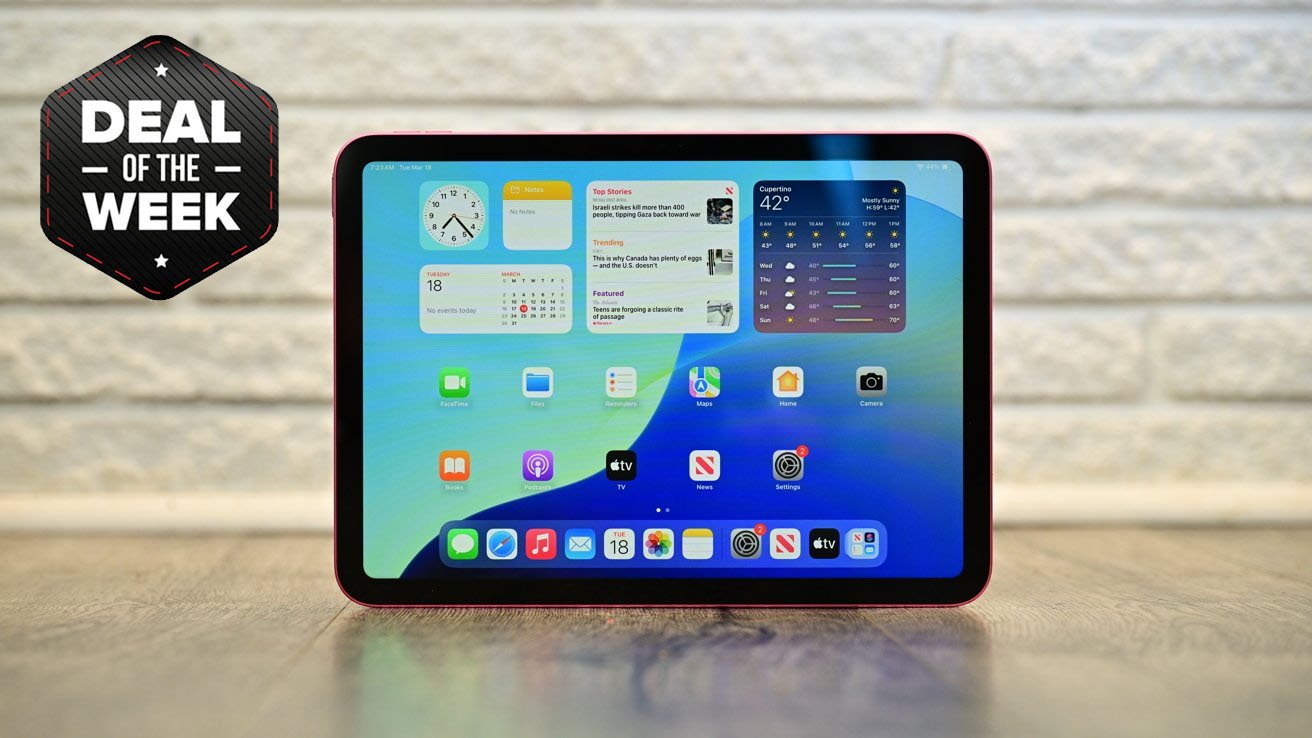
Amazon's March iPad sale delivers prices as low as $299, with discounts of up to $300 off new and closeout models across Apple's tablet line. Get Apple's iPad 11 for just $299 at Amazon. Steeper discounts on Apple's iPad line are in effect at Amazon as March hits the midway point, with Apple's 11-inch iPad available for $299 thanks to a $50 discount in three colors. Buy iPad 11 for $299 Continue Reading on AppleInsider | Discuss on our Forums

Formula 1's new style of racing puts on an entertaining sprint weekend in Shanghai.
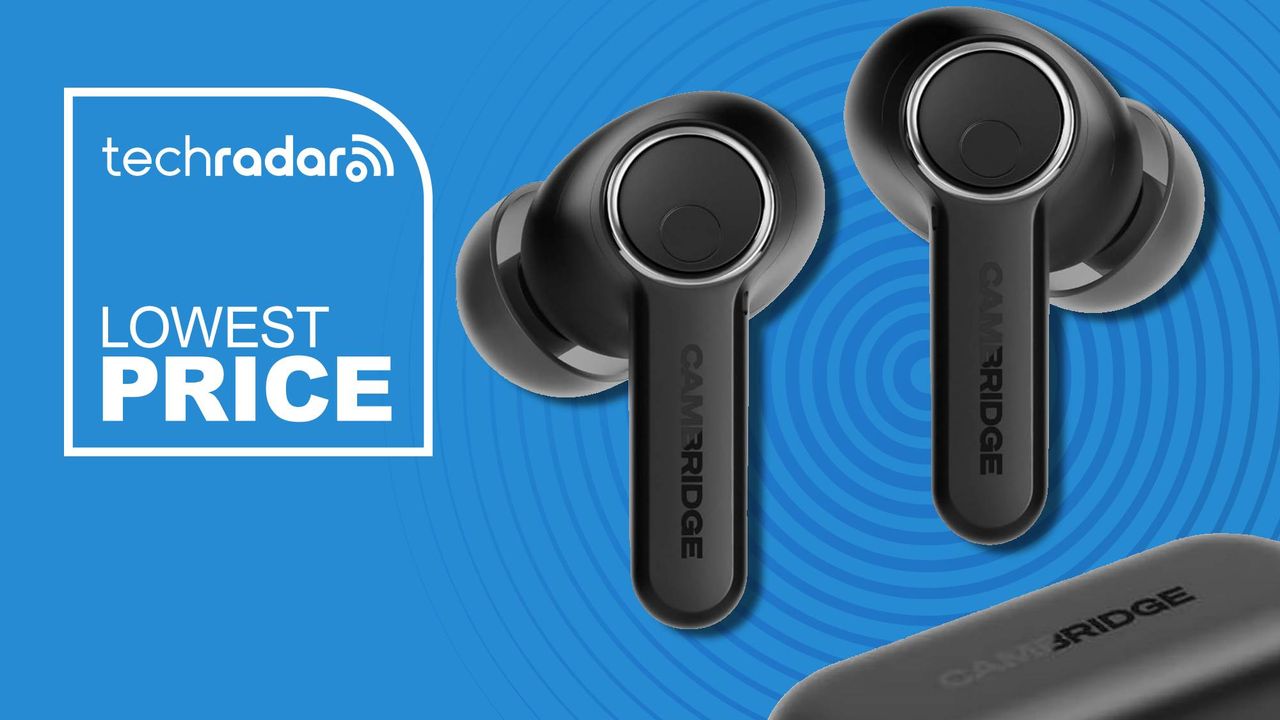
I have them; I love them — and for just £78.99 they're an absolute no-brainer on the last day of Amazon's Spring Deal Days sale extravaganza.

The post The Galaxy Watch 9 could have a larger battery than its predecessor appeared first on Android Headlines .

The early bird catches the... smart home bargain?
 TechCrunch
  Android Headlines
  Techmeme
  PCWorld
  GameSpot
  Android Central
  Forbes Tech
  Android Authority
  Gizmodo
  AppleInsider
  Ars Technica
  TechRadar