


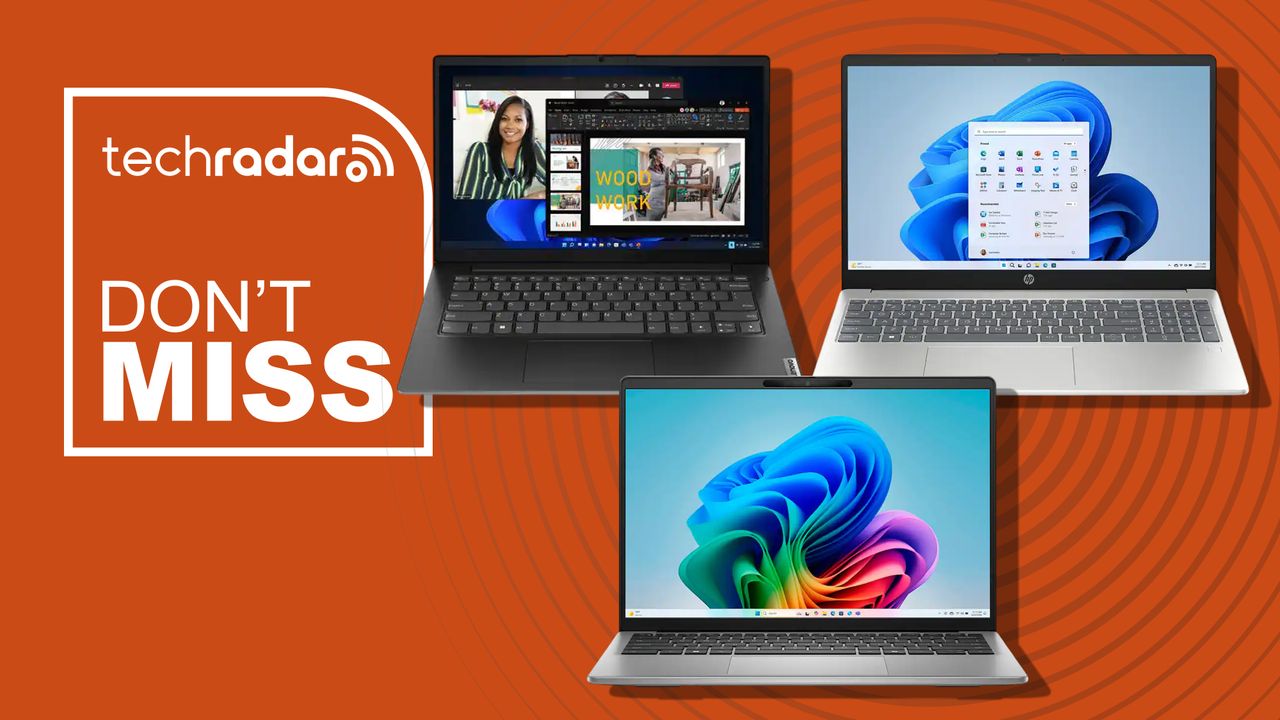
Forget the MacBook Neo: I found three Windows 11 laptops under $600 that beat Apple's new machine on specs, performance and price
Dell, HP and Lenovo models all offer double the memory and storage - and offer far greater value for money.
Dell, HP and Lenovo models all offer double the memory and storage - and offer far greater value for money.

The Severance season 3 release date is not any time soon according to a new update from Adam Scott when asked.
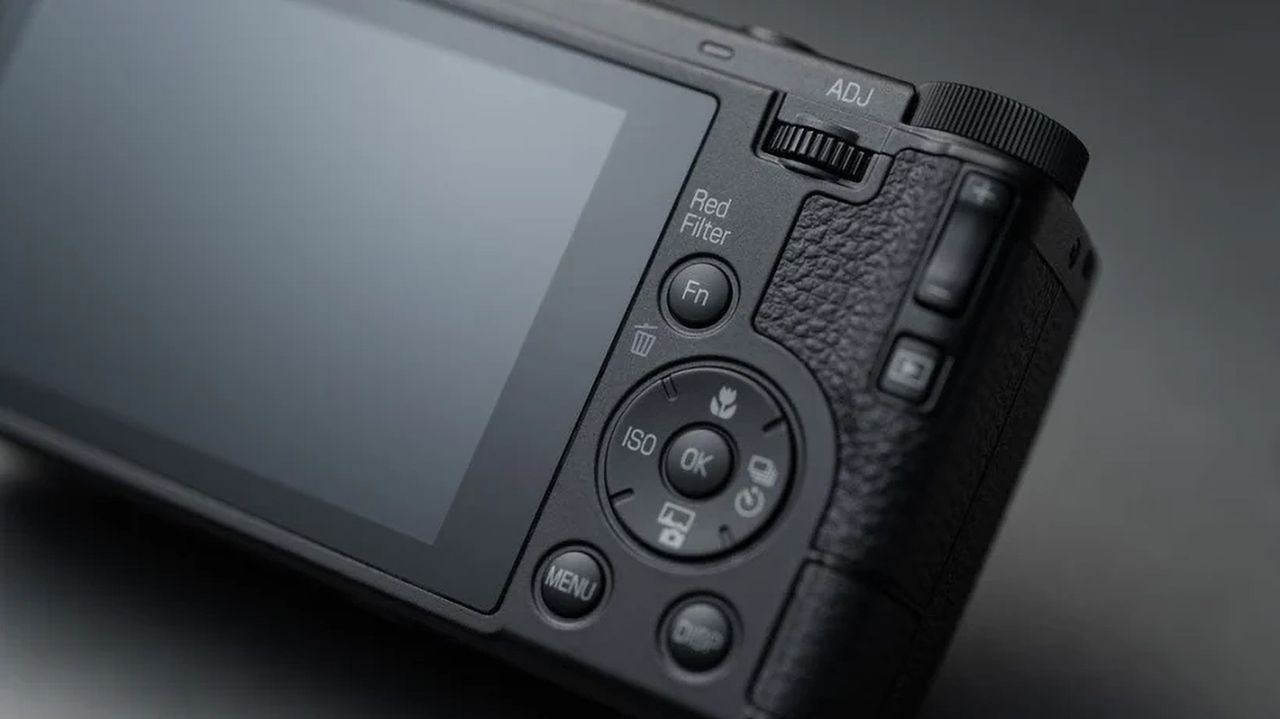
Ricoh's first black and white-only compact, the GR IV Monochrome, is giving Ricoh a welcome headache, with demand outstripping supply.

Apple TV has just released the trailer for its new comedy film, Outcome, starring Keanu Reeves and a stacked supporting roster. And based on this early look, it has all the makings of a hit. more…
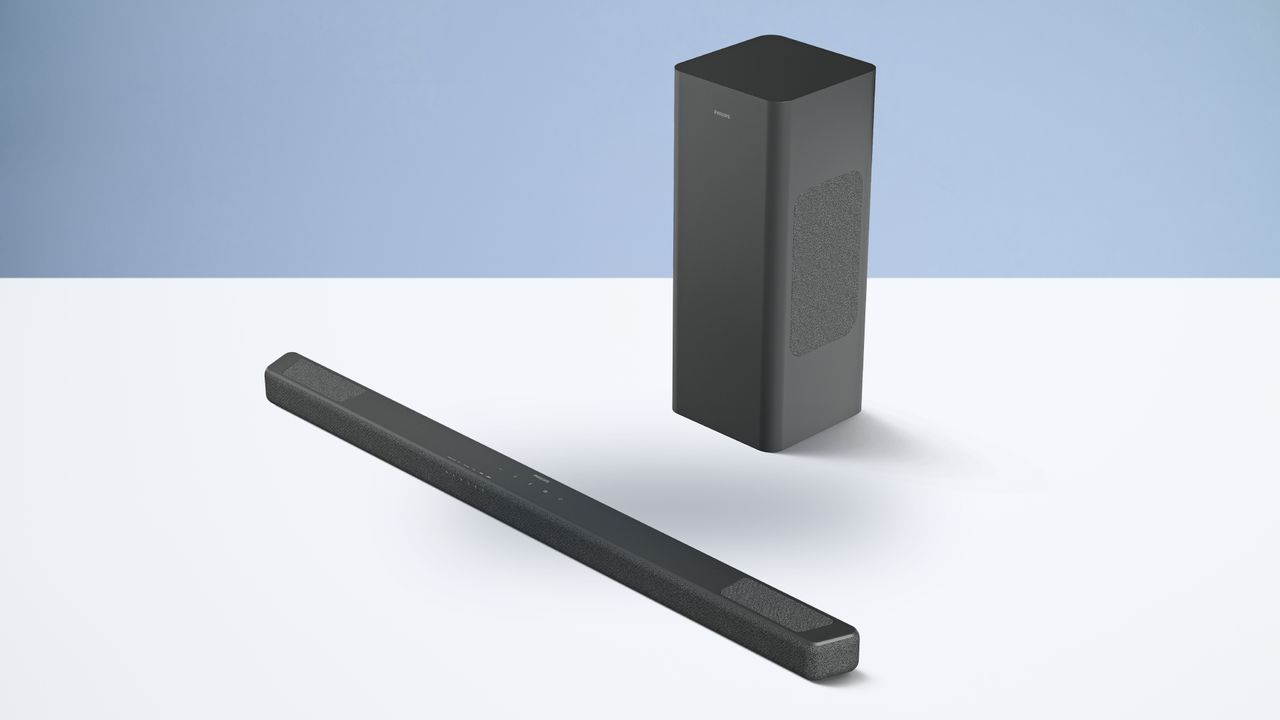
Philips has unveiled three new mid-range soundbars, one of which features 4K 120Hz passthrough that'll be useful for gamers

OMOWAY's wants to assuage your worst fears with its tricked out bikes.

It's the end of the Game Pass road for these games Microsoft gives with its new additions to the Game Pass library every month, but it also takes away a few titles every month. Fortunately--especially if you're a parent who's tired of an anthropomorphic pig who can't whistle --only two more games are exiting the subscription services on March 31 : Peppa Pig World Adventures and Mad Streets. There are some new games to try out in the weeks to come, including Disco Elysium, Like a Dragon: Infinite Wealth, and the superb roguelite beat-'em-up Absolum. Peppa Pig: World Adventures saw the British icon and her family tour the globe, stopping off in iconic cities like New York, Paris, and London. Players could create their own characters and even build their own home in Peppa Pig’s neighborhood, and the 2023 game was generally well-received when it first launched. Mad Streets is a physics-based, beat-'em-up party game, and it was added to the Game Pass library back in October 2024. In case you missed it, Bratz: Rhythm & Style, Enter the Gungeon, F1 23, He Is Coming, Lightyear Frontier, and Mythwrecked: Ambrosia Island were all removed from Game Pass earlier this month. As a reminder, if you'd like to keep any of these games, you can buy them at a discount as Game Pass subscribers can save up to 20% before they're removed from the service. Peppa Pig World Adventures Peppa Pig World Adventures is leaving Xbox Game Pass for cloud, console, and PC. Mad Streets Mad Streets is leaving Xbox Game Pass for cloud, console, and PC.

LOWEST PRICE EVER Insignia F50 Series 4K Fire TV (55 inches) View Deal If you’ve been waiting around for a good deal before upgrading your home TV, well, now’s the time to get one! The 55-inch Insignia F50 Series 4K Fire TV just dropped from its standard $350 to an amazing $180, the best price I’ve seen so far. Why get this TV? Mainly because it’s absolutely massive with its 55-inch diagonal, but also because it delivers super-crisp images in 4K. Pair that with HDR10 and you have a display with sharp contrast and vivid colors and glorious pictures—everything you could ask for in a TV. This Insignia TV (model NS-55F501NA26) runs on Fire OS, which means you’ll have easy access to all your favorite streaming services in a clean interface. Even better, you also get access to over a million free (ad-supported) movies and TV shows. If you have Alexa-powered gadgets at home, you can also use this TV to check in on live security camera feeds, for instance. The included Alexa Voice Remote makes accessing all content and controlling smart home gadgets super easy via voice commands. Look, I know it’s not a Samsung or an LG. But if you’re on a tight budget, you can’t deny that this is a lot of TV for a stunningly low price. 55 inches for just $180? That’s hard to beat! Score this limited-time deal—again, the lowest price it’s ever been—while you still can.

From a new iPhone to a budget-friendly MacBook, Apple announced a series of new products this week.

A software upgrade allowed CryoSat to monitor disturbances caused by a geomagnetic storm.

Video StoreAge is offering indie films on USB drives, letting you own movies permanently instead of relying on streaming platforms where titles can disappear. The post A new Netflix, but over USB? Video StoreAge sells indie films on thumb drives appeared first on Digital Trends .
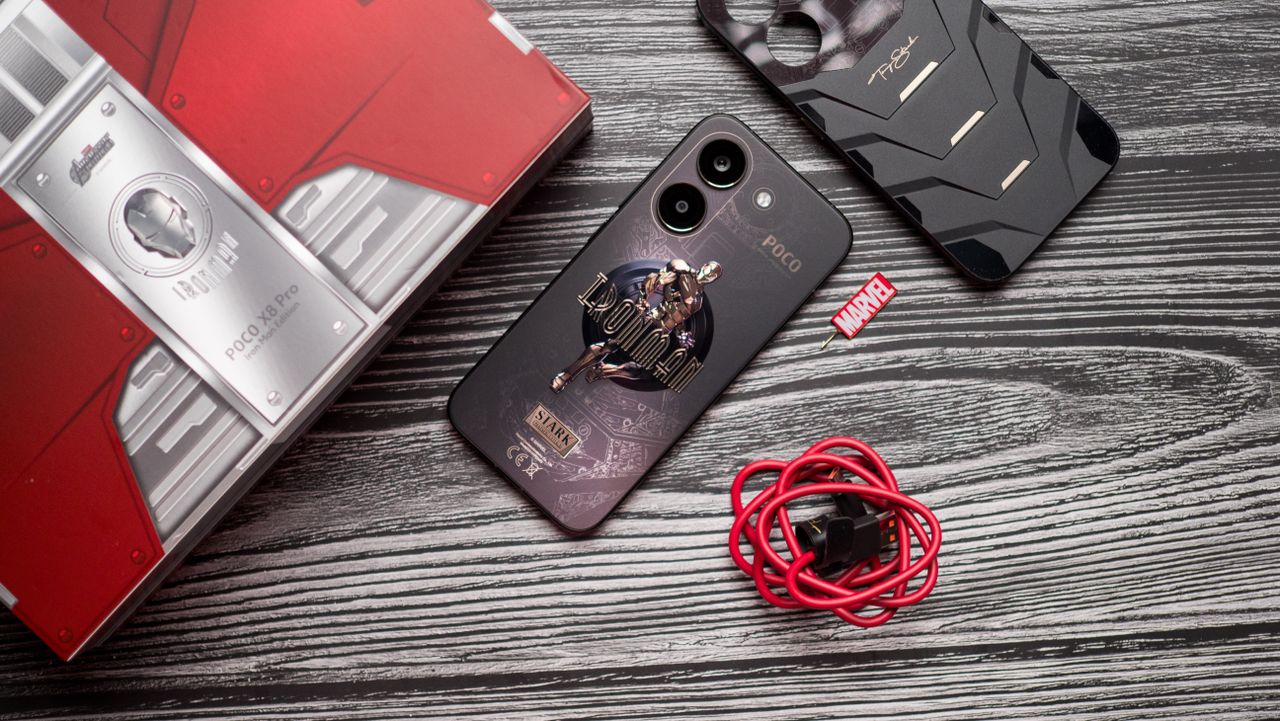
POCO just released the X8 Pro Iron Man Edition, and I used the phone ahead of launch to see if it's as good as last year's model.

Oppo is back with another high-spec foldable phone you may never see outside a tech journalist's hands. The Find N6 is its new, sub-9mm device that is headed to Asian markets and, for now, not many other places. That means no US or European availability. So why write about it? With its build quality, hardware specs and camera array, not only is it a very good phone, but it's also proof that another device maker can go toe-to-toe with Samsung’s dominance in flagship foldable phones. Hardware Image by Mat Smith for Engadget Oppo is obsessed with the foldable crease. More than me, more than most of you, more than it should, probably. A focus of its presentation last month in London detailed all the effort put into its “zero-feel crease.” The idea is that you can’t really feel where the device folds, with 3D liquid printing and laser scanning used to fill the hinge's surface precisely. The company says this reduces hinge height variance from 0.2mm to only 0.05mm. Oppo has improved the glass used on the foldable display, and according to TÜV Rheinland testing ( again ), the Find N6 reduces long-term crease formation by up to 82 percent compared to last year’s Oppo model. It apparently takes a lot of engineering to make a foldable that looks pristine for longer. It’s definitely still early days, but after a few weeks of use, the crease does seem perceptibly shallower than that of other devices, especially the older Find N5. However, there is still a crease. You might not feel it as much, but you can see it. Despite that particular obsession, it’s another incredibly thin foldable, measuring 8.93mm (0.35 inches) thick. That means, folded, it seems roughly equivalent to most typical smartphone form factors. For reference, the iPhone 17 Pro is 8.75mm (0.34 inches) thick. Even with its slim profile, it also offers improved protection with IP59 certification against dust and water. The new foldable also picks up a new custom hardware button, like the Find X9 , which can be assigned to launch the camera, switch sound profiles and other quick action settings. The screens are the same size and resolution as its predecessor: a 6.62-inch front display and an 8.12-inch inner screen. There have been notable improvements here, too. Peak brightness has been punched up to 3,500 nits on the front screen and 2,500 nits on the foldable screen, making them brighter than on Oppo’s last foldable, but behind Motorola’s latest, most luminous foldable. The Find N6 also has another custom 7-core Snapdragon 8 Elite Gen 5 processor — the flagship processor of the moment. The more impressive spec may be the battery: a huge 6,000mAh Silicon-Carbon power pack. That’s 400mAh more than the Find N5 and 1,600mAh more than the ZFold 7. And it goes and goes: Doing a battery rundown test on the front display playing non-stop video lasted just shy of 30 hours, while using the bigger internal screen still hit 24 hours. Another area where it bests Samsung is in charge speeds, supporting up to 80W SUPERVOOC wired charging through Oppo’s proprietary adapter and up to 55W with other high-wattage chargers. There’s also 50W AIRVOOC wireless charging — again, only if you have Oppo’s particular flavor of wireless charger, which I do not. Sadly, there are no Qi2/PixelSnap/MagSafe docking magnets. The cameras Image by Mat Smith for Engadget Oppo has made major improvements to the cameras with several features showcased on the Find X9, now making their way to its foldables. There's a new 200-megapixel main camera with an f/1.8 lens and a new 50MP ultrawide camera that lets in 50 percent more light. The telephoto camera captures 50MP images, with 3X periscope optical zoom and telemacro focus up to 10cm away. All three cameras also support 4K 60 fps Dolby Vision video capture, with the main sensor also capable of 120 fps recording. Image by Mat Smith for Engadget Oppo’s new foldable has cameras that rival those of Samsung's Galaxy Z Fold series. The addition of the high-resolution 200MP main sensor adds more detail to images and more versatility, too. The company continues to collaborate with Hasselblad on camera hardware and software. A new Hi-Res mode that captures stills using the full pixel count of each sensor, while other shooting modes from previous devices are still here. That includes the Hasselblad Master Mode, with full control over the camera settings and the iconic XPAN mode for 65:24 panoramic stills and video. While I was already impressed by Oppo’s recent Find X9, the Find N6 still surprised me. It’s versatile, consistent, and it’s almost the best foldable camera phone — if only its telephoto matched the Pixel 10 Pro Fold’s 5x zoom. Software Image by Mat Smith for Engadget When it comes to multitasking, the Find N6 really wants to deliver, even if the end result is a little messy. You can run a full-screen app, while three Free-Flow Windows each run a different app or web page, all concurrently. Every window is interactive and it almost immediately gave me a stress headache. Oppo has baked in a system of swipes and pinches to aid navigation, but I’d argue that even an 8.1-inch screen isn’t enough for all those windows. Still, for the true power user, there is a lot to tap into. If you’re the kind of person who bounces between work chats in Slack, your calendar and umpteen Chrome tabs — this phone is aimed at you. Oppo wasn’t done with the productivity bonafides. It’s added a new stylus to its foldable series, which comes with its own holster/case that attaches to the back of the Find N6. In most instances, this would make a chunky foldable too bulky, but the base phone is so slim that it's passable. The case also serves as a charging cradle that can recharge the stylus via reverse wireless charging. I’m not a huge stylus user, but for those who miss the S Pen, this is an option if you live in a country where it’s being sold. The stylus, officially called the Oppo AI Pen (hate that name), has a button to summon an onscreen palette of tools and features. Double-pressing the button switches between writing and erasing, which is pretty handy. Screen-off note-taking will apparently arrive in a later software update. Oppo is also continuing to bridge ecosystems with iPhone Connect, which adds AirDrop-style file sharing to Apple phones. Remote PC control is still a cute feature, making the Find N6 into a tiny pocketable PC, if you’re willing to work on your laptop through a tiny screen. Wrap-up Image by Mat Smith for Engadget It’s another impressive foldable from Oppo, one that sadly most folks will never be able to buy. What’s stopping Oppo from testing the waters outside of Asia? The Find N6 is an incredibly powerful, technically impressive device. What is Oppo afraid of? The foldable will arrive in both silver and orange, although the latter is a little more muted than I’d hoped. For now, Oppo is launching the Find N6 on March 20 in China, Japan, Malaysia, Thailand and other Asian territories. The company just announced that prices will start at ¥9999 in China (approximately $1,450), with 12GB of RAM and 256GB of storage. This article originally appeared on Engadget at https://www.engadget.com/mobile/smartphones/oppos-find-n6-might-be-the-foldable-of-your-dreams-131036055.html?src=rss

Seneca's drones carry foam, fly at night, and don't need an on-site pilot.

The best early AirPods deals to shop before Amazon's Big Spring Sale 2026 officially kicks off. Save on AirPods 4 and AirPods Pro 3.

Crimson Desert has now released base PS5 gameplay footage in the wild, trying to end that controversy before launch.
 TechRadar
  Forbes Tech
  9to5Mac
  Gizmodo
  GameSpot
  PCWorld
  TechCrunch
  Digital Trends
  Android Central
  Engadget
  Ars Technica
  Mashable