Samsung Galaxy Unpacked 2026: The Galaxy S26 lineup and everything else we expect

Samsung Galaxy Unpacked 2026: The Galaxy S26 lineup and everything else we expect

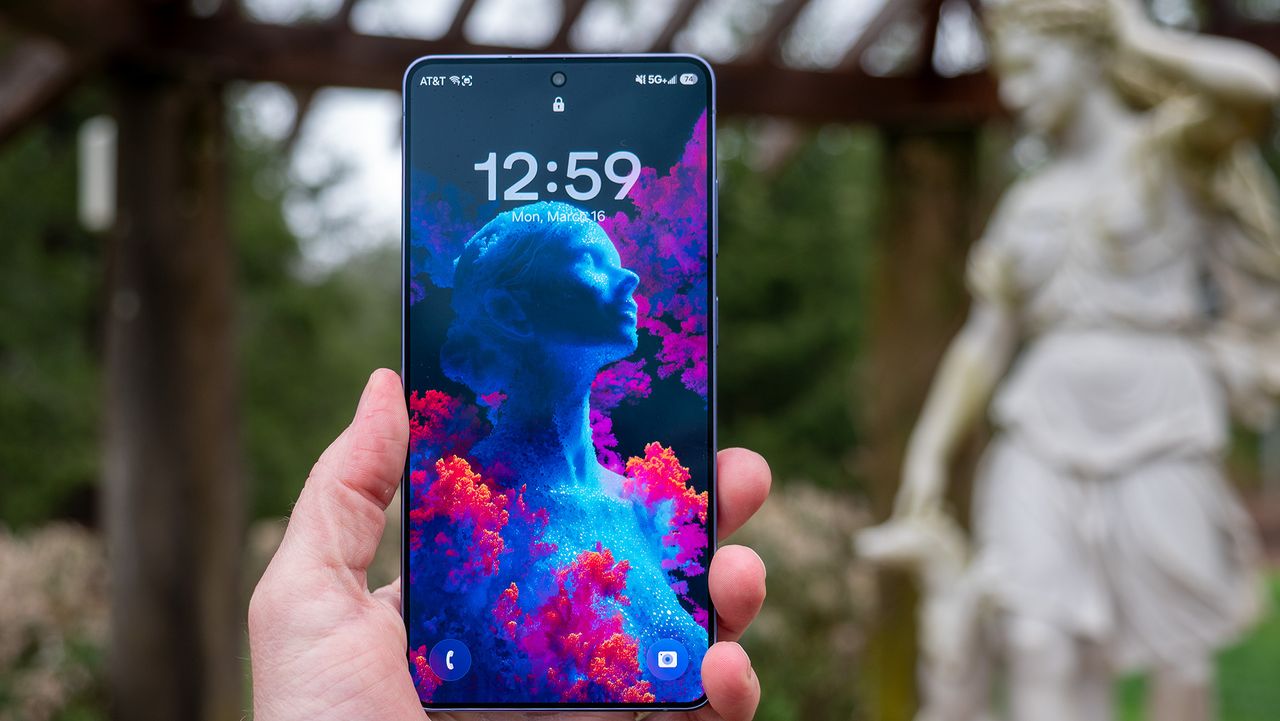
Samsung’s 2025 was filled with new foldables , an ultra-thin new form factor and the launch of Google's XR platform . After making some announcements at CES 2026 , the company is expected to host its first Galaxy Unpacked of the year in February to introduce the Galaxy S26 lineup. Engadget will be covering Galaxy Unpacked live, and we'll most likely have hands-on coverage of Samsung's new smartphones soon after they're announced. While we wait for an official invite, here's everything we expect Samsung will introduce at the first Galaxy Unpacked event of 2026. What is Unpacked 2026 taking place? But first, when is Unpacked going to happen? A recent image shared by leakster Evan Blass indicated Unpacked should be taking place on “February 25 2026.” Blass has a long history of credible leaks, which means this date is all but confirmed, and the main questions remaining would be — what time and in what timezone? We’re still waiting on Samsung for the official details, which should include answers to those questions. Galaxy S26, S26+ and S26 Ultra Samsung Galaxy S25 Ultra hands-on photo Photo by Sam Rutherford/Engadget Samsung's restrained approach to updating its phones will likely continue with the Galaxy S26. Based on leaked images of the new lineup, the company is not expected to radically reinvent the look of the Galaxy S26, Galaxy S26+ or Galaxy S26 Ultra, and instead will stick with a similar design to what it used on the Galaxy S25. The phones will have a flat front screen and frame, with rounded corners and cameras housed in a vertical pill-shaped plateau on the back. Unlike Apple's move from the iPhone 16 Pro to the iPhone 17 Pro , the biggest difference here will likely be internal components like the screens, chips and camera sensors Samsung uses. Qualcomm's new Snapdragon 8 Elite Gen 5 chip is expected to be in all Samsung Galaxy S26 phones, though Korean news site Yonhap News reports Samsung's relatively new Exynos 2600 chip could be used in some phones in the lineup depending on the region, a strategy Samsung has deployed in the past. Either way the new phones should be more performant than the previous generation, and in the case of the models with the Snapdragon 8 Elite Gen 5, particularly good at on-device AI processing. I have compiled the most accurate comprehensive parameter comparison of Galaxy S25, S25+ and Galaxy S26、 S26+. Which one do you want to buy? pic.twitter.com/aQpoSvYjOz — Ice Universe (@UniverseIce) November 29, 2025 One notable difference between the Galaxy S26 and the Galaxy S25 could be the phone's screen. The new phone will reportedly feature a 6.3-inch FHD+ display according to specs shared by leaker Ice Universe , which makes it ever so slightly larger than the 6.2-inch display used on the Galaxy S25. The S26 will also allegedly come with 12GB of RAM, either 256GB or 512GB of storage and a slightly larger 4,300mAh battery. Samsung isn't changing the cameras on the entry-level phone, though: leaks suggest it'll feature the same 50-megapixel main camera, 12-megapixel ultrawide, 10-megapixel 3x telephoto and 12-megapixel selfie camera as the previous generation. Changes appear to be even more minor on the Galaxy S26+. Other than the new Snapdragon chip, the phone will reportedly feature the same 6.7-inch FHD+ screen, 4,900mAh battery, 12GB of RAM and the same camera array used on the base Galaxy S26. The difference between the Galaxy S26 Ultra and Galaxy S25 Ultra is reportedly a bit clearer. According to Android Headlines , the new phone's cameras will be slightly more raised, and stand out thanks to a new metallic finish. Samsung may also switch back to using an aluminum frame on the Galaxy S26 Ultra, after using titanium frames on both the Galaxy S24 and S25 Ultras. Most importantly, to make the phone actually support Qi2 rather than only technically work with the standard when a case is attached, rumors suggest Samsung will remove the S Pen digitizer layer in the phone and adopt a new method for accepting stylus input. It's not clear what that new method will actually be, but it could let the Galaxy S26 Ultra more easily work with Qi2 accessories without losing its stylus. Galaxy Buds 4 Galaxy Buds 3 Pro in case. Engadget Samsung released the Galaxy Buds 3 and 3 Pro in 2024, with a major redesign that brought them much more in line with Apple's AirPods. The Galaxy Buds 4 and Buds 4 Pro Samsung is rumored to be announcing soon won't necessarily change that, though they will feature a more compact case and less angular stems, according to leaked images from the Samsung Tips app. Support for head gestures to accept and decline calls, a feature Apple includes on the AirPods Pro 3 and AirPods 4, is also rumored to work on both versions of the new Galaxy Buds. SamMobile reports the Galaxy Buds 4 and 4 Pro may also ship with a new Ultra Wideband chip that will make them easier to find with Google's Find Hub network. Galaxy Z Trifold Yes, the TriFold has a crease, two in fact. But they still don't ruin the experience. Sam Rutherford for Engadget Samsung announced the Galaxy Z TriFold in late 2025 without firm details of when the new smartphone-that-folds-into-a-tablet would be available in North America. That info came on January 27, when the company announced the TriFold would be available in the US on January 30, for a whopping $2,900. Considering we’ve already seen the device in person at CES 2026 and people are most likely to have had a chance to look at, if not buy the foldable for themselves by the time Unpacked rolls around, we don’t expect Samsung to spend too much time dwelling on it, if at all. Galaxy S26 Edge At just 5.8mm thick, the Samsung Galaxy S25 Edge is one of the thinnest smartphones ever made. Sam Rutherford for Engadget When the Galaxy S25 Edge was announced in 2025, it seemed possible that Samsung could replace its "Plus" smartphone with a unique form factor, just like Apple has opted to do with the iPhone Air . There have been conflicting reports on the matter, but it seems like Samsung will not be doing that with the Galaxy S26 Edge. Instead, the smartphone will reportedly remain another option, much like foldables are for customers not swayed by Samsung's traditional smartphones. The Galaxy S26 Edge is rumored to feature a slightly different design than last year's model, according to Android Headlines , with a large rectangular camera plateau that's reminiscent of Google's Pixel phones, and the raised oval Apple used on the iPhone Air. Beyond that, the phone is also expected to be ever so slightly thinner at 5.5mm than the 5.8mm Galaxy S25 Edge. Bixby and other AI features Samsung already acts as a first place Google can show off new AI features for Android, but the company is reportedly exploring other AI partnerships, too. In June 2025, Bloomberg reported that Samsung was nearing a deal with Perplexity to integrate its AI-powered search engine across OneUI and its homegrown mobile browser. Perplexity already has a deal with Motorola on its Razr phones, so the only thing that would make a deal with Samsung unusual is the close relationship the company already has with Google. The company also accidentally announced a new version of its Bixby AI assistant , which will likely also be integrated with Perplexity and could serve as an alternative to Google Gemini. Both a new Bixby and a deeper integration with Perplexity seem like natural new software features to show off at Galaxy Unpacked. Update, January 27 2026, 11:55AM ET: This story has been updated to reflect the latest news around the Galaxy Z TriFold’s price and availability in the US. Update, January 30 2026, 12:45PM ET: This story has been updated to include the latest leaks on the possible dates for Unpacked 2026. This article originally appeared on Engadget at https://www.engadget.com/mobile/smartphones/samsung-galaxy-unpacked-2026-the-galaxy-s26-lineup-and-everything-else-we-expect-130000999.html?src=rss

Get Ring’s Battery Doorbell + Indoor Cam for 50% off! Save big while you can

Get Ring’s Battery Doorbell + Indoor Cam for 50% off! Save big while you can

Home surveillance is so easy to set up nowadays, what with the proliferation of smart gadgets, more affordable prices, and the ubiquitous nature of home Wi-Fi networks. One of the simplest and most effective ways to get started is with a video doorbell, and if you don’t have one yet, you should seriously think about this deal: Ring Battery Doorbell + Indoor Cam bundle for $69.99 (was $139.99). That’s a huge savings of 50% on two tried-and-true security cams. View this Amazon deal This is a great starter package for anyone who wants to feel a bit safer whether at home or away from home. Being able to peek at your front door, your yard, or even inside your living room or bedroom whenever you want from your phone? That peace of mind has no price tag. The Ring Battery Doorbell is great for newbies because it doesn’t require any wiring to set up. Just screw the mount into your door frame, then click the doorbell into the mount. Connect it to your Wi-Fi network and you’re good to go. With head-to-toe video, it provides 66% more vertical coverage than previous models and allows you to see way more of your door step and porch. The doorbell supports Live View and Two-Way Talk, so you can even chat with whoever’s at your door. The Ring Indoor Cam can be placed anywhere in your home—including on your walls—as long as it’s close enough to a power outlet. (The power cable is 6.5 feet long.) It’s able to capture 1080p video in all lighting conditions, and it comes with a built-in cover that you can use to physically block the camera lens when you want privacy. This one also connects via Wi-Fi and provides a live feed to your phone. Again, you’d normally have to pay $139.99 for these two home surveillance devices, but now you can snag both for just $69.99 . That’s a huge deal worth nabbing before it expires! Ring Battery Doorbell + Ring Indoor Cam for 50% off? What a deal! Buy now via Amazon

Google's Project Genie lets you create your own 3D interactive worlds

Google's Project Genie lets you create your own 3D interactive worlds

This past summer, Google DeepMind debuted Genie 3 . It’s what’s known as a world world, an AI system capable of generating images and reacting as the user moves through the environment the software is simulating. At the time, DeepMind positioned Genie 3 as a tool for training AI agents. Now, it’s making the model available to people outside of Google to try with Project Genie . To start, you’ll need Google’s $250 per month AI Ultra plan to check out Project Genie . You’ll also need to live in the US and be 18 years or older. At launch, Project Genie offers three different modes of interaction: World Sketching, exploration and remixing. The first sees Google’s Nano Banana Pro model generating the source image Genie 3 will use to create the world you will later explore. At this stage, you can describe your character, define the camera perspective — be it first-person, third-person or isometric — and how you want to explore the world Genie 3 is about to generate. Before you can jump into the model’s creation, Nano Banana Pro will “sketch” what you’re about to see so you can make tweaks. It’s also possible to write your own prompts for worlds others have used Genie to generate. One thing to keep in mind is that Genie 3 is not a game engine. While its outputs can look game-like, and it can simulate physical interactions, there aren’t traditional game mechanics here. Generations are also limited to 60 seconds, as is the presentation, which is capped at 24 frames per second and 720p. Still, if you’re an AI Ultra subscriber, this is a cool opportunity to see the bleeding edge of what DeepMind has been working over the past couple of years. This article originally appeared on Engadget at https://www.engadget.com/ai/googles-project-genie-lets-you-create-your-own-3d-interactive-worlds-183646428.html?src=rss

Sonos home theater gear is up to 20 percent off ahead of Super Bowl LX

Sonos home theater gear is up to 20 percent off ahead of Super Bowl LX

Like many other companies during Super Bowl season, Sonos is discounting its home theater gear. Today, you can save $130 on the Beam (Gen 2) soundbar , bringing its price down to $369. You'll also find deals on the flagship Arc Ultra Soundbar, Sonos subwoofers, and more. The Sonos Beam is the company's sub-$500 soundbar. Engadget's pick for the best midrange model , the compact speaker has impressive sound for its size. Part of that is its Dolby Atmos support. Although the soundbar lacks upward-firing speakers, it uses software tricks to compensate. Audio timing and frequency adjustments make sound seem to come from the side or slightly above. One of the biggest drawbacks is that the Beam only has one HDMI port. Regardless, that compromise may be easier to accept at Beam's current $369 than at its usual $499. Several more home theater speakers are included in Sonos's sale. If you have a loftier budget for a soundbar, there's the Arc Ultra . Typically $1,099, it's now $899. The company's pair of subwoofers is included as well. You can get the Sub Mini for $399 (down from $499) or the Sub 4 for $759 (from $899). Although they aren't explicitly sold as home theater products, the Era 100 ($179) and Era 300 ($379) are also included in the sale. The portable Move 2 isn't discounted individually, but you will find it in a couple of bundles . You can check out the sale page for the complete list. This article originally appeared on Engadget at https://www.engadget.com/deals/sonos-home-theater-gear-is-up-to-20-percent-off-ahead-of-super-bowl-lx-174053619.html?src=rss

Save up to 81 percent on ExpressVPN two-year plans right now

Save up to 81 percent on ExpressVPN two-year plans right now

If you're looking to up your privacy game on the internet in the new year, you can do so for a little less than usual thanks to ExpressVPN's latest deal. Its two-year plans are up to 81 percent off right now: the Advanced tier is on sale for $88 for two years, plus four additional free months. The Basic plan is where you'll see the biggest discount: it's $68 for two years, plus the same four additional free months. We’ve consistently liked ExpressVPN because it’s fast, easy to use and widely available across a large global server network. In fact, it's our current pick for best premium VPN . One of the biggest drawbacks has always been its high cost, and this deal temporarily solves that issue. In our review we were able to get fast download and upload speeds, losing only 7 percent in the former and 2 percent in the latter worldwide. We found that it could unblock Netflix anywhere, and its mobile and desktop apps were simple to operate. We gave ExpressVPN an overall score of 85 out of 100. The virtual private network service now has three tiers. Basic is cheaper with fewer features, while Pro costs more and adds extra perks like support for 14 simultaneous devices and a password manager. Advanced sits in the middle and includes the password manager but only supports 12 devices. This article originally appeared on Engadget at https://www.engadget.com/deals/save-up-to-81-percent-on-expressvpn-two-year-plans-right-now-180602273.html?src=rss

The trust paradox killing AI at scale: 76% of data leaders can't govern what employees already use

The trust paradox killing AI at scale: 76% of data leaders can't govern what employees already use

The chief data officer (CDO) has evolved from a niche compliance role into one of the most critical positions for AI deployment. These executives now sit at the intersection of data governance, AI strategy, and workforce readiness. Their decisions determine whether enterprises move from AI pilots to production scale or remain stuck in experimentation mode. That's why Informatica's third annual survey — the largest survey yet of CDOs specifically on AI readiness , spanning 600 executives globally — carries particular weight. The findings expose a dangerous disconnect that explains why so many organizations struggle to scale AI beyond pilots: While 69% of enterprises have deployed generative AI and 47% are running agentic AI systems, 76% admit their governance frameworks can't keep pace with how employees actually use these technologies. The survey reveals what Informatica calls a "trust paradox" — and explains why data leaders are dangerously overconfident about AI readiness. Organizations deployed generative AI systems faster than they built the governance and training infrastructure to support them. The result: Employees generally trust the data powering AI systems, but organizations acknowledge their workforces lack the literacy to question that data or use AI responsibly. Seventy-five percent of data leaders say employees need upskilling in data literacy. Seventy-four percent require AI literacy training for day-to-day operations. "The gap now is just, can you trust the data to set an agent loose on it?" Graeme Thompson, CIO at Informatica, told VentureBeat. "The agents do what they're supposed to do if you give them the right information. There's just such a lack of trust in the data that I think that's the gap." Why infrastructure isn't the bottleneck for data and AI GenAI adoption jumped from 48% a year ago to 69% today. Nearly half of organizations (47%) now run agentic AI — systems that autonomously take actions rather than just generate content. This rapid expansion has created a race to acquire vector databases, upgrade data pipelines, and expand compute infrastructure. But Thompson dismisses infrastructure gaps as the primary problem. The technology exists and works. The limitation is organizational, not technical. "The technology that we have available at the moment, the infrastructure, is more than — it's not the problem yet," Thompson said. He compared the situation to amateur athletes blaming their equipment. "There's a long way to go before the equipment is the problem in the room. People chase equipment like golfers. Those golfers are a sucker for a new driver, a new putter that's going to cure their physical inability to hit a golf ball straight." The survey data supports this. When asked about 2026 investment priorities, the top three are all people and process issues: data privacy and security (43%), AI governance (41%), and workforce upskilling (39%). Five hard lessons for enterprise CDOs The survey data combined with Thompson's implementation experience reveals specific lessons for data leaders trying to move from pilots to production. Stop chasing infrastructure, fix the people problem The trust paradox exists because organizations can deploy AI technology faster than they can train people to use it responsibly. Seventy-five percent need data literacy upskilling. Seventy-four percent need AI literacy training. The technology gap is a people gap. "It's much easier to get your people that know your company and know your data and know your processes to learn AI than it is to bring an AI person in that doesn't know anything about those things and teach them about your company," Thompson said. "And also the AI people are super expensive, just like data scientists are super expensive." Make the CDO an execution function, not an ivory tower Thompson structures Informatica so the CDO reports directly to him as CIO. This makes data governance an execution function rather than a separate strategic layer. "That is a deliberate decision based on that function being a get things done function instead of an ivory tower function," Thompson said. The structure ensures data teams and application owners share common priorities through a common boss. "If they have a common boss, their priorities should be aligned. And if not, it's because the boss isn't doing his job, not because the two functions aren't working off the same priority list." If 76% of organizations can't govern AI usage effectively, reporting structure may be part of the problem. Siloed data and IT functions create the conditions for pilots that never scale. Build literacy outside IT teams The breakthrough insight is that AI literacy programs must extend beyond technology teams into business functions. At Informatica, the chief marketing officer is one of Thompson's strongest AI partners. "You need that literacy across your business teams as well as in your technology teams," Thompson said. He noted that the marketing operations team understands the technology and data. It knows that the answer to the "How do I get more value out of my limited marketing program dollars each year?" is by automating and adding AI to how that job is done, not adding people and more Google ad dollars. Business-side literacy creates pull rather than push for AI adoption. Marketing, sales and operations teams start demanding AI capabilities because they see strategic value, not just efficiency gains. Pitch AI as strategic expansion, not cost reduction Data leaders have spent decades fighting perceptions that IT is just a cost center. AI offers the opportunity to change that narrative, but only if CDOs reframe the value proposition away from productivity savings. "I am very disappointed that, given this new technology capability on a plate, as IT people and as data people, we immediately turn around and talk about productivity savings," Thompson said. "What a waste of an opportunity." The tactical shift: Pitch AI's ability to remove headcount constraints entirely rather than reduce existing headcount. This reframes AI from operational efficiency to strategic capability. Organizations can expand market reach, enter new geographies and test initiatives that were previously cost-prohibitive. "It's not about saving money," Thompson said. "And if that's mainly the approach that you have, then your company's not going to win." Go vertical first, scale the pattern Don't wait for perfect horizontal data governance layers before delivering production value. Pick one high-value use case. Build the complete governance, data quality and literacy stack for that specific workflow. Validate results. Then replicate the pattern to adjacent use cases. This delivers production value while building organizational capability incrementally. “I think this space is moving so quickly that if you try and solve 100% your governance problem before you get to your semantic layer problem, before you get to your glossary of terms problem, then you're never going to generate any outcome and people are going to lose patience," Thompson said.

Apple could have used Claude to power a future Siri, but Anthropic got greedy

Apple could have used Claude to power a future Siri, but Anthropic got greedy

Apple may have signed a deal to use Google's Gemini AI model to boost Siri , but Claude was ahead of the game, already inside Apple Park's walls, and have taken its place if not for Anthropic's astronomical fee demands. Anthropic priced itself out of a long-term AI deal with Apple Apple is aware that its internal AI models aren't as good as those built by other companies. The news of a deal to integrate Gemini into Siri confirms as much, but Apple continues to use models from OpenAI and Anthropic elsewhere. Bloomberg's Mark Gurman notes that the deal with Google was only signed recently, and Apple will have to use models from other companies in countries like China. Apple already tweaks its products to work within China's laws, and using a Chinese AI model for Siri will likely be part of that. Continue Reading on AppleInsider | Discuss on our Forums

How to import eBooks and PDFs from Messages to Apple Books

How to import eBooks and PDFs from Messages to Apple Books

Apple has made it decidedly more difficult to import .EPUB and .PDF files from Messages to the Books app — but it's not impossible. Here's how to do it on iPad, iPhone, and Mac. Import PDFs and eBooks from Messages into Apple Books If you're an avid bookworm and you like reading on your iPhone , chances are you might be a fan of the Apple Books app. You can easily buy ebooks and sync them across multiple platforms, which is great if you're the type to start reading on one device and pick up on another later. Before you start, make sure you've got Apple Books downloaded to your device of choice. You can grab it from the App Store for free. Continue Reading on AppleInsider | Discuss on our Forums