


A ‘Lord of the Rings’ Star Could Join ‘The Batman, Part II’
Plus, 'A Quiet Place, Part III' sets its cast.
Plus, 'A Quiet Place, Part III' sets its cast.
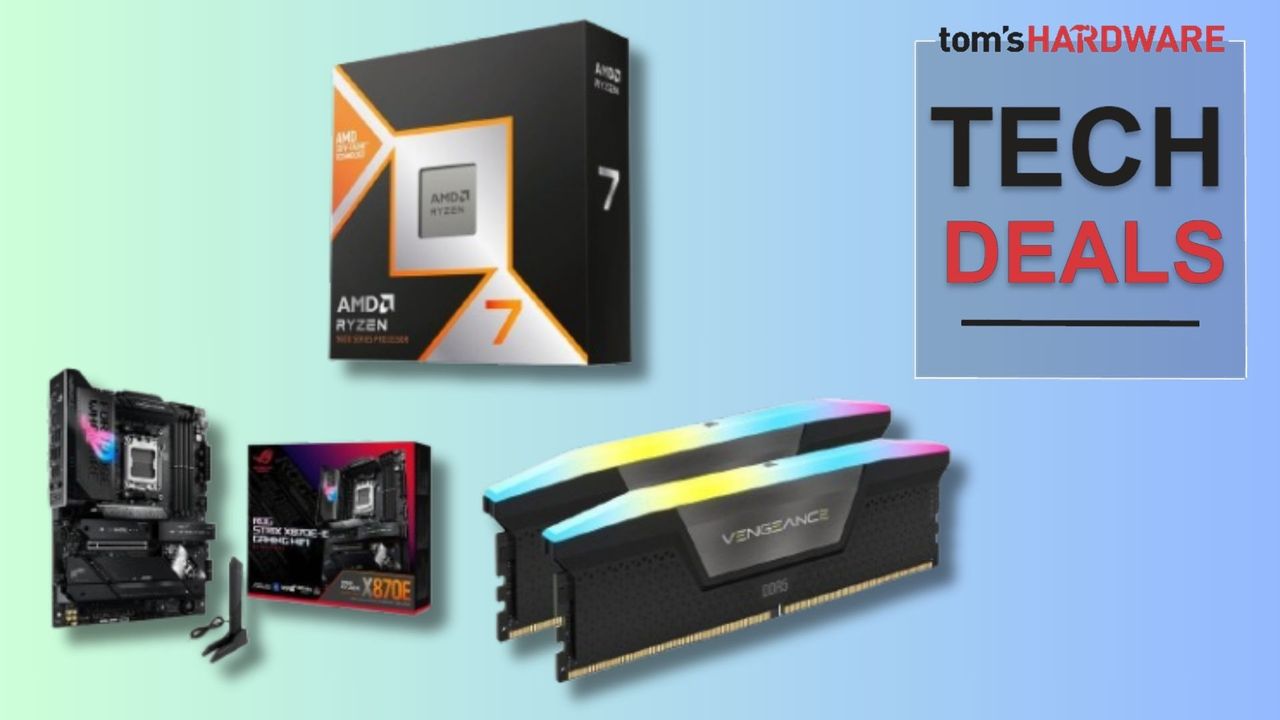
Another fantastic Newegg combo deal has combined the eight-core AMD Ryzen 7 9850X3D with 32GB of Corsair Vengeance DDR5-6000 RAM and an Asus ROG Strix X870E-E motherboard for just $1,019.99, making the RAM effectively just $111 in this build.

John Collison / Cheeky Pint : Q&A with Kalshi co-founders Tarek Mansour and Luana Lopes Lara on suing the US government, solving market making, agentic and insider trading, ethics, and more — Tarek Mansour and Luana Lopes Lara are the co-founders of Kalshi, the first federally regulated prediction market in the US.

As distrust peaks, nearly half of users are abandoning ChatGPT and Gemini. Discover how the "privacy rebellion" of 2026 is reshaping the digital landscape. The post People are quitting ChatGPT and Gemini over privacy concerns appeared first on Digital Trends .
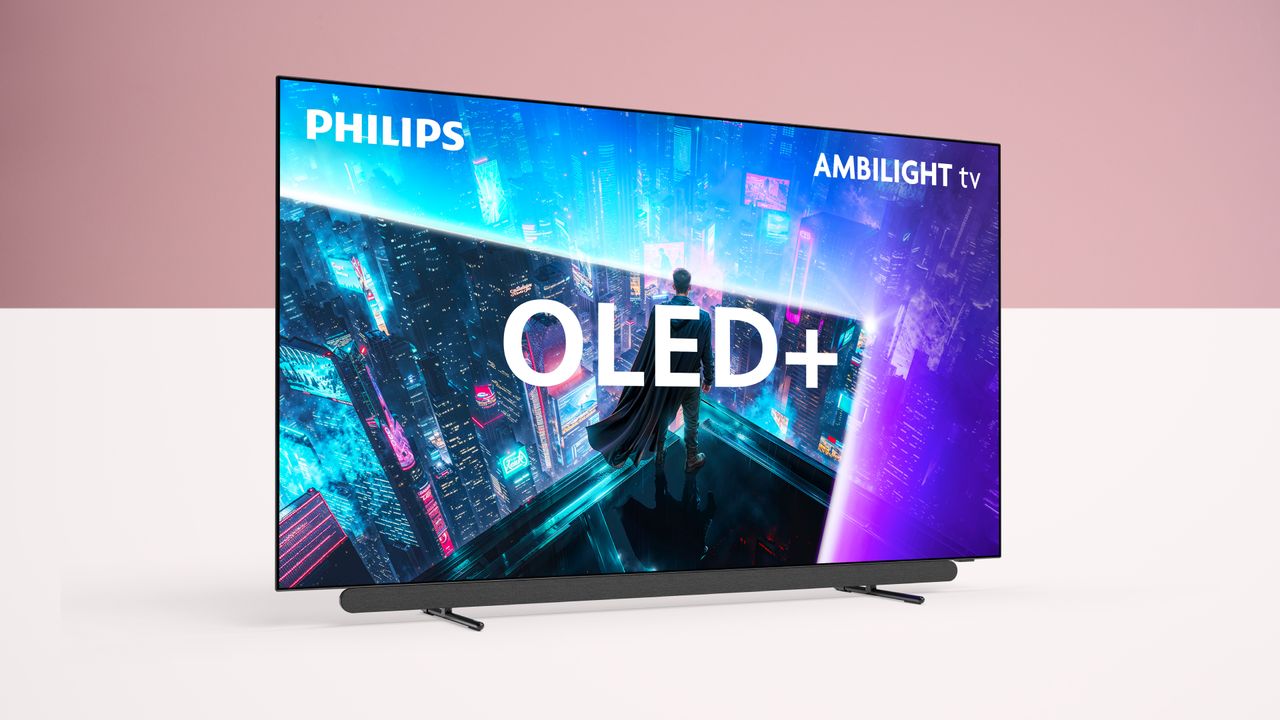
Philips has revealed its 2026 OLED lineup, featuring higher brightness, Dolby Vision 2 support and a new Amiblight feature!

NOW 46% OFF ON AMAZON Baseus Picogo 10K MagSafe Power Bank View Deal At the rate modern phone batteries deplete, leaving home for a long stretch of time can be a gamble. Doomscroll a little too much during your commute and you might not have enough battery left to get back home at the end of the day. (Don’t ask me how I know that.) Well, there’s one thing you can do to never worry about that again: grab yourself a conveniently wireless power bank. Today, this Baseus Picogo 10K MagSafe power bank is on sale for $38 (was $70). This is a slim and super-portable power bank with a 10,000mAh battery capacity. That’s going to allow you to recharge your phone about two times over. With Qi2 charging, this tiny little thing can push 15 watts of charging for iPhones and Android devices with MagSafe cases. This portable charger is small enough that it will neatly fit on the back of your phone, right under the camera lenses. It’s lightweight enough that it won’t make your phone uncomfortable to hold, and slim enough that you can still use the phone while on the go. It stays put thanks to its magnetic mount, too. It doesn’t get more convenient than that. The Baseus Picogo also features a USB-C port, so if you’re inclined to use that instead, you can expect 27 watts of fast charging. That’s ideal for when you’re at your desk, for instance. Go ahead and buy yourself peace of mind with this Baseus Picogo 10K MagSafe power bank that’s 46% off on Amazon right now!

Gaming company forced to backtrack by court after AI-driven plan to dodge $250m bonus payment backfires.

Marshall has announced a new and smaller party speaker. The classic guitar amplifier brand's Bromley 450 Bluetooth speaker includes instrument and microphone inputs.

Valorant gets a new agent as part of its latest set of patch notes, but significant nerfs to others will no doubt make some players unhappy.
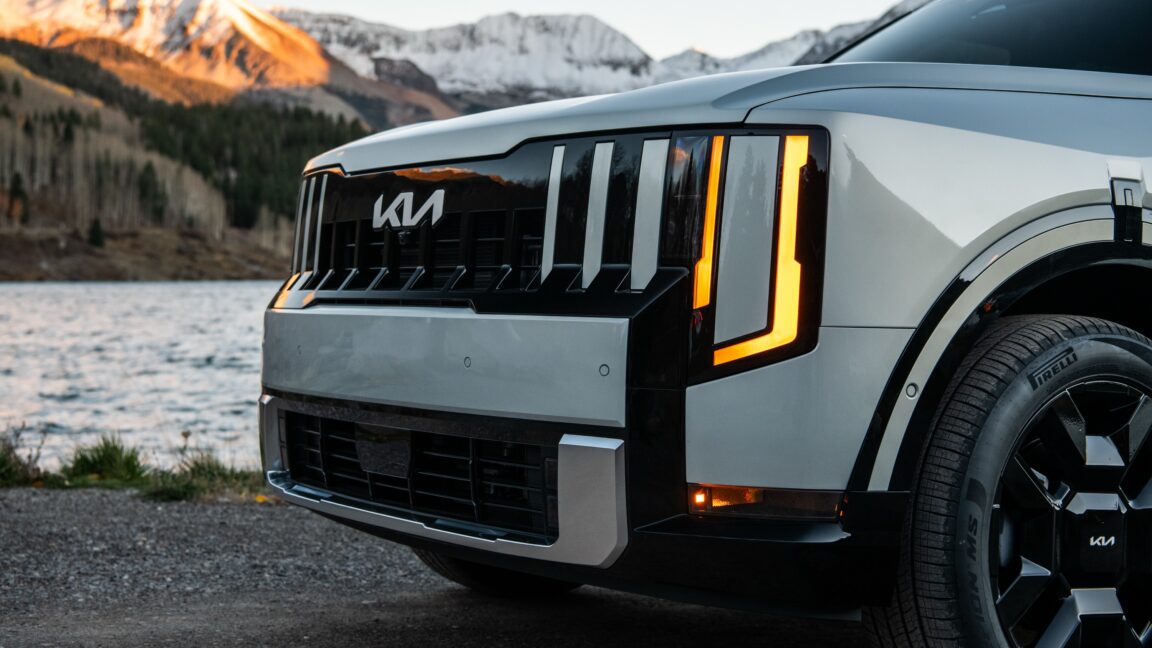
The three-row SUV starts at under $40,000, and now there's a 35 mpg hybrid version.

5G has only been around for a few years. The technology is still far from living up to everything that operators, manufacturers, and other players in the industry promised before its launch. But just like then, the same players have already started talking about 6G . So what is the plan for the next generation of mobile networks? When will it be launched, and what practical differences can ordinary consumers expect? 10-year product cycle Ever since the infancy of mobile telephony in the 1980s, there has been a major technological shift approximately every 10 years. NMT was replaced by GSM (later called “2G”) in the early 1990s, which was replaced by UMTS and CDMA 2000 (3G) around the turn of the millennium. Ten years later, LTE (4G) made its entrance, and around 2020, parts of 5G began to roll out. It is therefore hardly surprising that the mobile industry is aiming to launch 6G around 2030. But just as with previous generational shifts, no one expects operators to one day switch on the new network and suddenly all the new technologies that have been in development over the past decade will work. And just as 3G received a major upgrade with “3.5G” (HSUPA) and 4G with LTE-Advanced and later LTE-Advanced Pro, the planned innovations in 6G are expected to come in waves over the next 10 years. Tommy Svensson is a professor at Chalmers University of Technology. Anna-Lena Lundqvist Tommy Svensson, professor at Chalmers, lists the highlights of 6G: More robust and energy-efficient wireless communication, AI-driven mobile networks with AI processing in the networks, the possibility of radio sensing and sensor data combining. He also says that 6G will bring higher speeds, higher capacity per square meter and shorter response times. Who is behind 6G? The development of new mobile technologies is driven by a large number of players around the world. The central organizer is the UN agency International Telecommunication Union (ITU-R). Technical development is mainly driven by the organizations 3rd Generation Partnership Project (3GPP) and Next Generation Mobile Networks (NGMN), whose members include technology companies, network operators, and academics. “The architecture is currently being designed. The specifications are expected around 2028. Right now, there is an intense global battle for technological leadership. China, the U.S., and the EU are all investing billions in research programs to ensure that their patents and visions will be the ones that determine the final standard,” says Mikael Gidlund. During the MWC trade show in Barcelona at the end of February, Nvidia unveiled an initiative that could have major consequences for this development. With support from Swedish companies such as Ericsson and Nokia, operator giants such as Deutsche Telekom and Softbank, and encouragement from the U.S. government through a collaboration with the Linux Foundation, Nvidia will ensure that the 6G standard is the first to be largely open source. Mobile masts will gain new functions with 6G. Budget Bizar Radar everywhere One of the planned new features in 6G is called Integrated Sensing and Communication, or ISAC. “It’s the big talking point that’s getting the most attention right now. ISAC means that we will no longer see the mobile network as just a way to transport data. Instead, radio waves will be transformed into a sensor, a kind of radar. The network can ‘see’ and measure distance, speed, and movement with centimeter precision without the devices needing GPS or cameras. This opens doors for everything from traffic monitoring to fall detection in healthcare,” says Mikael Gidlund, professor at Mid Sweden University. The idea that all mobile phone masts could be able to sense their physical surroundings and detect presence or movement may sound like science fiction — and also like a nightmare from a privacy perspective. This is something Mikael Gidlund is well aware of. “This is one of the most important technical challenges that must be solved for the technology to gain acceptance. The goal is to design the system according to the principle of ‘privacy by design.’ ISAC works like a radar, not a camera. It works with anonymous point clouds rather than biometric data. We can see that someone has fallen and needs help, but not who it is . By allowing data processing to take place locally in the mast and building technical barriers to identification directly into the standard, we can actually increase privacy by replacing cameras in sensitive environments. Anonymization is not an option — it is a technical prerequisite for trust. Mikael Gidlund Tina Strafrén Financially, network operators hope that technologies such as ISAC will be marketable to companies that want to run autonomous drones that scan their surroundings and stay in the right place, for example. A related innovation that also takes advantage of the air being full of radio waves is the “zero-energy internet of things.” This is a concept involving small sensors that do not need batteries but are powered by energy extracted from the environment, in this case radio waves in the mobile network (but it can also be via temperature differences, light, vibrations, or other means). The technology is reminiscent of the RFID chips found in some retail goods that trigger an alarm if you get too close to the exit. However, these sensors can read their environment in different ways and do not need to be located right next to a base station. Ericsson has an interesting article on this if you are curious and want to know more. Smart surfaces There is great interest among researchers in a new development called Reconfigurable Intelligent Surfaces. This involves using smart materials to improve coverage in urban environments by reflecting and directing signals around corners, so that fewer places end up in radio shadow. An example: You are standing next to a large building. On the other side of the building is a mobile phone mast. The signal has difficulty reaching you through the concrete, glass, and steel of the building, but on the other side of the road is another building whose façade has been coated with this type of smart surface. This allows the signal from the mast to bounce off the façade and easily reach you. This sounds fantastic, but Mikael Gidlund is pessimistic. “It’s an elegant solution on paper for solving range problems, but in reality we are struggling with difficult business models. Who will own and maintain these surfaces? Operators are skeptical about the logistics, even though the technical potential is exciting. With 6G, the boundary between digital and analog reality will become blurred. Gerd Altmann AI built into the network 6G is being developed at the same time as another huge technological shift has swept across the world: AI. And since AI is set to be everywhere, it is not surprising that it is taking center stage in the development of the 6G network. “A fundamental change is that 6G is designed as an ‘AI-native network.’ Intelligence is built into the network’s foundations to optimize operation and energy consumption,” says Mikael Gidlund. “AI-native” also means that the base stations themselves will have the capacity to run AI algorithms for various purposes. What could that mean in practice? Lightweight AR glasses where the network provides the computing power, for example,” says Mikael Gidlund. “But let’s be honest: Holographic living rooms by 2030 are more of a visionary image than a practical consumer product. The main consumer benefit will be a robust network. It simply must not go down, regardless of external stresses.” Analyst Ian Fogg explains the idea to The Verge : People move between different locations, and it is not practical to store information about all these locations in the mobile phone to which the glasses are connected. But a base station can store up-to-date information about everything in its surroundings, which can be communicated immediately to users who are located there. With a combination of mobile masts and satellite communication, 6G coverage could be improved. Spencer Backman Filling in the blank spots on the map According to Mikael Gidlund, the innovation that could be of most practical use to ordinary users is something called Non-Terrestrial Networks. This involves using satellites for communication when there is no mobile phone mast nearby. “Today, satellite communication is often expensive and separate, but in the 6G era, the mobile network will become three-dimensional. Your regular phone will be able to switch to a satellite when you leave the range of the terrestrial network. For consumers, this means a whole new level of coverage. The last “white spots” on the map in the forest, at sea, or in the mountains will disappear or become fewer, which is a huge safety gain. With 6G, the total capacity of each base station is expected to be significantly higher, both at higher frequencies and at the lower frequencies used over longer distances and to reach inside buildings. Mikael Gidlund is hopeful that 6G will eventually overcome “network collapses” in crowded arenas and similar venues, where thousands of people gathered in a small area cause mobile networks to be unable to cope with the enormous pressure. Today’s mobile networks often have problems in arenas and other densely populated places. Israel França New frequencies While mobile networks currently use frequencies below 6GHz and above 24GHz, there is discussion about how the space in between should be used. Mikael Gidlund calls the centimeter band (7- to 15GHz) “6G’s workhorse,” something that Ericsson also highlights in a report on 6G development. Tommy Svensson points out that the allocation of frequencies in this range has not yet been decided anywhere in the world. In Europe, the frequency bands 7.125- to 7.25GHz, 7.75- to 8.4GHz, and 14.8- to 15.35GHz are being discussed. It is thanks to this range that ISAC and 6G’s higher capacity can become possible, says Mikael Gidlund. The companies developing 6G technology are also interested in the terahertz bands, frequencies above 100GHz. In theory, these can provide extreme speeds, but Mikael Gidlund is skeptical about their social benefits and believes that they will remain niche solutions for controlled environments such as factory floors. “The biggest challenge for operators is to avoid being forced into a massive rollout of thousands of new small cells. The success of the 6G standard depends on whether we can squeeze maximum performance out of the bands between 6- and 15GHz. Anything higher than that is research. Anything lower than that is coverage,” summarizes Mikael Gidlund.

The company raised $12 million in seed funding to measure and manage GPU power surges.

Rubi has developed an enzymatic process to turn carbon dioxide into cellulose that's ready to be spun into lyocell or viscose.

The company's new product, called Gamma Imagine, will let users employ text prompts to create brand-specific assets like interactive charts and visualizations, marketing collateral, social graphics, and infographics.

Last year, Dell came this close to abdicating its throne as the maker of the best premium Windows laptops when it announced it was killing off the XPS brand . Thankfully, the company regained its wits, admitted its mistake and doubled down on its flagship notebook line by revealing a full redesign for 2026 with super sleek builds, improved performance and helpful tweaks to nearly everything else we loved about its predecessors. The one blemish to Dell's crown jewel is some keyboard issues on early units. But make no mistake, the king of laptops is back. Design and display For this revamp, Dell didn't stray away from the XPS line's typical mix of glass and aluminum. However, this time around, the company streamlined pretty much everything. The XPS 16 now weighs just 3.65 pounds (or 3.85 if you opt for the heavier LCD display), which is almost a full pound lighter than its predecessor (4.56 pounds). That's a massive drop and it makes this system closer in heft to a 15-inch MacBook Air (3.3 pounds) than a 16-inch MacBook Pro (4.7 pounds), despite the latter being XPS's usual rival. It's also noticeably thinner at 0.58 to 0.6 inches (depending on the exact configuration), which is once again a sizable decrease from the previous model (0.75 inches). Honestly, this laptop needs to be held to be truly appreciated. Even after using it for a while, it still feels impossibly sleek every time I pick it up. The optional 3.2K OLED display available on the XPS 16 is simply gorgeous. Sam Rutherford for Engadget Elsewhere, Dell kept important features like the XPS line's up-firing stereo speakers (which sound great), along with a decent mix of ports, including three USB-C jacks that support Thunderbolt 4, DisplayPort 2.1 and power delivery. The one thing I wish Dell had included though, is some sort of SD card reader. With the XPS 16 being the largest member of the family, it's often a prime option for people who like to edit photos and videos on the go, so having an easy way to transfer media from a camera to the laptop would be really nice. As for its display, Dell's optional 3.2K tandem OLED panel like the one on our review unit reinforces the laptop's role as a mobile editing platform. It produces vibrant hues and features a variable refresh rate that can go between 20 and 120Hz depending on what's on the screen. Despite having a nominal peak brightness of 400 nits, it looks much brighter in person, so you're getting an excellent viewing experience. Keyboard and touchpad The XPS 16's keyboard looks great, but the lack of an anti-ghosting feature and somewhat shallow key travel aren't ideal. Sam Rutherford for Engadget Perhaps the biggest change to the XPS line is its reworked keyboard and touchpad, which brings some ups and downs. Dell kept the glass deck and seamless touchpad used on previous models, except now there's a faint line going around its perimeter, so you never have to guess where it is. The company also replaced the row of capacitive touch function and media controls from its predecessor with regular keys. As a fan of physical buttons, this is just great. The issue is that for discerning typists, the keyboard seems to be missing anti-ghosting or N-key rollover tech. This means that if you press two keys very quickly one after another, the second press actually gets registered first, which can result in erroneous inputs. We ran into the same problem when testing the XPS 14 . Dell claims this issue only impacts the first batch of systems off the line and that units on sale today have had this issue patched already. Furthermore, the company says it will release an update to address the issue on the remaining units, which should be out sometime in March. Though at the time of publication, I haven't received anything yet. The XPS 16 also features punchy up-firing stereo speakers that don't leave much to complain about. Sam Rutherford for Engadget There is another nitpick about the keyboard. While I don't mind that Dell retained its zero-gap layout instead of going with a more traditional chiclet-style design, the more I type on it the more I wish Dell would offer something with a bit more key travel and heavier actuation. For reasons out of my control, my company-assigned work machine is a Dell Precision 5680 from 2023. I don't like it very much aside from its keyboard, which is significantly bouncier and just generally nicer to use than the one on the XPS 16. Performance A big reason why Dell was able to make the XPS 16 so thin and light is that the company didn't leave room for discrete graphics. That means you can only choose between a handful of Intel's latest Series 3 Core Ultra chips, ranging from the Ultra 5 325 to the Ultra X7 358H, with the latter being the one I tested here. That's not a bad thing though, as the laptop easily handled all the various productivity tasks I threw at it. And even without a proper GPU, the XPS 16 still pumped out 62 fps in Cyberpunk 2077 at 1920 x 1080, using Ultra settings and Intel's XeSS set to Quality. Those kinds of numbers aren't going to make anyone toss out their dedicated gaming rig, but once again, that's not too shabby for a notebook this easy to carry around. Battery life The XPS 16 comes with three USB-C port with Thunderbolt 4 which is nice, but sadly it lacks an SD card reader for quickly transferring media from a camera. Sam Rutherford for Engadget Thanks to a larger 99.5Whr battery, the XPS 16 fared better on our rundown test than its smaller sibling. This could be a deciding factor for anyone trying to choose between the two. In PCMark 10's Modern Office battery benchmark, the XPS 16 lasted just shy of 12 hours (11:53), which is more than an hour and a half longer than what we got from the XPS 14 (10:21). As long as you're not going to be gone for more than a day or you're really pushing it, you should be able to leave its power brick at home. Wrap-up Instead of killing the XPS name for good, Dell wisely reconsidered and then doubled down. The result is fantastic new version of the XPS 16. Sam Rutherford for Engadget When Dell decided to bring back the XPS name, COO Jeff Clake said the company was going to get back to its roots. That's the kind of messaging that's easy to stay on a stage, but after testing out the reborn XPS 16, I can confirm it isn't just flimsy rhetoric. This laptop is a shining example of a premium ultraportable Windows laptop done well. It features a super sleek aluminum chassis, strong performance, solid battery life and an excellent display, particularly if you upgrade to the 3.2K OLED option. The connection to the iconic award-winning systems isn't just skin deep. This thing is just as much an XPS as the ones we loved a decade ago and Dell is driving that point home by letting the XPS logo sit front and center on its lid instead of the company's usual branding. At just 3.65 pounds, the 2026 XPS 16 is basically a full pound lighter than its predecessor. Sam Rutherford for Engadget My one complaint is that I wish Dell would bring back the chiclet-style keyboards we got on models from the early 2020s . Though as long as the company can release updated software to fix the ghosting issues I've encountered, what's on there now is more than good enough. Granted, at $2,349 for our review unit, the XPS 16 is a bit pricey, but that's the going rate for a high-end notebook these days. If you snag a discount similar to the one Dell is currently running , suddenly, you're looking at an even more enticing package at $1,900. The biggest reason someone might want to hold off for now is if you do need more powerful graphics, as I'm expecting Dell to release an alternate version of the XPS 16 with room for a discrete GPU (and hopefully an SD card reader) sometime before the end of the year. Despite Dell nearly tossing decades of pedigree in the trash just months ago, the XPS 16 has returned to reclaim its spot at the top. This article originally appeared on Engadget at https://www.engadget.com/computing/laptops/dell-xps-16-2026-review-return-of-the-king-130000906.html?src=rss

Bold reinvention turns setbacks into lasting momentum for leaders and their teams. Including why and what to do about it.
 Gizmodo
  Tom's Hardware
  Techmeme
  Digital Trends
  TechRadar
  PCWorld
  Forbes Tech
  Ars Technica
  TechCrunch
  Engadget