Amazon launches one- and three-hour delivery options in the US

Amazon launches one- and three-hour delivery options in the US

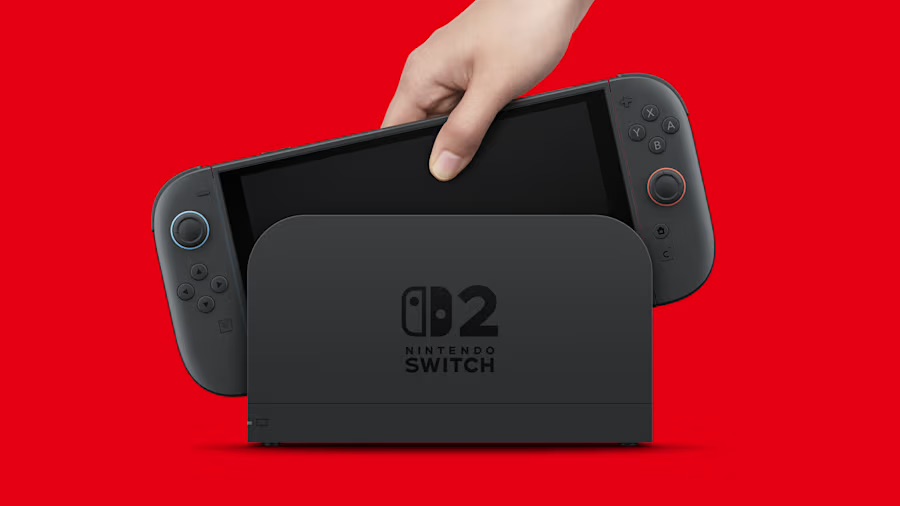
Amazon just launched one-hour and three-hour delivery options in many cities and towns throughout the US. As a matter of fact, the company says three-hour delivery windows are already available in over 2,000 locations, while one-hour windows have launched in "hundreds" of cities. You can check to see if your area is covered by clicking right here . Just like same-day and next-day delivery, this doesn't cover every available item. Amazon boasts that over 90,000 products are ready for "fast, reliable delivery in just a few clicks." There has been a priority placed on the kinds of items typically needed within 60 to 180 minutes. Users can order "everyday essentials like pantry items, cleaning supplies, health and beauty items and over-the-counter medications." The new delivery options also cover some fun, but perhaps not essential, items like electronics, toys and clothing. Hey, a Nintendo Switch 2 to play Pokopia could be considered essential to many. Amazon These high-octane delivery methods don't come cheap, even for Prime members. One-hour deliveries cost $10 and three-hour deliveries cost $5. Customers without a Prime membership pay $20 for one-hour deliveries and $10 for three-hour deliveries. The same-day delivery option remains free for Prime members. This isn't Amazon's first foray into ultra-quick delivery windows. The company has been experimenting with this kind of thing for years. It started a program called Amazon Now in the 2010s that handled that sort of thing, which eventually changed to Prime Now. It was sunsetted in 2021 . This article originally appeared on Engadget at https://www.engadget.com/apps/amazon-launches-one--and-three-hour-delivery-options-in-the-us-151536118.html?src=rss

Starfield Hits PS5 On April 7, Extensive New DLC Coming To All Platforms

Starfield Hits PS5 On April 7, Extensive New DLC Coming To All Platforms

Starfield will release for PlayStation 5 on April 7, Bethesda has announced. It'll be out that day alongside the release of the "biggest update to the game since launch" for all platforms. None of this is surprising, as the release date and some early details have been leaking for a long time. The Terran Armada and Free Lanes updates will make Starfield the "most complete version" of the game, Bethesda said. Continue Reading at GameSpot

Intel quietly pushes ‘Arrow Lake Refresh’ CPUs into gaming laptops

Intel quietly pushes ‘Arrow Lake Refresh’ CPUs into gaming laptops

Intel quietly revealed the mobile version of its “Arrow Lake Refresh” processors on Tuesday, adding both the Core Ultra 9 290HX Plus and Ultra 7 270HX Plus in a bid to capture the gaming laptop space. Last week, Intel debuted its Core Ultra 200S Plus series for desktop PCs , trying to overcome a somewhat mediocre launch of its older “Arrow Lake” chips. Intel’s two new Arrow Lake Refresh chips offer the same upgrades: a 900MHz increase in die-to-die frequency between the memory controller and CPU, as well as the Intel Binary Optimization Tool, a still somewhat unknown way of optimizing game code so that it runs better on Intel processors. Intel also said that the platform will include discrete (not integrated) Wi-Fi 7, Bluetooth 5.4, and Thunderbolt 5. The latter technology means that the older 40Gbps Thunderbolt 4 technology will likely continue being our preferred technology for the best Thunderbolt docks . Here are the details of the two new mobile chips: Intel Core Ultra 9 290HX Plus: 24 cores (8 P-cores, 16 E-cores, up to 5.5GHz), 36MB Smart cache Intel Core Ultra 7 270HX Plus: 20 cores (8 P-cores, 12 E-cores, up to 5.3GHz), 30MB Smart cache It appears that Intel will keep selling its older Arrow lake-HX chips, as the company showed the two platforms fitting together in the same product hierarchy. Intel said that the Core Ultra 9 290HX Plus delivers 8 percent faster gaming performance than the Core Ultra 9 285HX, along with 7 percent faster performance in single treaded applications. Intel also used the circa-2022 Core Ultra i9-12900HX as a benchmark for gaming comparisons, claiming that gamers would see 62 percent faster gaming performance and about a 30 percent increase in single-threaded performance. It will face a strong performance from its own Panther Lake productivity chips , which games quite capably from its own integrated GPUs. The gen-over-gen upgrade is also slightly muddied by the IBOT tool, which can offer substantial performance gains. In the chart below, IBOT is designated by a small asterisk next to the game’s name. Intel Core Ultra 200HX Plus-powered systems will be available from our OEM partners throughout the year, beginning today. PC vendors include Acer, Asus, Colorful, Dell, HP, Lenovo, Maingear, Mechrevo, MSI, Origin, Puget and Razer.

Tim Cook continues Apple's 50th anniversary victory lap in new interview

Tim Cook continues Apple's 50th anniversary victory lap in new interview

Apple CEO Tim Cook reveals what he thinks the company's contribution to the world is, discusses working with Trump, plus what he plans to do if Apple ever gets tariff refunds. Tim Cook on "Good Morning America" — image credit: ABC Following his open letter celebrating Apple's 50th anniversary, Tim Cook has now talked to ABC's Michael Strahan on Good Morning America about whether he'll retire soon, and just how he thinks Apple works in the world. Asked about Apple's biggest contribution to society is so far, Cook could not just pick one. "Oh, my God," he started. "You know, you can focus on the product moments, reinventing music, reinventing the smartphone, bringing the creative arts to the table, creative graphics, saving people's lives with the [ Apple Watch ]..." Continue Reading on AppleInsider | Discuss on our Forums

Best Amazon Spring deals on Hisense TVs: Mini-LED and Canvas models at major discounts

Best Amazon Spring deals on Hisense TVs: Mini-LED and Canvas models at major discounts

Amazon’s Spring Sale is bringing steep discounts on several popular Hisense TVs, offering buyers the chance to upgrade their home entertainment setup at some of the lowest prices of the year. The promotion includes a mix of Mini-LED smart TVs and lifestyle display models with savings ranging from around 12% to 40%, depending on the […] The post Best Amazon Spring deals on Hisense TVs: Mini-LED and Canvas models at major discounts appeared first on Digital Trends .

Best Amazon Spring deals on Hisense TVs: Mini-LED and Canvas models at major discounts

Best Amazon Spring deals on Hisense TVs: Mini-LED and Canvas models at major discounts

Amazon’s Spring Sale is bringing steep discounts on several popular Hisense TVs, offering buyers the chance to upgrade their home entertainment setup at some of the lowest prices of the year. The promotion includes a mix of Mini-LED smart TVs and lifestyle display models with savings ranging from around 12% to 40%, depending on the […] The post Best Amazon Spring deals on Hisense TVs: Mini-LED and Canvas models at major discounts appeared first on Digital Trends .

Gamers are right to be disgusted by NVIDIA's DLSS 5

Gamers are right to be disgusted by NVIDIA's DLSS 5

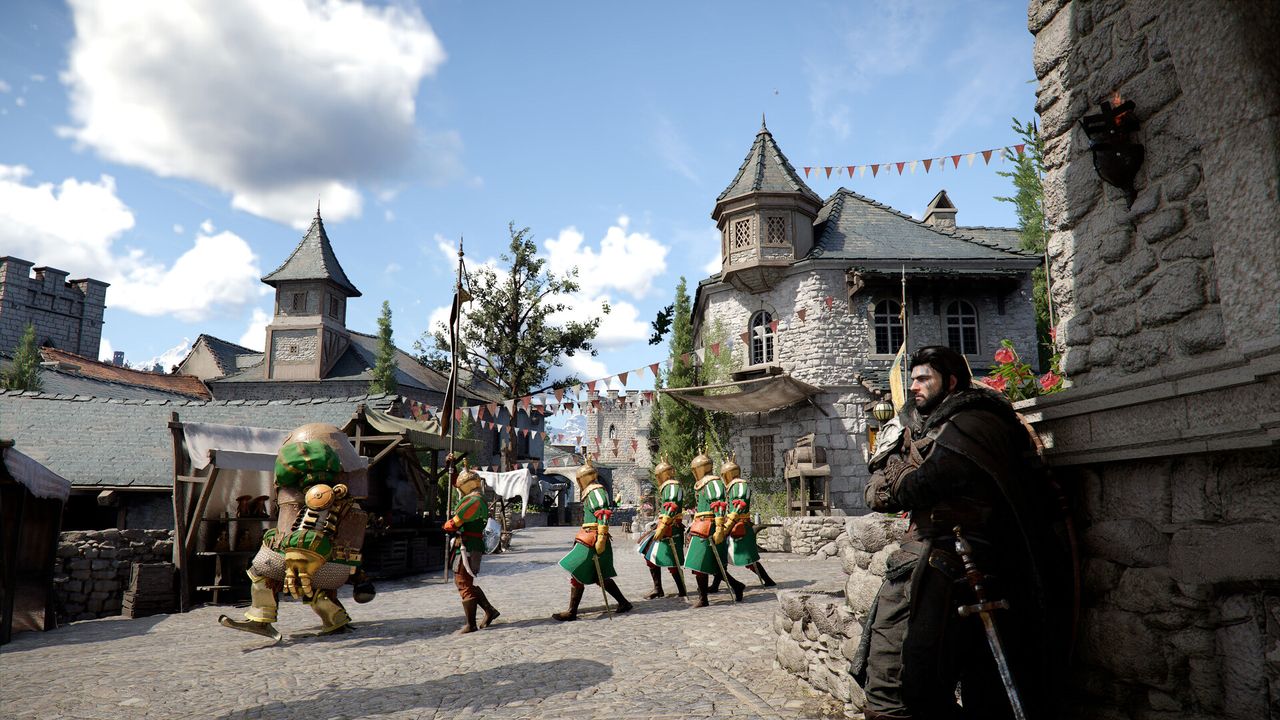
You can sum up the gamer response to NVIDIA's DLSS 5 announcement with the ever-relevant Fallout 4 meme: "Everyone disliked that." Across social media and Reddit last night, I couldn't find anyone who's genuinely positive about the potential for DLSS 5, which uses AI to add "photorealistic" lighting and materials to in-game models and environments. Instead, it's mostly complaints about the feature being another avenue for AI slop. And you know what? I agree. It's not unusual to see gamers being reflexively angry about new technology on the internet, especially when it's being pitched by NVIDIA as the “biggest breakthrough in computer graphics” since its RTX 20-series GPUs arrived in 2018 with real-time ray tracing. There was plenty of suspicion around DLSS's original AI upscaling model, as well as the "fake" frames generated by later iterations. But the few demos we've seen of DLSS 5 basically look like "yassified" AI filters for popular games. Leon and Grace from Resident Evil: Requiem have more distinct facial and hair detail, but they look a bit too slick. There are more wrinkles on an old woman in Hogwarts Legacy . And the face, hair and clothing from a Starfield character gain an uncanny sheen. None of the demos have the immediate impact of the Star Wars real-time ray tracing short ILMxLab produced with NVIDIA seven years ago. That demonstration showed us glorious reflections and lighting effects we'd never seen before in real-time. The DLSS 5 demos, on the other hand, don't look much different from the AI filters that make you look more presentable for Zoom calls. There's no genuine excitement for DLSS 5, just NVIDIA telling us that it's groundbreaking. There's also plenty of concern about DLSS 5 straying from an artist's original intent , as well as a potential homogenization of game visuals if every developer starts using the feature. NVIDIA claims developers will have "detailed controls for intensity, color grading and masking," which will help DLSS 5 stay in line with a game's aesthetic. But we don't have any direct developer experience with the feature yet — some artists may want far more control than NVIDIA wants to give. The difference between DLSS 5 and earlier versions NVIDIA's upscaling is like the difference between generative AI and more traditional machine learning models. NVIDIA relied on the latter to make low-resolution textures and models appear sharper, and later to insert generated frames to smooth out gameplay and raise your fps count. As Wirecutter and former Polygon editor Arthuer Gies points out , you could argue those features were in service of delivering what developers originally intended. But DLSS 5's neural model applies its concept of "photorealism" on top of what games are rendering -- it's like watching a Pixar movie that let OpenAI's Sora do a final visual pass. Part of the negative response towards DLSS 5 may stem from a widespread anti-gen AI sentiment, but that doesn’t devalue the criticisms either. Similar to AI generated text, images and video, there’s a dehumanizing aspect about DLSS 5. It can erase the work of human artists (despite how much control NVIDIA claims they have), and it also feels like a calculated attempt to appeal to gamers who just want shinier graphics. NVIDIA showed off how generative AI could be used to create dialog and voices for NPCs last year at CES, but that was also widely disliked (and I called it a genuine nightmare ). Of course, I can’t fully judge DLSS 5 until I see it in action beyond a short demo. But I think the visceral disgust is an important indicator that many gamers aren’t onboard with the AI-powered future NVIDIA is trying to sell us. And perhaps the idea of chasing “photorealism” may be a bit of a fool’s errand. It may be appropriate for some games, but as Nintendo and indie PC devs have shown, you can also make some of the best games of all time without striving for realism. Tears of the Kingdom could use a better framerate and higher resolution textures, but it certainly doesn’t need DLSS 5. This article originally appeared on Engadget at https://www.engadget.com/gaming/pc/gamers-are-right-to-be-disgusted-by-nvidias-dlss-5-151105593.html?src=rss