
2025 marked by extreme heat, record temperatures, widespread impacts

2025 marked by extreme heat, record temperatures, widespread impacts

ANKARA — 2025 ranked among the warmest years on record globally, despite a shift toward neutral or weak La Nina conditions that typically cool global temperatures, according to the World Meteorological Organization (WMO) and the Copernicus Climate Change Service. Global temperatures in 2025 ranked second or third warmest on record, following the record-hot year of 2024, underscoring the growing strength of human-caused warming driven by greenhouse gas emissions. Scientists said natural cooling cycles were no longer sufficient to offset rising baseline temperatures, with many regions recording record or near-record heat levels throughout the year. WMO said its latest global climate outlook showed temperatures over the next five years were likely to remain at or near record levels, with an 80 percent chance that at least one year will exceed the current warmest year on record and a 70 percent chance that the five-year average will temporarily exceed 1.5C above pre-industrial levels. The effects of climate change are considered one of the biggest threats facing humanity today, according to many studies and scientific bodies. Summer 2025 heatwaves Extreme summer heat in 2025 caused widespread health impacts and record temperatures across multiple regions, with July ranking as the third-warmest on record globally. Europe recorded its fourth-warmest summer on record, with intense heat concentrated in western and southern areas. Land surface temperatures were significantly above average in northeastern Spain, southwestern France, the Balkans and parts of Fennoscandia, with anomalies reaching up to 6C (10.8F) in some locations. The UK recorded its hottest June on record in England and the second-warmest nationwide since records began in 1884, according to the Met Office. The Netherlands experienced its second-highest June temperatures since 1901, data from the Royal Netherlands Meteorological Institute showed. Spain endured its most intense heatwave on record in August, the State Meteorological Agency said. Scandinavia, including Finland, Denmark, Sweden and Norway, saw prolonged heatwaves in July, with temperatures well above seasonal averages across the region. A study by researchers from Imperial College London and the London School of Hygiene & Tropical Medicine estimated around 24,400 heat-related deaths across 854 European cities between June and August. About 68 percent of those deaths were attributed to climate change, effectively tripling the expected toll without human-induced warming. Italy recorded the highest number of climate-attributed deaths at 4,597, followed by Spain with 2,841, Germany with 1,477, France with 1,444 and the UK with 1,147. The most severe city-level impacts were recorded in Rome, followed by Athens, Paris and Madrid. Researchers said older populations were particularly vulnerable, with around 85 percent of victims aged 65 or older, adding that heat-related deaths are often underreported. Asia Extreme heat affected large parts of Asia in 2025. Japan recorded one of its hottest Junes since records began in 1898, the Japan Meteorological Agency said, with prolonged heat leading to a surge in heatstroke cases and deaths, particularly among elderly people. South Korea reported record daily temperature averages in late June, the highest since 1904. India issued red alerts in New Delhi amid extended heat conditions, while Pakistan saw temperatures rise to around 50C (122F) in parts of Punjab province. In Iran, authorities closed public institutions in 18 provinces to manage soaring energy demand caused by widespread use of cooling systems. North America The US and parts of North America experienced severe heatwaves in 2025, including a major June heat dome that exposed more than 255 million people to extreme temperatures, with readings frequently exceeding 38C (100F). Record heat affected the Midwest, Northeast, South and West, leading to thousands of heat-related illnesses. The Centers for Disease Control and Prevention said extreme heat remains the leading weather-related cause of death in the US, with preliminary 2025 data confirming at least 150 heat-related deaths nationwide. The prolonged heat strained power grids, infrastructure and public health systems across the country. Droughts intensify Extreme heat in 2025 intensified drought conditions in many regions by increasing evaporation rates. Iran faced one of its most severe water crises, with Lake Urmia, once the Middle East’s largest saltwater lake, shrinking dramatically and facing periodic drying, alongside critically low dam levels in Tehran and other major cities. Drought conditions also affected Syria, parts of Africa and South Korea, where the city of Gangneung was declared a disaster zone after record-low rainfall. The WMO’s State of Global Water Resources report warned of increasingly erratic water cycles marked by rapid swings between floods and droughts. UN Water said 3.6 billion people currently face inadequate access to water for at least one month each year, a figure projected to rise to more than 5 billion by 2050. Events in 2025 highlighted the accelerating risks posed by climate change, with heatwaves, droughts and related crises becoming more frequent, more severe and more disruptive worldwide.

NSC reiterates call for rebels to lay down arms

NSC reiterates call for rebels to lay down arms

ON the 57th founding anniversary of the Communist Party of the Philippines (CPP) on Friday, the National Security Council (NSC) cited the "heavy toll" on Filipino communities of the group’s decades-long armed campaign to topple the Philippine government, reiterating its call for rebels to lay down their arms. In a statement, the NSC said the CPP-New People’s Army’s (NPA) operations have led to loss of lives, displacement, economic disruption, and persistent insecurity, particularly in remote rural areas. The council noted that armed clashes, including incidents during the holiday season, show that violence remains a tool for pursuing political objectives. The NSC criticized temporary ceasefire declarations as “insincere” when accompanied by continued calls for armed readiness, saying these moves undermine public safety and community welfare. Highlighting the government’s National Action Plan for Unity, Peace, and Development (NAP-UPD), implemented under the National Task Force to End Local Communist Armed Conflict (NTF-Elcac), the council emphasized that democratic dissent and advocacy for reform are protected under the Constitution. “The use of armed violence to pursue political objectives is not,” the statement said, adding that coercion marginalizes communities and undermines lawful political processes. The statement outlined the government’s focus on “lawful, development-centered, and people-focused measures” to end the conflict. Programs under NAP-UPD include disengagement and reintegration, livelihood support, strengthened local governance, and targeted interventions addressing long-standing grievances, while upholding human rights and the rule of law. Amnesty remains available for qualified former rebels seeking to return to civilian life. The NSC urged remaining armed elements to surrender and “contribute meaningfully to nation-building,” and called on the public, civil society, and youth to reject the romanticization of violence and support peaceful avenues for reform. “Ending this conflict requires collective resolve to deny violence legitimacy and advance solutions that deliver security, accountability, and tangible development for all Filipinos,” it said.

Flood control mess: More face jail time

Flood control mess: More face jail time

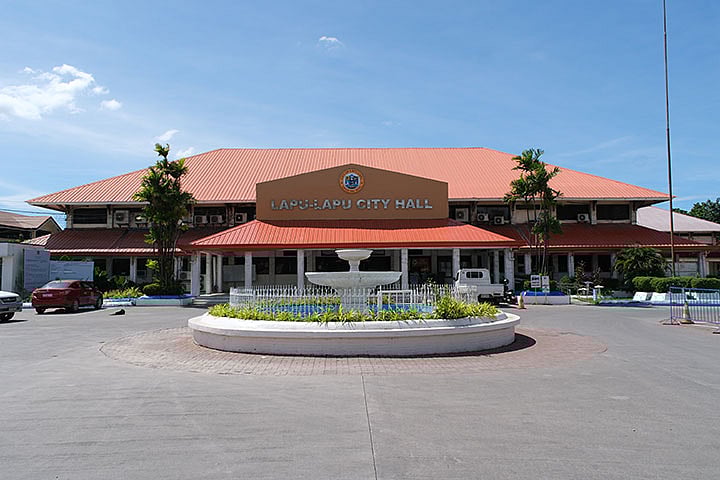
MALACAÑANG said Friday more personalities linked to the flood control scandal will be “thrown behind bars in the New Year.” Presidential Communications Acting Secretary Dave Gomez also assured the public President Ferdinand Marcos Jr. would continue his administration’s efforts to hold to account all individuals involved in corruption-tainted infrastructure projects. Gomez also said the detention of contractors Pacifico “Curlee” Discaya and Cezarah Rowena “Sarah” Discaya over the Christmas period is just the start of a broader accountability drive. “The flood control investigation does not end on Dec. 25. It’s only been a little over four months,” he said. “The Napoles probe took almost a year before people were sent to jail. There will surely be more thrown behind bars in the New Year,” he added. Janet Lim-Napoles was accused of running a pork barrel scam for at least a decade, using a network of bogus non-government organizations to siphon off about P10 billion in lawmakers’ Priority Development Assistance Fund to ghost projects in exchange for massive kickbacks. Napoles was eventually convicted of plunder. Gomez said the scale of the Discayas’ ill-gotten wealth far exceeds previous cases. “Some quarters are calling the Discaya couple as the new Napoles, but their unexplained wealth is ten times over. Both spent Christmas in detention,” he said. While the Discaya couple and several officials of the Department of Public Works and Highways (DPWH) are already in detention and awaiting trial, the public continues to question why more prominent personalities — such as former speaker Martin Romualdez and former House Appropriations Committee chairman Zaldy Co — have yet to be placed behind bars despite their alleged involvement in the corruption scheme. Sarah Discaya was arrested on Dec. 18 over a P96-million ghost flood control project in Davao Occidental and is locked up at the Lapu-Lapu City Jail., Her husband, Pacifico, is detained at the Senate premises after being cited in contempt by the Senate Blue Ribbon Committee for inconsistent testimony. Co remains at large weeks after similar charges were filed against him in relation to a substandard flood control project in Oriental Mindoro. In a separate statement Palace Press Officer Claire Castro said the Marcos administration’s fight against corruption was “far from over.” She said that all relevant investigative bodies, including the Independent Commission for Infrastructure (ICI), were working to gather evidence to prosecute the culprits.

PNP to work with LGUs on common fireworks zone

PNP to work with LGUs on common fireworks zone

(UPDATE) IN the lead-up to the New Year revelry, the Philippine National Police (PNP) has directed all police chiefs nationwide to coordinate with local government units (LGUs) on the possible establishment of designated centralized markets for firecrackers and pyrotechnics. LtGen. Jose Melencio Nartatez Jr., acting PNP chief, said the directive was issued as firecracker-related injuries continued to rise days before New Year’s Day. Data from the Department of Health (DOH) showed at least 28 firecracker-related injury cases recorded from Dec. 21-25, a figure authorities expect to increase as celebrations peak. Nartatez said concentrating the sale of firecrackers in specific areas would allow authorities to more closely monitor vendors and products, while reducing risks to the public. “The main purpose is proper regulation and public safety. By designating a specific area in every town or city where people could buy firecrackers and pyrotechnic materials, we can easily monitor and prevent the selling of illegal firecrackers,” Nartatez said on Friday. He instructed police chiefs to work closely with LGUs in identifying safe locations for the designated selling areas and in setting the allowable period for the sale of firecrackers. Under the plan, designated areas will have a visible police presence, coordinated with the Bureau of Fire Protection (BFP). Fire trucks and emergency responders will also be placed on standby for any incident, Nartatez said, adding that centralized selling areas would help curb the sale of illegal firecrackers, as transactions outside the designated zones would be considered unauthorized. “Centralized selling areas allow us to inspect vendors and products closely. It will be easier for us to determine which firecrackers are legal and which are illegal,” he said. The PNP also urged the public to cooperate with the authorities and observe safety guidelines to help ensure a peaceful and injury-free New Year celebration. Indiscriminate firing The PNP has also intensified its monitoring of indiscriminate firing incidents and arrested seven individuals, including several police officers, from Dec. 16-26, according to official records. The arrests were the result of heightened internal monitoring by the PNP targeting members of its ranks involved in illegal gunfire incidents, authorities said. Among those apprehended were a police master sergeant assigned to the City Police Station under the Surigao del Sur Police Provincial Office, a police senior master sergeant assigned to the Iloilo City Police Office, and a patrolman from the Third Special Operations Unit of the Maritime Group under the National Capital Region Police Office. Another patrolman assigned to the Opol Municipal Police Station in Misamis Oriental also surrendered in connection with an indiscriminate firing incident. Based on PNP data, a total of seven people were arrested nationwide for their alleged involvement in indiscriminate firing. BGen. Randulf Tuaño, chief of the PNP Public Information Office (PIO), said the organization would not tolerate violations committed by its own personnel, emphasizing that strict rules and policies are in place regarding the use of firearms. “The PNP will not condone any form of misconduct, especially indiscriminate firing, regardless of rank,” Tuaño said, adding that erring officers would face administrative and criminal charges. The PNP reiterated its call for discipline among its personnel and urged the public to report any incidents involving illegal discharge of firearms.

BOC intercepts illegal drugs worth P21.4M

BOC intercepts illegal drugs worth P21.4M

MORE than P21.4 million worth of illegal drugs have been intercepted by operations of the Bureau of Customs (BOC) at the Central Mail Exchange Center (CMEC) in Pasay City during the Christmas rush. Customs Commissioner Ariel Nepomuceno on Friday disclosed that, based on the report, Ninoy Aquino International Airport (NAIA) district collector Atty. Yasmin Mapa said the illegal drugs were hidden inside five unclaimed inbound parcels declared as various consumer items. The parcels were, however, subjected to examination after exhibiting suspicious indicators. Physical inspection revealed that the parcels contained a total of 2,928 grams of methamphetamine hydrochloride, popularly known as shabu, with an estimated standard value of P19,910,400, and 997 grams of high-grade marijuana (kush) with an estimated street value of P1,495,500. Nepomuceno said the seized items were officially turned over to the Philippine Drug Enforcement Agency (PDEA) for proper disposition and further investigation. The case constitutes violations of Republic Act (RA) 9165 (Comprehensive Dangerous Drugs Act of 2002, as amended) and RA 10863 (Customs Modernization and Tariff Act). “These interceptions reflect the bureau’s sustained efforts to detect and prevent the entry of illegal drugs through postal and courier channels. We remain resolute in protecting our borders and the welfare of the public,” added Nepomuceno. Mapa said the operation reinforces the bureau’s unwavering commitment to enforce customs and anti-drug laws in support of the national government’s campaign to protect the Filipino public. “Through strengthened inspection measures and close coordination with partner agencies, BOC-NAIA continues to ensure that mail and cargo facilities are not exploited for illegal activities,” added Mapa. For 2025 alone, the BOC-NAIA has intercepted some P800 million of illegal drugs inside outbound and inbound parcels at the NMEC. BOC-NAIA's biggest single-day illegal drug operation was the interception last July of 44 kilograms of shabu worth at least P304 million at the NAIA Terminal 3. The "hot" goods were intercepted in two separate flights that arrived on the same day at NAIA 3 from Hong Kong. The second biggest catch was made last September with the interception of P227 million of high-grade marijuana, popularly known as Kush, also at NAIA 3. The illegal drugs were found in six checked-in baggage belonging to two Filipino passengers arriving from Bangkok, Thailand. WILLIAM B. DEPASUPIL

Employers reminded of 13th month pay report

Employers reminded of 13th month pay report

THE Department of Labor and Employment (DOLE) has reminded all private sector employers to submit their compliance report on their workers’ 13th-month pay. Secretary Bienvenido Laguesma said Friday that all employers have until Jan. 15, 2026 or three weeks after the Dec. 24, 2025 deadline on the 13th-month payout as required by law and the implementing guidelines. According to Laguesma, employers may submit their compliance report through the DOLE Establishment Report System (https://reports.dole.gov.ph). He emphasized that employers must release the 13th-month pay on or before Dec. 24, 2025, without exception. Employers who fail to comply risk facing charges and shall be processed in accordance with the Rules Implementing the Labor Code of the Philippines and the Rules of the National Labor Relations Commission. “Employers who failed to give 13th-month pay will have to pay more with moral and exemplary damages if found guilty,” added Laguesma. Under the Civil Code, monetary awards for unpaid wages and benefits may accrue interest at a rate of 6 percent per annum from the date of demand until payment is full. Additional moral and exemplary damages may be granted if the employer acted in bad faith. Aggrieved employees may file complaints with DOLE, National Labor Relations Commission (NLRC), Department of Trade and Industry (DTI) and Bureau of Immigration (BI) in the case of a foreign employer. To avoid litigation, Laguesma also encourages both employers, particularly struggling businesses, to dialogue with their employees so that they can meet halfway and come up with a “win-win” solution to the problem. Laguesma said the Labor department would not resort to extreme actions against companies facing hardships that failed to pay their employees the mandatory 13th-month pay because doing so would leave the workers on the losing end. “We will not close down companies that cannot afford to pay their workers their 13th-month pay. We don’t like to deprive the workers of their opportunities to get their rightful benefits and continue with their jobs,” added Laguesma. The 13th-month pay is a statutory right of workers. Under Labor Advisory 16, series of 2025, the 13th-month pay applies to all rank-and-file employees in the private sector, regardless of position, employment status, or wage payment method, provided they have worked for at least one month during the calendar year. It includes employees paid on a piece-rate basis, those receiving fixed or guaranteed wages plus commissions, workers with multiple employers, and even those who have resigned, been terminated, or were on maternity leave with a salary differential. Presidential Decree (PD) 851, also known as the Thirteenth Month Pay Law, requires all employers to pay their employees one month’s equivalent salary on or before Dec. 24th every year. According to the DOLE advisory, the minimum 13th-month pay shall not be less than one-twelfth (1/12) of the total basic salary earned by an employee within the calendar year. It is computed as follows: total basic salary / 12 months = proportionate 13th month pay DOLE explained that “basic salary” includes all earnings for services rendered but excludes allowances and benefits, such as overtime pay, night shift differential, holiday pay, unused leave credits, and cost-of-living allowances — unless explicitly treated as part of the basic salary under company policy or collective agreements. For piece-rate workers, the computation is based on their total production earnings divided by twelve. Meanwhile, employees who earn fixed wages plus commissions receive their 13th-month pay computed on the fixed wage alone, consistent with Supreme Court jurisprudence (Boie-Takeda Chemicals, Inc. v. De la Serna). As for domestic helpers or kasambahay, they are also entitled to 13th-month pay as provided for under Republic Act 10361, the Domestic Workers Act or Batas Kasambahay. Under Section 2 of RA 10361, classified as kasambahay, whether on a live-in or live-out arrangement, are general house help, yaya, cook, gardener, laundry person or any person who regularly performs domestic work in one household on an occupational basis. Not covered are service providers, family drivers, children under foster family arrangement and any other person who performs work occasionally or sporadically and not on an occupational basis.

No winner in Ultra, Mega lotto draws for Dec 26

No winner in Ultra, Mega lotto draws for Dec 26

MANILA, Philippines — There were no winners in the Ultra lotto 6/58 and Mega lotto 6/45 draws on Friday night, the Philippine Charity Sweepstakes Office (PCSO) said. The winning combination for Ultra lotto 6/58 was 17-4-50-19-46-28 which had a jackpot prize of P49,500,000.00. There was also no winner for the Mega lotto 6/45 draw, which had a winning combination of 36-20-18-32-6-24 for a jackpot prize of P8,910,000.00.

CFO gets inputs from PH students in Japan

CFO gets inputs from PH students in Japan

COMMISSION on Filipinos Overseas (CFO) Secretary Dante Ang II said the agency conducted a focus group discussion (FGD) in Japan to gather crucial policy inputs from scholars it will use in laying the groundwork for inclusive, long-term youth programs abroad. Ang said on Friday a CFO team led the discussion that assessed the challenges faced by Filipino students, particularly in the Kansai region. The team also planned out a structured approach to support systems in collaboration with the Kyoto Association of Pinoy Scholars (KAPS). During the discussion, the Filipino students shared their experiences and made recommendations for optimizing support, from pre-departure planning to post-graduation reintegration into the Philippine workforce. They also suggested policy intervention, aligning with the CFO’s political connection mandate and the administration’s goal of facilitating better governance. Ang said the students want the government to exempt them from the travel tax and help lighten their financial load. They also requested the development of clearer, accessible information regarding Filipino student visas granted for Japan. The participants recommended implementing mandatory Registration and Pre-Departure Seminar and Guidebooks for Filipino scholars, similar to those required for US J-1 visa holders, to clarify rights, responsibilities, and support systems before deployment. The students highlighted the scarcity of established post-graduation programs once they return home. They said there is a lack of clarity regarding skills utilization, particularly in regulated fields like medicine and education. The students proposed a standardized policy to sort out inconsistent service-return requirements across scholarship programs. Ang said the CFO will highly consider the students’ proposals for the creation of a larger organization representing Filipino students in Japan that will promote unified advocacy and inclusivity beyond localized groups like KAPS, and accreditation for student organizations to facilitate coordination with embassies, consulates, and educational institutions. While government support mechanisms already exist, the feedback confirms the need for long-term policies and plans consistent with the administration’s Bagong Pilipinas vision, Ang said.

Two former 4Ps kids in top spots of LET 2025

Two former 4Ps kids in top spots of LET 2025

THE Department of Social Welfare and Development (DSWD) announced on Friday that two former monitored children under the agency’s Pantawid Pamilyang Pilipino Program (4PH) have ranked among the topnotchers of the September and November 2025 Licensure Examination for Teachers (LET). “The Department extends its congratulations to former 4Ps monitored children Chariz Ann Rillamas Lucero and Clyde Zeph Payusan for once again demonstrating that effective government interventions, combined with hard work and dedication, can help achieve our mission of breaking the intergenerational cycle of poverty,” Assistant Secretary Irene Dumlao, also DSWD’s spokesperson, said. Lucero, of San Vicente, Ilocos Sur, landed in the 7th spot in the LET-Secondary Level, while Payusan, of Dalaguete, Cebu, ranked 9th in the LET-Elementary Level. Payusan expressed his gratitude to 4Ps for supporting his academic journey in his message posted on the Facebook page of the DSWD regional office. “The 4Ps goes beyond financial aid; it genuinely helps lessen the educational and economic struggles of families like ours,” he said. Dumlao said the achievements of the former 4Ps monitored children highlight the Marcos Administration’s goal to improve the lives of poor and marginalized families primarily through health and education. Meanwhile, Marvine Sabal, of Baroy, Lanao del Norte, was still in Grade 6 when his family became 4PS beneficiaries. At that time, he admits that he did not fully understand the importance of the assistance his family was receiving. “What seemed like a simple cash grant would later become a crucial lifeline that helped me pursue my education,” he said. He reiterated that through the 4Ps, his family received financial assistance that helped them meet their daily needs and education. His family graduated from the program during his final year in high school after the local social welfare and development office assessed that their living conditions had improved. He was thankful to the DSWD for standing by him during the most challenging moments of his life and for helping support his dreams. Today, those dreams have become a reality, as proven by the professional license he earned from the Professional Regulation Commission, the agency said. "Hello, Department of Social Welfare and Development - DSWD! I am Marvine B. Sabal, a beneficiary of the 4Ps program.  I am now a licensed teacher and currently teaching in DepEd," he proudly shared on Facebook. Launched in 2008 and institutionalized in 2019, the 4Ps provides conditional cash grants to more than four million family beneficiaries, whose children get support until they graduate from elementary and senior high school, and are given nutrition grants. (Arlie O. Calalo)

Banatao, known 'father of Philippine semiconductor industry, ' dies at 79

Banatao, known 'father of Philippine semiconductor industry, ' dies at 79

MANILA, Philippines — Diosdado “Dado” Banatao, known as the father of the Philippine semiconductor industry and for his contributions in technology, died on Christmas Day, his family confirmed on Friday. He was 79 years old. “The Banatao Family regrets to share the sad news that our beloved Dado passed peacefully on December 25, 2025, surrounded by family and friends. He was 5 months shy of his 80th birthday, and ultimately succumbed to complications from a neurological disorder that hit him late in his life,” the family’s statement read. “We are mourning his loss, but take comfort from the time spent with him during this Christmas season, and that his fight with this disease is over. We thank everyone for all the messages of support and prayers during this time,” they added. A memorial page set up for Banatao said he died on the campus of his alma mater, Stanford University, in the United States. News of his death was first mentioned by former finance secretary Cesar Purisima. “Today we mourn the passing of Diosdado ‘Dado’ Banatao, a brilliant engineer, visionary tech entrepreneur, and a true pride of the Philippines. From humble beginnings in Cagayan Valley, where he once walked barefoot to school, Dado’s journey to Silicon Valley became one of the most inspiring Filipino success stories on the global stage,” Purisima said in a Facebook post on Friday. In Purisima’s post, he said that Banatao was known for shaping the modern personal computer, was behind innovations in the semiconductor industry that included first 10-Mbit Ethernet CMOS chip, the system logic chipsets for the IBM PC-XT and PC-AT, the first graphics accelerator chip, and the pioneering local bus architecture, technologies that have become foundational to today’s computing industry. Banatao also founded Silicon Valley companies that included Mostron, Chips & Technologies, S3 Graphics, and Tallwood Venture Capital. He and his wife, Maria, founded the Philippine Development (PhilDev) Foundation in 2011, which is focused on eradicating poverty and uplift the Filipino community. “He believed deeply in Filipino talent and often emphasized that talent was never the problem, what mattered was opportunity and access to world-class technology education. Through PhilDev, he worked tirelessly to open doors for young Filipinos, empowering them to dream bigger and compete globally,” Purisima said in his tribute to the late engineer. Banatao was born in Iguig, Cagayan on May 23, 1946 and was known for his rags to riches story. He graduated cum laude in Bachelor of Science in Electrical Engineering in Mapua University and took up Master of Science in Electrical Engineering and Computer Science at Stanford University in 1972. In Banatao’s memory, donations to PhilDev are appreciated by the family, while wake and funeral details are being finalized.