Peza OK’d P260.89-B investments in 2025

Peza OK’d P260.89-B investments in 2025

MANILA, Philippines — Despite global and geopolitical headwinds, the Philippine Economic Zone Authority (Peza) posted its strongest investment performance in nine years. It approved P260.89 billion worth of investments in 2025, covering 314 projects. This tally marks Peza’s highest investment approvals since 2016 and exceeds its 2024 figure of P214.18 billion by 21.91 percent. It […]... Keep on reading: Peza OK’d P260.89-B investments in 2025

BSP requires ISO 20022 on retail payments

BSP requires ISO 20022 on retail payments

MANILA, Philippines — The Bangko Sentral ng Pilipinas (BSP) is requiring all retail payment systems in the country to adopt the ISO 20022 standard that enables more seamless, efficient and secure domestic and cross-border retail payments. The requirement, laid out in Circular No. 1223, aligns Philippine payment systems with specifications set by the Bank for […]... Keep on reading: BSP requires ISO 20022 on retail payments

American wood exports to Philippines likely up by 30%

American wood exports to Philippines likely up by 30%

MANILA, Philippines — Cargos of wood from the United States are expected to post a 30-percent growth to $28 million in 2025, driven by rising demand for quality wood and challenges in local sourcing. The US Department of Agriculture-Foreign Agricultural Service (USDA-FAS) said in a report that softwood lumber, commonly used in construction, will make […]... Keep on reading: American wood exports to Philippines likely up by 30%

Dyna Drug taps First Gen to power pharma warehouses

Dyna Drug taps First Gen to power pharma warehouses

MANILA, Philippines — First Gen Corp. has signed a power supply agreement with Dyna Drug Corp., enabling the latter to run its major warehouse facilities on geothermal energy. This is as part of its push to lower the pharmaceutical distributor’s carbon footprint and ensure stable operations. Under the agreement, which took effect last Nov. […]... Keep on reading: Dyna Drug taps First Gen to power pharma warehouses

‘Matatag’ curriculum keeps teachers’ workload heavy

‘Matatag’ curriculum keeps teachers’ workload heavy

MANILA, Philippines — The revised Kinder to Grade 10 (K-10) curriculum has reduced classroom teaching time as teachers reallocated hours to lesson preparation, a new Philippine Institute for Development Studies (PIDS) study found. The study collected detailed time-use diaries from 696 teachers in selected pilot public schools. It found that while the curriculum aimed […]... Keep on reading: ‘Matatag’ curriculum keeps teachers’ workload heavy

Uncovering the Marcos siblings’ conflict: A case study

Uncovering the Marcos siblings’ conflict: A case study

(First of two parts) MANILA, Philippines — How does a sibling rivalry escalate when power enters the family? Sibling rivalry is not a childhood problem. It is a governance failure—one that simply waits for power, position or legacy to expose it. The visible tensions between President Ferdinand “Bongbong” Marcos Jr. and Sen. Imee Marcos offer […]... Keep on reading: Uncovering the Marcos siblings’ conflict: A case study

SSS maps out bigger, better services in 2026

SSS maps out bigger, better services in 2026

MANILA, Philippines – The Social Security System (SSS) is preparing a wide range of programs for 2026, including pension increases, a microloan program, continued emergency loan support and other expansion initiatives. In its 2026 outlook, the state-run agency laid out plans for next year, saying its main goal is to enhance its servicing platforms. “We […]... Keep on reading: SSS maps out bigger, better services in 2026

Align Assets sued for illegal investment solicitation

Align Assets sued for illegal investment solicitation

MANILA, Philippines — The Department of Justice (DOJ) has ordered the filing of criminal charges against self-styled “cryptocurrency trading” firm Align Assets and its officers for soliciting investments from the public without the required license. This followed a complaint lodged by the Securities and Exchange Commission (SEC). In a resolution promulgated on Nov. 27, state […]... Keep on reading: Align Assets sued for illegal investment solicitation

Pope Leo calls for global truce

Pope Leo calls for global truce

CASTEL GANDOLFO, Italy — Pope Leo XIV on Tuesday called for a global truce on Christmas Day, expressing “great sadness” that “apparently Russia rejected a request” for one. “I am renewing my request to all people of good will to respect a day of peace — at least on the feast of the birth of our Savior,” Leo told reporters at his residence in Castel Gandolfo near Rome. Russia invaded Ukraine in February 2022 and has repeatedly rejected calls for a ceasefire saying it would only give a military advantage to Ukraine. “Among the things that cause me great sadness is the fact that Russia has apparently rejected a request for a truce,” the pope said. Referring to conflicts in general, Leo said: “I hope they will listen and there will be 24 hours of peace in the whole world,” he added. Ukraine on Tuesday pulled out troops from a town in the east of the country after fierce battles with Russian forces as relentless strikes by Moscow killed three civilians and cut power to thousands in freezing winter temperatures. There was no sign of an imminent breakthrough after top negotiators from both Russia and Ukraine were in Miami last weekend for separate meetings with US officials seeking a deal to end almost four years of fighting. Pope Leo met with Ukrainian President Volodymyr Zelenskyy earlier this month. Asked if he would accept Zelenskyy’s invitation to visit Ukraine, Leo later said “I hope so,” but cautioned it was not possible to say when such a trip would be possible. He also said that seeking peace in Ukraine without European diplomatic involvement was “unrealistic” and warned US President Donald Trump’s proposed peace plan risked a “huge change” in the transatlantic alliance.

Zaldy Co lawyer denies Remulla claims of bitcoin stash

Zaldy Co lawyer denies Remulla claims of bitcoin stash

(UPDATE) THE lawyer for former congressman Zaldy Co on Wednesday rejected as false and misleading the claims by Interior Secretary Jonvic Remulla that Co had amassed P5 billion in bitcoin abroad and built a multi-level basement in his residence to store cash. Ruy Rondain said in a statement Remulla’s allegations were “a complete fabrication” and challenged him to identify the supposed associate who allegedly provided the information. Rondain said Remulla could keep any bitcoin he might find registered in Co’s name. Rondain also dismissed Remulla’s claim that Co’s house in Forbes Park, Makati City, had “four to five basement levels.” He said the house was designed with a split-type basement for vehicle parking, a layout guided by Forbes Park village rules that limit the allowable building area relative to the lot size. “The split-tier basement is intended only to maximize the house’s footprint,” Rondain said, stressing that it had nothing to do with storing unaccounted cash. He also rejected speculation that the basement design was meant to safeguard money because “fire moves upward.” “The public deserves facts, not misinformation,” Rondain said, emphasizing that false narratives have no place in discussions on public issues. Remulla claimed that Co’s Forbes Park residence featured a five-story basement, reportedly designed not for vehicles but for storing large amounts of cash, as a way to circumvent banking restrictions. “All the money was supposed to be put below,” Remulla said in an interview, citing fire safety experts who allegedly confirmed that the structure was waterproof and designed to protect its contents. He also said that Co had siphoned approximately P5 billion in cryptocurrency while evading arrest in Portugal. The amount, he said, was transferred to Co by his associates.

Corruption loophole in 2026 budget plugged – Gatchalian

Corruption loophole in 2026 budget plugged – Gatchalian

SEN. Sherwin Gatchalian on Wednesday said a long-standing corruption loophole in the national budget has been plugged following the removal of the Strengthening Assistance for Government Infrastructure and Social Programs (Sagip) from the proposed 2026 General Appropriations Act, as approved by the Bicameral Conference Committee. Gatchalian, chairman of the Senate Committee on Finance, said Sagip was previously lodged under Unprogrammed Appropriations (UA) and contained large lump-sum allocations for infrastructure and social projects, including flood control, which had been linked to corruption controversies in recent years. “Unprogrammed Appropriations have many parts, and Sagip is one of them. This is where lump-sum funds, such as for flood control projects, were previously placed, which became the root of corruption investigations. This is what we said we would remove, and we have removed it in the 2026 budget,” Gatchalian said in Filipino. “So with the new form of Unprogrammed Appropriations, there is no longer any source of corruption,” he said. Sagip previously carried massive allocations: more than P50 billion in 2023, P225 billion in 2024, and P160 billion in 2025. In 2024, flood control projects amounting to P86.93 billion were placed under Sagip, drawing public scrutiny amid investigations into alleged misuse of funds and so-called “insertions” in the budget. In the proposed 2026 budget, Sagip has been completely removed, and infrastructure projects are required to be itemized and placed under regular programmed appropriations, subject to clearer planning, oversight, and accountability mechanisms. Gatchalian said the remaining components of the Unprogrammed Appropriations are limited to items that are genuinely contingent and unforeseen, such as foreign-assisted projects that still require counterpart funding from the Government of the Philippines (GOP). “This is actually included in Unprogrammed Appropriations because there are still projects for which negotiations are ongoing and others for which no contracts have been signed yet,” he said. “These projects are not certain to push through, and it is not fiscally prudent to put them under Programmed Funds because they are tentative obligations of the government,” Gatchalian said. Other items retained under the Unprogrammed Appropriations include additional funding for the Armed Forces of the Philippines (AFP) Modernization Program, which may be released only if excess revenues or new financing sources materialize. Gatchalian said the changes reflect the Senate’s push for greater transparency and fiscal discipline, particularly after years of concern over the use of lump-sum funds that are vulnerable to abuse.

Marcos to countrymen: Spread goodwill, kindness on Christmas

Marcos to countrymen: Spread goodwill, kindness on Christmas

PRESIDENT Ferdinand Marcos Jr. appealed to Filipinos to go beyond festivities and embrace the spirit of giving and compassion as they celebrate Christmas. In his Christmas message Wednesday, Marcos emphasized the importance of spreading hope and sharing the blessings of the season with those in need. “As we enjoy our gatherings, let us also remember those who are in most need of our compassion and generosity-the poor, sick, calamity-stricken, and marginalized,” Marcos said. “Like Jesus who brought salvation to the world, let us share our abundance with the people around us. Let us bring kindness, happiness, and good cheer to everyone we meet, especially to our children for whom these festivities are really for,” he said. He urged the public to become a source of light and goodness this Christmas and in the years to come. “Truly, no other occasion stirs a warmer and more festive spirit in all of us than the Filipino Christmas, which gives us countless moments to appreciate and cherish life’s many blessings,” he said. Malacañang has said Marcos would spend the Christmas holidays working, mainly reviewing the P6.7-trillion budget proposal for 2026 approved by the Bicameral Conference Committee. In his latest vlog released on Tuesday, Marcos reminded Filipinos to be mindful of their health and safety as they celebrate the holidays with their families and friends. He encouraged the public to enjoy holiday food but warned against overindulgence, noting the seasonal rise in health risks. The president also cautioned motorists to be careful while traveling for the holidays and reiterated his call to avoid firecrackers, which have long been linked to injuries during the year-end festivities. In the same light-hearted vlog, the president also shared advice on how to behave when receiving gifts that are not to one’s liking. He reminded Filipinos to value the thought behind every present, while noting that gifts may still be shared with others who could benefit from them. In the vlog, first lady Liza Araneta-Marcos joined the president in answering questions from netizens. Asked whether godparents can avoid giving gifts to their godchildren, Marcos said that was not an option for them. In her own Christmas message, Vice President Sara Duterte also urged Filipinos to share God’s blessings with the less fortunate this Christmas season. Duterte said every Christmas, hearts are being filled with blessings brought by the birth of Jesus, but also asked how to make the celebration more meaningful amid challenges. “Fellow citizens, Christmas will be more meaningful if we share God’s blessings with our fellow men, especially those struggling in life, the sick, the orphans and homeless, victims of disasters and violence, and sectors suffering from neglect,” Duterte said. She said that through the goodness of hearts comes hope, resilience and faith that would “guide and strengthen us as individuals, as families, and as a nation.” Duterte urged everyone to pray for the “blessing of peace and stability for our beloved country.” The vice president’s brother, Davao City Rep. Paolo Duterte, stressed that Christmas reminds them of what truly matters — family, faith, and unity, amid a time filled with trials, noise, and criticism. He thanked the people of Davao for their continued trust in him. “This isn’t blind support; it’s support rooted in experience — because you know what genuine, quiet, and results-driven service looks like,” Duterte said. “This Christmas, let us choose hope over hatred, truth over noise, and unity over division. We may not be going through the same things, but we share a common goal: a nation with dignity, compassion, and the courage to stand up for what’s right,” Mayor Duterte said. Speaker Faustino Dy III said that amid the challenges, Filipinos chose to let integrity, respect for law, and gentle action prevail the Christmas season, adding that it is a time for Filipinos to pause as a nation to give thanks, reflect, and rekindle hope. “In every twinkling light and shared smile, let us remember the true spirit of Christmas: love, care for one another, and the belief that everything becomes more meaningful when we are united,” Dy said. He also said that under a “Bagong Pilipinas” (New Philippines), there is a government that has a “clear direction and accountability to the people.” Former speaker Martin Romualdez said Christmas is a celebration that unites everyone as Filipinos — hope, heart, strength, and love for one another. “May the birth of Christ renew our hearts, strengthen our families, and remind us that even in difficult times, light always finds its way through,” Romualdez said.

Year of decisive action for BBM

Year of decisive action for BBM

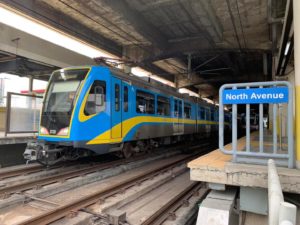
THE year 2025 marked a series of decisive actions by President Ferdinand Marcos Jr., Malacañang said Wednesday. The Presidential Communications Office (PCO) said Marcos was the first president to expose and pursue actions against corruption, as good governance and accountability became defining pillars of his administration. The president also moved to deepen international partnerships, advance inclusive social reforms, strengthen food security, and improve public services. During his fourth State of the Nation Address (SONA) in July, the president condemned anomalous flood control projects, delivering the unforgettable line, “Mahiya naman kayo! (You ought to be ashamed of yourselves!).” Personally inspecting flood control projects, Marcos stepped the administration’s crackdown on corruption, ordered the recovery of public funds, and encouraged public participation through the launch of the “Sumbong sa Pangulo” website and the Department of Public Works and Highways Transparency Portal. On Sept. 11, Marcos signed Executive Order 94, which created the Independent Commission for Infrastructure (ICI) to investigate alleged irregularities in flood control and related projects. The president also voiced support for peaceful anti-corruption protests, emphasizing that public office was a public trust and that no individual involved in irregularities would be spared. He ordered the realignment of the flood control budget for next year to priority programs. As the Office of the Ombudsman has begun filing charges and arrest warrants have been issued, Marcos asserted that the government would continue to pursue filing criminal cases against all those involved in flood control irregularities. Marcos was also hands-on in leading disaster response and resilience, which emerged as key priorities in 2025, following the impact of Super Typhoon Nando and Typhoon Opong in September, a 6.9 magnitude earthquake in Cebu the same month, the double 7.4 and 6.8 magnitude earthquake in Davao Oriental in October, and Typhoon Tino and Super Typhoon Uwan in November. On Nov. 6, the president declared a one-year state of national calamity to bolster disaster recovery and enhance future resilience. Under Marcos, the government also implemented the zero balance billing policy, ensuring that patients admitted to basic or ward accommodations in Department of Health-listed hospitals had their medical expenses fully covered. Complementing these measures, the nationwide rollout of Yaman ng Kalusugan health caravans provided accessible medical services to communities, while the establishment of Bagong Urgent Care and Ambulatory Service centers provided free outpatient care. In education, the Marcos administration advanced comprehensive reforms aimed at enhancing learning opportunities and outcomes. The signing of the Expanded Tertiary Education Equivalency and Accreditation Program Act enabled working professionals to earn college degrees through the recognition of prior learning and work experience. Education reforms were prioritized through the fine-tuning of the K–12 curriculum, the signing of the Early Childhood Care and Development System Act, the addition of thousands of new teaching posts, and support for teachers’ welfare and professional growth. Marcos ordered the strengthening and expansion of the Unified Student Financial Assistance System for Tertiary Education to provide financial support to more deserving college students. Marcos spearheaded job fairs and improved transportation systems and commuter experience through fare discounts for students, senior citizens, and families and provision of e-shuttle services for persons with disabilities. He addressed community concerns such as the Siquijor power shortage, Bulacan schools’ water supply, and the San Juanico Bridge rehabilitation. He also intensified efforts to promote inclusive economic growth by implementing programs that directly benefit workers, farmers, and small businesses. The initiatives included the historic Social Security System pension reforms, which provided retirees with increased and timely benefits, alongside executive orders that strengthened workers’ rights and ensured their freedom of association. The president also expanded the 4Ps conditional cash transfer program to reach more vulnerable families and scaled up the Aksyon Fund to provide critical support for overseas Filipino workers (OFWs). To address food security, the government distributed fertilizer and farm machinery, established fair floor prices for palay, adjusted rice import policies to stabilize supply and prices, and invested in agri-processing and fish ports infrastructure to modernize farming and increase farmer incomes. The government accelerated the country’s digital transformation, expanding the eGovPH Super App to provide more accessible government services. Marcos launched the eGovPH Serbisyo Hub in San Juan City to allow easier access and faster services from government agencies gathered under one center. On the president’s guidance, efforts were made to improve digital connectivity including faster SIM card distribution and the rollout of the Free Wi-Fi for All program. Cybersecurity measures were strengthened to protect citizens’ data and maintain trust in digital government platforms. On the instructions of Marcos, the Department of Transportation deployed Dalian trains, which had been idle for nearly 10 years, to augment MRT-3 operations, significantly improving mass transit efficiency in Metro Manila. Airport upgrades at key tourism gateways enhanced both domestic and international travel, stimulating tourism and supporting local economic growth. The president’s order for the 100-percent electrification of households brought more communities into the national grid. The president and first lady Liza Araneta-Marcos also brought government services directly to OFWs through the OFW Serbisyo Caravan conducted in 11 key cities for migrant Filipinos. The Serbisyo Caravan provided OFWs convenient access to multiple government services, such as welfare and legal aid, documentation, social security and national ID enrollment. The president also maintained full support for the Armed Forces of the Philippines (AFP), pushing forward modernization efforts and internal and external security measures. In fighting crime, the president ordered heightened police patrols, faster response time for emergencies through the new Unified 911 System, and intensified operations against drug syndicates. Just three years into Marcos’ term, the amount of illegal drugs confiscated has nearly matched the total haul seized over the entire six-year term of the previous administration. At the same time, the number of fatalities under Marcos’ administration remained a very small fraction of those recorded during the previous administration, highlighting a shift toward a more humane and reform-focused strategy. For the welfare of military and uniformed personnel, the president approved an adjustment in base pay to be implemented in three tranches beginning on Jan. 1, 2026, and raised the daily subsistence allowance to P350. The PCO said that leadership changes and key appointments ensured continuity and stability in governance. Marcos asked all Cabinet-level officials to submit courtesy resignations, in what Malacañang described as a “bold reset” of his administration following the administration coalition’s weak performance in the May 12 elections. The move led to the exit of Environment Secretary Ma. Antonia Yulo-Loyzaga and the reassignment of others, including Raphael Lotilla, who shifted from the energy portfolio to the Department of Environment and Natural Resources. Marcos also accepted the resignations of a few officials as part of this reset, including former Solicitor general Menardo Guevarra, former Commission on Higher Education chairman J. Prospero de Vera III, former Presidential Commission on the Urban Poor chairman and chief executive officer Meynardo Sabili, former Presidential adviser for Special Concerns Menandro Espineli, and former Trade secretary Alfredo Pascual, who stepped down to return to the private sector. Those retained include then-executive secretary Lucas Bersamin, Agriculture Secretary Francisco Tiu Laurel Jr., then-Finance secretary Ralph Recto, Socioeconomic Planning Secretary Arsenio Balisacan, then-Budget secretary Amenah Pangandaman, Transportation Secretary Vince Dizon, Education Secretary Sonny Angara, Social Welfare Secretary Rex Gatchalian, Migrant Workers Secretary Hans Leo Cacdac, Science and Technology Secretary Renato Solidum Jr., Tourism Secretary Christina Frasco, Information and Technology Secretary Henry Aguda, Public Works Secretary Manuel Bonoan, and Presidential Adviser on Peace, Reconciliation, and Unity Charlie Galvez Jr. The president’s remarks in his fourth SONA also set off more departures. Public Works Secretary Manuel Bonoan resigned soon after, while Bersamin and Pangandaman stepped down “out of delicadeza” after accusations raised by resigned lawmakers. Marcos tapped Recto as executive secretary and appointed Frederick Go to lead the Finance department. Pangandaman was replaced by Budget Undersecretary Rolando Toledo as acting Budget secretary while deliberations on the 2026 spending plan proceed. Marcos also pursued an active foreign policy throughout 2025, strengthening alliances and expanding regional and global partnerships. State visits to Cambodia and India, participation in Association of Southeast Asian Nations (Asean) engagements, and high-level meetings during the Asia-Pacific Economic Cooperation Summit further underscored the Philippines’ commitment to multilateralism, regional stability, and international trade and security partnerships. In November, Marcos launched the Philippines’ chairmanship of the Asean for 2026.

PH, Slovakia mark milestone year

PH, Slovakia mark milestone year

THE Philippines and the Slovak Republic marked a milestone year in their bilateral relations during a diplomatic gathering of Indo-Pacific countries hosted by the Slovak government in Bratislava last Dec. 8. The event highlighted a year of positive developments in Philippine-Slovak relations, including Slovakia’s decision to open an embassy in Manila, expanded cultural exchanges through music and sports, and advanced discussions toward the conclusion of a bilateral labor agreement. Officials said these initiatives reflect growing mutual interest in building practical, forward-looking cooperation between the two countries. The Philippines was among a group of countries invited to the vin d’honneur reception, signaling Manila’s increasing engagement with partners in Central and Eastern Europe and its expanding role in Slovakia’s outreach to the Indo-Pacific region. During the gathering, Slovakia formally launched its “Strategic Concept for Engagement in the Indo-Pacific,” identifying the region as a key foreign policy priority. Slovak officials emphasized the country plans to deepen diplomatic, economic, and security cooperation with Indo-Pacific partners in line with broader European Union policies.

Long-delayed EDSA rehabilitation starts

Long-delayed EDSA rehabilitation starts

(UPDATE) THE Department of Public Works and Highways (DPWH) began the first phase of the long-delayed rehabilitation of the historic Epifanio delos Santos Avenue, popularly known as EDSA, on Christmas Eve. “This follows the order of President Ferdinand Marcos Jr. to repair the highway to make it safe for motorists, commuters, and pedestrians, especially vulnerable sectors such as persons with disabilities, senior citizens, and pregnant women,” Public Works Secretary Vince Dizon said on Wednesday. According to Dizon, concrete reblocking works started at 11 p.m. on the southbound and northbound stretches of EDSA, and the work will continue until Dec. 27, to be followed by asphalt overlay works thereafter. The work plan, Dizon explained, was meant to take advantage of the long Christmas break when people are on vacation, and fewer cars are expected on EDSA. “With less disruption, more work can be done and at least cost to the government,” said Dizon. Based on the DPWH work plan, southbound concrete reblocking will be done from Dec. 24 to 27 on P. Celle St., Pasay City, to Roxas Boulevard (inner lane only), and Tramo Flyover to P. Celle St. (inner lane only) from Dec. 26 to 27. For the northbound side, roadwork will be from Roxas Boulevard to Park Avenue (inner lane only) from Dec. 24 to 27, and Park Avenue to Taft Avenue (inner lane) on Dec. 27. Soulbound asphalt overlay will be done at the ESA Orense to Urdaneta Village (Dec. 25), EDSA Orense to Magallanes Interchange (Dec. 26) and Tramo to Loring St. (Dec. 27). Dizon advised motorists to use alternate routes during the said period, adding that the DPWH will provide an updated repair work schedule from Dec. 28, 2025 to Jan. 5, 2026. Under the revised work plan, Dizon said, the rehabilitation of EDSA will be implemented in two phases of four month each, starting at the Roxas Boulevard to EDSA-Orense, while the second phase will cover the rest of EDSA. The 23.8-kilometer EDSA stretch is the longest and most congested highway in Metro Manila. It passes through six of Metro Manila’s 17 local government units or cities, namely, Caloocan, Quezon City, San Juan, Mandaluyong, Makati, and Pasay. With faster implementation, Dizon pointed out, the cost of rehabilitating EDSA would be down to P6 billion from the original estimates of P17 billion or a substantial savings of P11 billion, which the government can use to fund other projects. Among the action plans on EDSA will be the expansion of pedestrian lanes, implementing shared bike lanes and repair stops, pedestrian waiting sheds, and removal of obstructions along the commuter route.

P1B biosafe program can avert food crises

P1B biosafe program can avert food crises

SEN. Francis “Kiko” Pangilinan on Wednesday said the inclusion of a P1-billion Bio-Safe biosecurity enforcement program in the proposed 2026 budget of the Department of Agriculture (DA) is a crucial step toward preventing smuggling, animal disease outbreaks, and food supply disruptions before they escalate into price shocks and shortages. “The line item aims to strengthen disease surveillance, border controls, and on-ground enforcement against threats such as African swine fever (ASF) and avian influenza. These outbreaks have previously driven up food prices and wiped out livelihoods,” Pangilinan said. Pangilinan is a member of the bicameral conference committee reconciling the national budget and serves as vice chairman of the Senate Committee on Finance. He also chairs the Senate Committee on Agriculture, Food and Agrarian Reform. The Bio-Safe program institutionalizes biosafety, biosecurity, and surveillance (BSS&S) measures across the agriculture sector, covering crops, livestock, poultry, and fisheries. The program applies to farms, laboratories, quarantine stations, slaughterhouses, and other agricultural facilities. It is designed to prevent the entry and spread of animal and plant diseases that can cripple food production. Under the BSS&S system, the DA issues standardized containment and response protocols, strengthens disease surveillance and reporting, and upgrades engineering controls in facilities handling biological materials. For livestock operations, biosecurity measures may include perimeter fencing, controlled farm access, climate-regulated animal housing, proper waste management systems, and sanitation facilities such as shower-in and shower-out areas for workers. “As they say, ‘Prevention is better than cure.’ Every outbreak we fail to prevent becomes a huge price Filipino families are forced to pay,” Pangilinan said. The senator cited past food emergencies as evidence that delayed responses are far more costly than early prevention, both in terms of public spending and household welfare. African swine fever alone wiped out an estimated five million pigs nationwide, caused losses of at least P200 billion, and reduced the country’s hog inventory by more than 20 percent. The resulting supply shock pushed pork inflation to about 20 percent in 2021 and kept retail prices elevated and volatile in the years that followed. While pork remained safe for consumption, weak biosecurity and market controls left consumers paying higher prices, while many backyard hog raisers lost entire herds and breeding stock. Avian influenza outbreaks have similarly strained food security and farmer incomes. Since 2017, authorities have culled hundreds of thousands of poultry upon detection of highly pathogenic H5N1 avian influenza in multiple regions, triggering temporary shortages and spikes in chicken and egg prices. “We always scramble after the damage is done. This budget seeks to stop the damage from happening at all,” Pangilinan said. Beyond disease prevention, Pangilinan said the Bio-Safe program also plays an important role in curbing agricultural smuggling by tightening sanitary and phytosanitary controls on imports. Enhanced inspection, testing, and quarantine measures improve detection rates at entry points, making it more difficult for illegally imported or misdeclared agricultural goods to access domestic markets. Effective implementation, he added, will require close coordination between the DA and the Bureau of Customs, particularly in cases involving large-scale smuggling and economic sabotage.