Is AI Making Us Want Impossibly Perfect Teeth?

Is AI Making Us Want Impossibly Perfect Teeth?

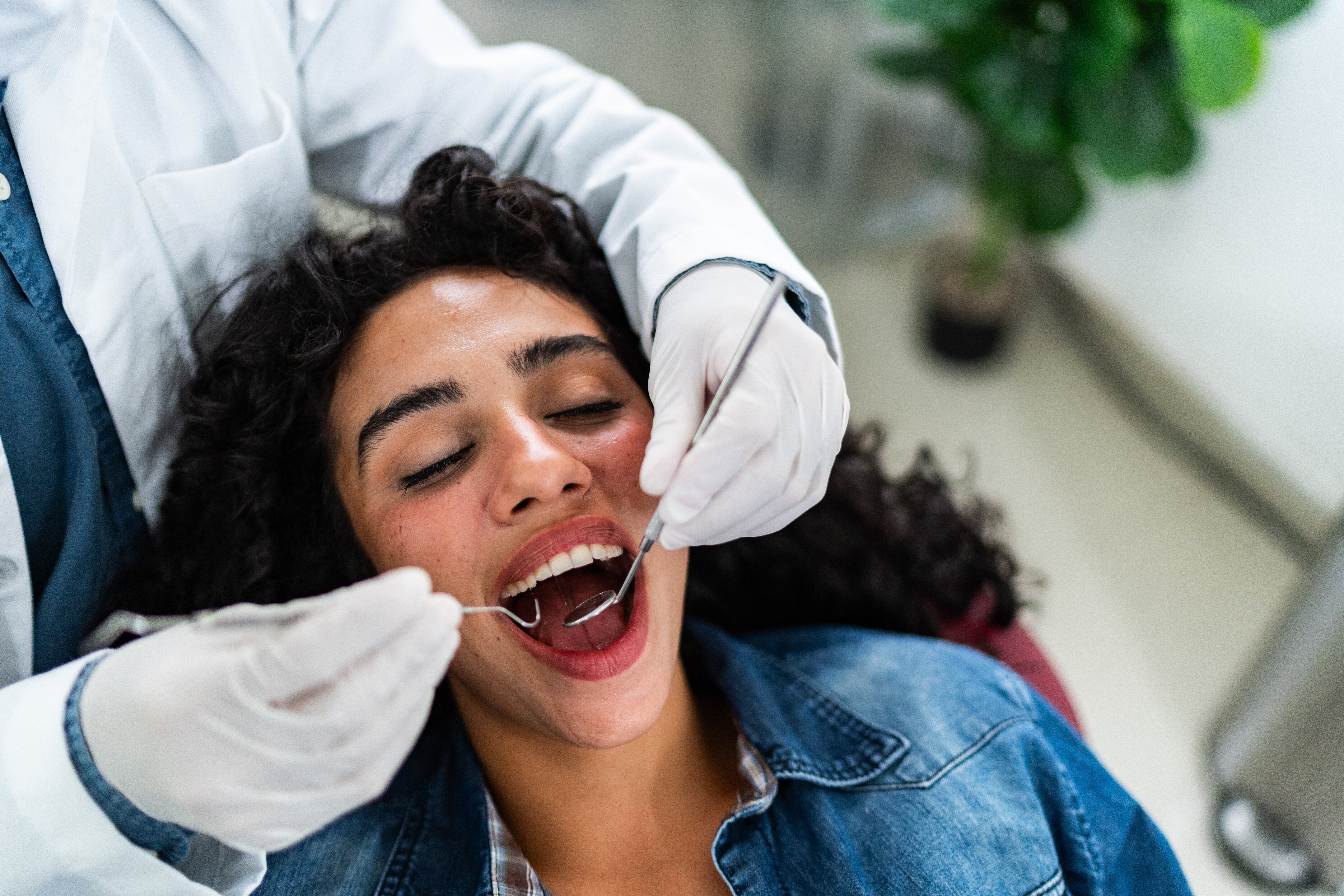
Posting our every move on social media has its joys and consequences — one of which is the incessant opportunity for self-criticism. Our smiles, oddly enough, are often the target of our scrutiny. There we are, mid-scroll on TikTok, wondering if we should have worn our retainers a little more stringently in sixth grade. But how many of us are actually taking action? As it turns out, a growing number of young women are actively seeking out veneer consults, even when their teeth are healthy, straight and functional. Veneers — essentially a thin, custom-made porcelain shell for teeth once reserved for the Hollywood elite or midlife reinventions — have quietly become part of the modern beauty conversation, discussed in the same breath as Botox, filler and laser treatments. What feels new isn’t the desire for nice teeth, but how commonplace the idea of altering them (often in a very costly and somewhat dramatic way) has become.  I n many cases, there’s nothing clinically wrong with our teeth at all — a smile may be slightly warmer in tone, a tooth a fraction shorter than its neighbour. However, details that once would have gone unnoticed now seem glaring. These small variations are part of what gives faces character and humanity, but because they don’t resemble the uniform, hyper-polished smiles saturating social media, young women are increasingly growing up believing that cosmetic alteration isn’t an exception, but an expectation. Spend time on TikTok or Instagram, and you’ll see it everywhere: “smile transformations,” “seat day” reveals, influencers documenting their temporary teeth and final results in real time. The language is casual, almost breezy, as if cosmetic dentistry is simply another stop on the self-care circuit (scheduled right after a facial or waxing appointment). According to the American Society of Plastic Surgeons , more than 260,000 minimally invasive cosmetic procedures were performed on patients 19 and under in 2023 . And while veneers aren’t tracked the same way as injectables, young adults without medical issues are increasingly seeking consults with dentists for an aesthetic upgrade. Young girls have always been coerced into obsessing about their image — having the perfect body shape, silky hair, impossibly smooth skin — but today, it’s getting even more granular. “Now more than ever, we are staring at our own faces,” says Andi-Jean Miro, a New York City-based cosmetic dentist with several celebrity patients. “Between Zoom, FaceTime, TikTok and dating apps, it can feel like living with a camera on you all the time.” In that setting, small details become magnified, and perfection begins to feel attainable and therefore expected. Young women are increasingly growing up believing that cosmetic alteration isn’t an exception, but an expectation. Social media has also changed how cosmetic work is discussed. Procedures that were once private are now documented publicly, often framed as transparency. Veneer “journeys” unfold in real time — even though some of the details are omitted in favour of a pithy, watchable video. Temporary teeth are shown, final results are revealed. The repetition has a normalising effect. “When you see it enough,” Miro says, “veneers start to feel routine, even if your natural teeth are already beautiful.” Celebrities and influencers have played a role in this shift, offering highly visible smile transformations that circulate widely online. But the images themselves can be misleading. Many of the smiles labeled as “veneers” are actually crowns — a far more invasive procedure that requires the significant removal of the natural tooth structure. Even moments that serve as cautionary tales don’t depict the true story. Internet personality Tana Mongeau famously posted a TikTok showing her “veneers” falling out, a clip that quickly went viral. What many viewers didn’t realise — and what dentists are quick to point out — is that what fell out was likely a crown, not a veneer, a distinction that underscores how poorly understood these procedures have become online. But that difference is critical in a clinical setting. And once you shave down those pearly whites? Well, that’s that. “A veneer is an enhancement. A crown is reconstruction,” Miro explains. Veneers cover only the front surface of a tooth and can often be done conservatively. Crowns encase the entire tooth, requiring aggressive drilling. “For younger patients with healthy enamel, crowns are usually unnecessary. And once that enamel is gone, you can’t get it back.” “Young women are comparing themselves not just to influencers, but to filtered images and AI-generated faces,” says dentist Pia Lieb. Pia Lieb, a dentist, founder of Cosmetic Dentistry Center NYC and a former clinical assistant professor at New York University, sees the effects of this confusion regularly. She describes a generation that examines their smiles with an intensity that was previously impossible. “Patients come in with concerns about a single tooth being slightly longer or less symmetrical,” she says. “They are zooming in on their own faces in ways that weren’t available even a decade ago.” Filters and editing tools further distort expectations. Teeth appear whiter, straighter and more uniform than biology actually allows. “Young women are comparing themselves not just to influencers,” Lieb says, “but to filtered images and AI-generated faces.” The result is a narrowing definition of what a “good” smile looks like, one that often excludes natural variation. And that’s dangerous. While veneers can be appropriate in certain cases — such as physical trauma, intrinsic discolouration or developmental issues — both Lieb and Miro caution against treating them as a cosmetic shortcut. Veneers require long-term maintenance and eventual replacement. Plus, they can take a good chunk out of your wallet, running from $500 to $2,500 per tooth. Over-preparation can lead to sensitivity, nerve damage and restorative work later in life. “This part is rarely shown online,” Miro says. “Cosmetic dentistry is a commitment, not a trend.” What stands out most about the surge in cosmetic consults isn’t vanity so much as vulnerability. It’s the moment when a young woman pauses a video of herself and wonders why her smile doesn’t look like the ones she sees everywhere else. It’s the slow accumulation of images, comparisons and “before-and-afters” that make perfectly healthy teeth start to feel insufficient. And recent, poignant findings have shown that teen girls process social media content involving body image differently than their male counterparts. Research from 2022 suggests that teen girls reported using TikTok and Instagram (where there’s an abundance of content with strong suggestions about body image and aesthetics) more often, while teenage boys use Twitch, YouTube and Reddit. One problem with this, says Amanda Raffoul, a researcher at the Harvard T.H. Chan School of Public Health, is “a societal acceptance of body dissatisfaction in teen girls as a normal.” In a story by The 19th , she explained that this assumption “can create a dangerous environment for teens to engage in social media.” Since young women and girls are exposed to more body criticism online , it’s worth having real conversations, offline, about what certain dental procedures entail and whether having one is truly necessary — rather than a byproduct of something we see on an AI-doctored image or in a post from an influencer. In a culture that rewards polish and uniformity, the pressure rarely announces itself outright — it builds gradually, until opting out feels harder than opting in. A smile, after all, is not just another aesthetic choice. It is functional, biological and deeply personal , shaped by genetics, age and real life experience. As cosmetic dentistry becomes increasingly normalised for younger patients, the question shifts from whether veneers are beautiful to whether young women are being given enough space — and enough honest information — to decide what they actually want. Sometimes, enhancement is the right choice. But sometimes, the best option is realising that the smile you already have doesn’t need fixing at all. Related... Dentists Are Begging You To Stop Using These Viral Teeth-Whitening Hacks Semaglutide Users Are Reporting 'Ozempic Teeth' – But It May Not Be What They Think This Is What Aimee Lou Wood Really Thinks Of Everyone Talking About Her Teeth

I Slowly And Quietly Destroyed My Marriage. Don't Make The Same Mistake

I Slowly And Quietly Destroyed My Marriage. Don't Make The Same Mistake

I could tell you my marriage ended. But that wouldn’t be the whole story. The truth is I slowly and quietly destroyed my marriage while convincing myself everything was fine. I’m an average guy. I had a good job, and I showed up physically. I paid the bills. I provided. I thought that was enough. I thought love was something you earned once and then just… had. I was wrong. I grew up in a small town in rural western Kentucky, raised in church by a devoted mother. Faith was familiar. Scripture was familiar. People watched me grow up and assumed I’d be fine. I assumed it, too. My parents divorced when I was five. After that, I saw my father three times before he died. No birthdays. No calls. No effort. For years, he lived a mile from me, and I never knocked on his door. I didn’t have the courage. We joked about it when we drove by his house, but jokes are sometimes just a mask for pain. I didn’t realise then how much that absence shaped me. I learned how to be likeable. How to avoid confrontation. How to be “fine” instead of honest. Then I met her. When she walked into church one Sunday in a red dress back in the summer of 2014, the world stopped. I still see it clearly. Third row from the back, sliding past her family to the middle of the pew. She didn’t know what she did to me just by walking in. I remember thinking, Don’t screw this up. She had a way of making rooms feel warmer without trying. A confidence that wasn’t loud. A softness that wasn’t weak. She laughed easily, but she also carried depth. She noticed people. She listened. She remembered things I forgot. When I told her I loved her and she said it back, something settled deep in me. Well, after my heart exploded in my chest. It felt safe. Certain. Like I had finally landed somewhere. I loved her in ways that were quiet and ordinary. I loved how she moved through the world. She loved the beach, and I loved watching her stand at the edge of the water, red swimsuit with white trim, dipping her toes in and hesitating. She was terrified of sharks and whatever else she thought might await her out there. She would cling to me as I pulled her farther out, trusting me even when she was afraid. I loved the way she looked at night when everything was quiet. Wearing one of my T-shirts, ratty pyjama shorts, hair a mess, no makeup. No one has ever looked better with no makeup. Standing at the end of the bed rubbing lotion on her arms, talking about something small that felt important just because she was saying it. I would watch her and think, This is it. And still, I didn’t protect it. I loved her voice. I loved the way she sang karaoke without fear. I loved how she laughed at herself. I loved how hard she tried. How much she gave. I loved her. And then, years later, when she said yes to my proposal, something in me relaxed. I thought the work was done. I didn’t stop loving her. I stopped being careful with her heart. I stopped listening the way I used to. I stopped noticing when she was tired. I stopped hearing what she was really saying. I defended myself, instead of protecting us. I crossed lines I knew better than to cross. I hid things because honesty felt inconvenient. I didn’t lose my wife all at once. I lost her in pieces. For 10 years, I quietly gave her hell. Through defensiveness. Through distraction. Through choosing comfort over connection. Through the nights I chose screens, hobbies or “me time” over sitting next to her. Through moments where she needed my presence. She warned me. She told me she was tired. She told me she felt alone. She told me she was losing feelings. She said it more than once. More than twice. I treated those words like background noise. Something to address later. Something that could wait. I thought love would wait. On Christmas morning in 2025, everything looked normal. The kids were laughing. Wrapping paper everywhere. A life built together doing what it had always done. But when I looked at her, her eyes were empty. Not angry. Not sad. Just done. I saw it. And I ignored it. When she asked me to leave, I told myself it was temporary. I said what I needed to say to get back to feeling comfortable. A week later, it wasn’t temporary anymore. I moved into an apartment. Friends told me I’d be home soon. I wanted to believe them. But something inside me knew I wouldn’t be. There is a special kind of loneliness that comes from grieving someone who is still alive. Your brain lies to you and tells you there’s hope because she’s breathing, because you can still see her. But your heart knows when something sacred has already left the room. Finally, the lights came on. Years ago, my mum bought me glasses to help improve my colour-blindness. When I put them on, I cried. Colours I had never seen before exploded into view. That’s what this was like – except it wasn’t colours. It was her. I saw everything clearly. The love she gave. Her patience. Her effort. All the times she stayed when she shouldn’t have. And then I saw myself, from her side, without excuses. I realised that I didn’t lose her suddenly – I lost her slowly, choice by choice. I let the pain hurt. Sleepless nights. Knots in my stomach. A heaviness that didn’t lift when the sun came up. Somewhere in that pain, I began to change. Not to win her back. I changed because I couldn’t live as that man anymore. I am learning not to waste time on things that just fill gaps in the day, but to focus on the things that truly make an impact in my life. I have learned to lean on God in a way that I never have in my life. I’ve learned “I’m sorry” has to be more than just words. I am learning to be a man. Every day, I ask myself one question: How can I love her today – even if she never comes back? Sometimes that means prayer. Sometimes silence. Sometimes restraint. Sometimes doing the right thing knowing she’ll never see it and never know. Our old home feels different now. I see unfinished projects. Cracks I never fixed. The effort I postponed because I thought there would always be time. There wasn’t. I wish I had been more present. I wish I had soaked in the moments instead of multitasking my way through them. I wish I had taken more pictures. More videos. I still love her deeply. I probably always will. I don’t know what tomorrow will look like. I don’t know when this pain will ease or when I will no longer feel the urge to crawl back into her presence. The world doesn’t stop turning, so we move forward. But we don’t have to move forward blind. I pray there will be another chance for me to find this kind of love again in the future. If I do, I will walk into it as a man with a scar – one that will instruct me on how to love for the rest of my life. If my story keeps one man from assuming love will wait, from believing tomorrow is guaranteed, then something good came from the wreckage. Don’t wait until it’s too late. Logan Durall is a pseudonym for a writer who hopes other men might learn from his example before it’s too late. Do you have a compelling personal story you’d like to see published on HuffPost? Find out what we’re looking for here and send us a pitch at pitch@huffpost.com. Related... My Senior Dog Couldn’t Walk Anymore. Before She Died, She Led Me To My Husband. My Husband Left Me At 60 To Have A Baby With A Younger Woman 'I Think We Have A Dead Bedroom. My Wife Has A Wildly Different Take.'

Already on the plane or left at home? How England’s Rugby World Cup squad is shaping up

Already on the plane or left at home? How England’s Rugby World Cup squad is shaping up

Steve Borthwick started the Six Nations with a settled group but the journey to Australia 2027 has suddenly become a lot more complicated Not so long ago, Steve Borthwick’s squad for the 2027 World Cup was taking shape nicely. He picked a largely predictable 36-man group for the Six Nations and the same can be said of his matchday 23 to face Wales in England’s championship opener. Borthwick is a loyal coach who relies heavily on depth charts and the exodus of so many players to France after the last World Cup made a number of difficult decisions for him much easier. Just how tailored his squad is to the 2027 tournament is demonstrated by his refusal to pick the Bordeaux-bound Tom Willis on the basis he will not be available despite being awarded an enhanced contract last summer. Suddenly, on the back of two heavy defeats and shocking performances, things are not nearly as settled. Comparisons have been made with the 2018 Six Nations in which England also bombed. Eddie Jones reacted by deciding that a clutch of senior players such as Chris Robshaw, James Haskell, Mike Brown and Dylan Hartley would not keep going to the 2019 World Cup. There are also similarities with the 2023 World Cup warm-up matches when a number of players played their way out of Borthwick’s thinking. Here we take a look at which stalwarts are now under pressure, those in the maybe pile, who has advanced their case and who may emerge from left field. Continue reading...

Richard Eyre: ‘My biggest disappointment? At university in the 60s, I thought social justice was going to improve’

Richard Eyre: ‘My biggest disappointment? At university in the 60s, I thought social justice was going to improve’

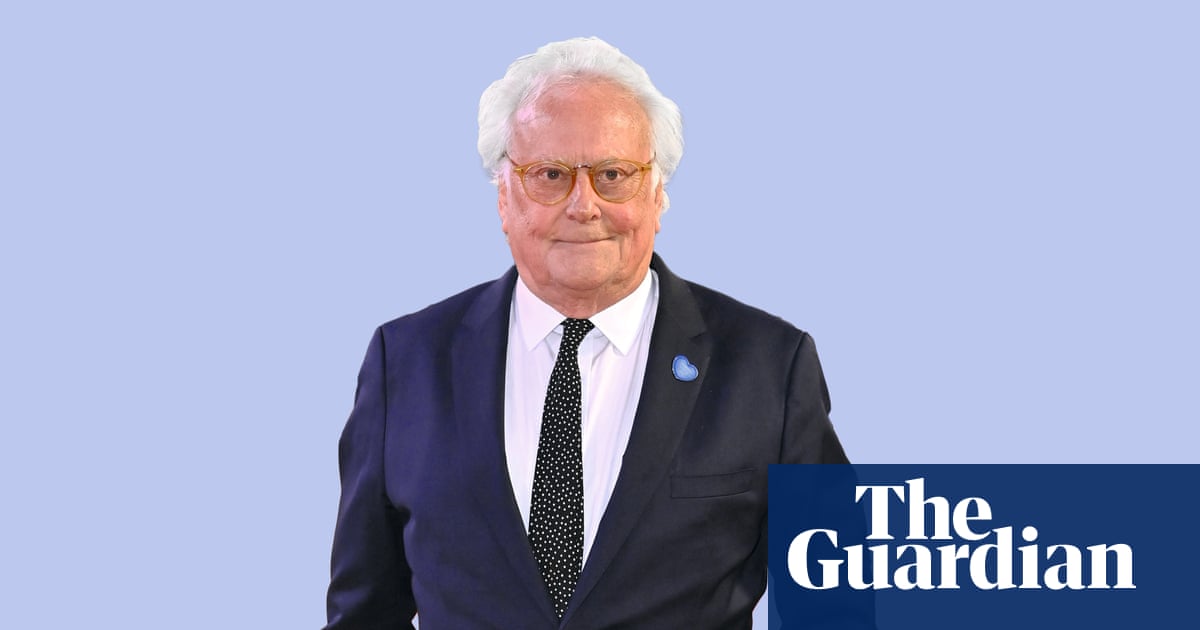
The director on his wife’s illness, the worst thing anyone’s said about him and the age he imagines himself to be Born in Devon, Richard Eyre, 82, was educated at the University of Cambridge and became an actor. Between 1987 and 1999 he was artistic director of the National Theatre. His notable films include Iris, Notes on a Scandal and The Dresser; he is currently shooting The Housekeeper and is directing Strindberg’s Dance of Death at Richmond’s Orange Tree theatre until 7 March. He is married with a daughter and lives in London. When were you happiest? In the 80s. Continue reading...

T rex breath and Queen Elizabeth’s car: scientists creating ‘time machine for the nose’

T rex breath and Queen Elizabeth’s car: scientists creating ‘time machine for the nose’

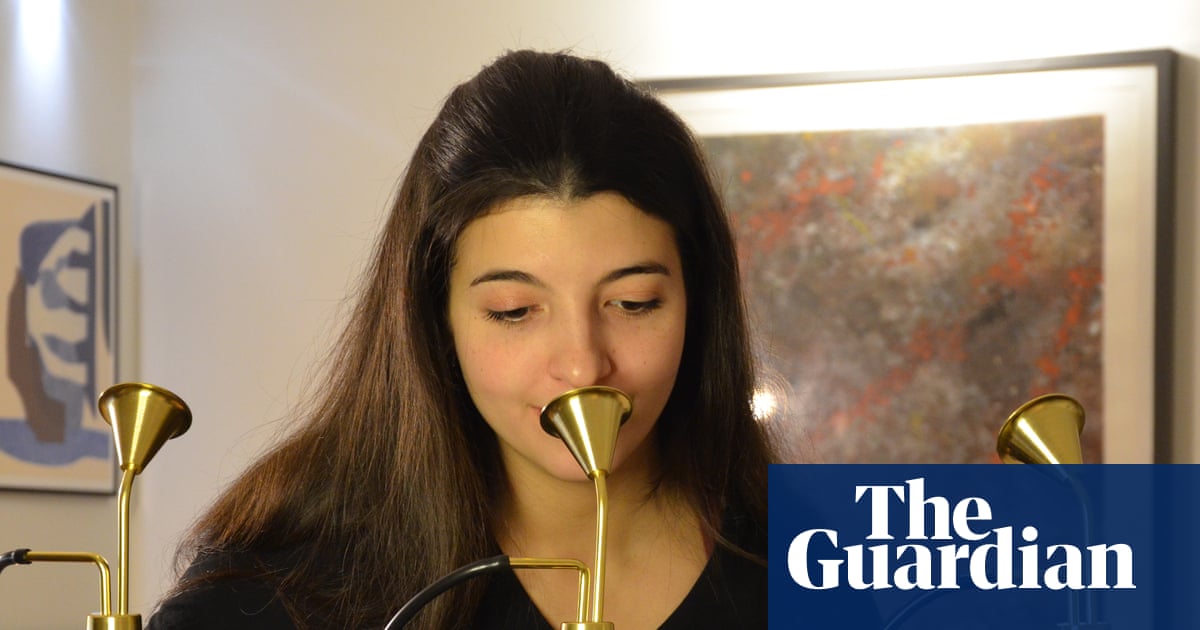
Researchers are recreating ancient odours for museumgoers as interest in the archaeology of smell grows From the interior of Queen Elizabeth II’s car to the scent of ancient Egyptian funerary practices, museumgoers are getting a whiff of the past like never before. Experts say the approach is more than a pungent stunt: it’s part of a broader effort to try to reconstruct the sensory worlds of the past, with collaborations involving historians, scientists, heritage experts and perfumers. Continue reading...

‘Adventurism has had its day’: speedboat shootout leaves Miami’s exiled Cubans bewildered

‘Adventurism has had its day’: speedboat shootout leaves Miami’s exiled Cubans bewildered

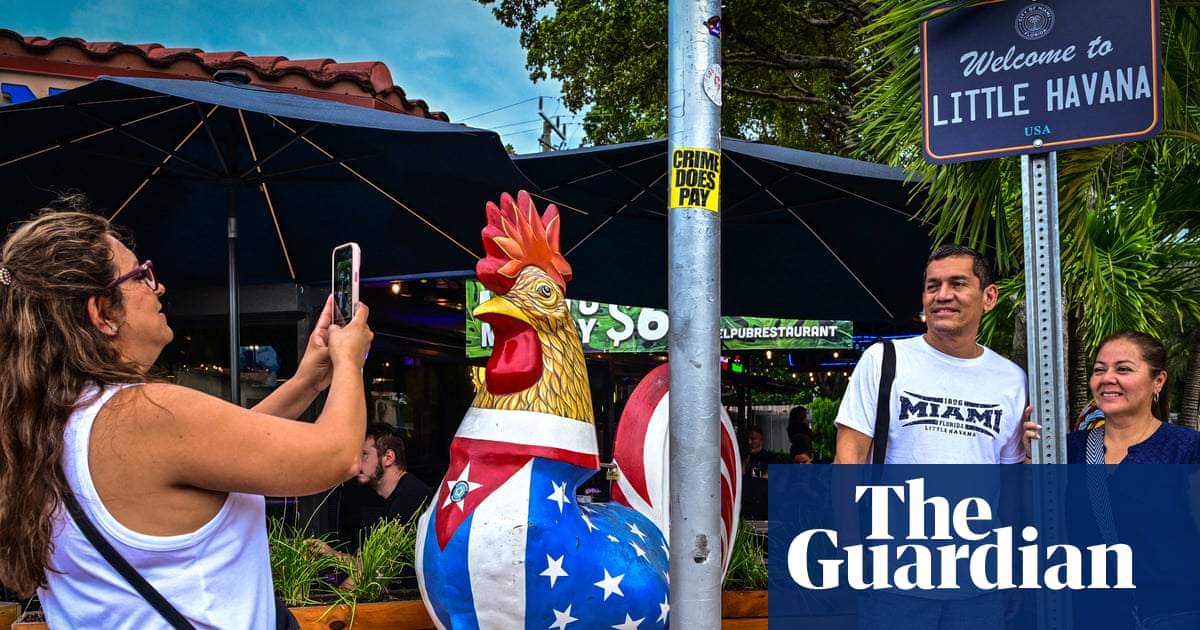
Few clues as to how 10 heavily armed men intercepted on stolen speedboat came together from across Florida or what they hoped to achieve Foot traffic was slow outside the Bay of Pigs Museum on Calle Ocho in Miami’s Little Havana neighbourhood. A few tourists in T-shirts and shorts bypassed the gallery dedicated to one of the most fateful days in Cuba’s history and headed instead to nearby Máximo Gómez Park to take photographs of Cuban exiles playing dominoes. This is the street at the heart of the Cuban expat community of more than 1 million people where tens of thousands partied through the night in November 2016 to celebrate the death of Fidel Castro, and where they gathered in sorrow almost exactly 30 years ago to mourn four Cuban-Americans shot down by the communist country’s air force as they conducted a mission for the humanitarian exile group Brothers to the Rescue. Continue reading...

Her husband wanted to use ChatGPT to create sustainable housing. Then it took over his life.

Her husband wanted to use ChatGPT to create sustainable housing. Then it took over his life.

Kate Fox says Joe Ceccanti was the ‘most hopeful person’ before he started spending 12 hours a day with a chatbot On 7 August, Kate Fox received a phone call that upended her life. A medical examiner said that her husband, Joe Ceccanti – who had been missing for several hours – had jumped from a railway overpass and died. He was 48. Fox couldn’t believe it. Ceccanti had no history of depression, she said, nor was he suicidal – he was the “most hopeful person” she had ever known. In fact, according to the witness accounts shared with Fox later, just before Ceccanti jumped, he smiled and yelled: “I’m great!” to the rail yard attendants below when they asked him if he was OK. Continue reading...

I’ve seen some bizarre exercises online. If I were an influencer, this is the one workout I’d recommend | Devi Sridhar

I’ve seen some bizarre exercises online. If I were an influencer, this is the one workout I’d recommend | Devi Sridhar

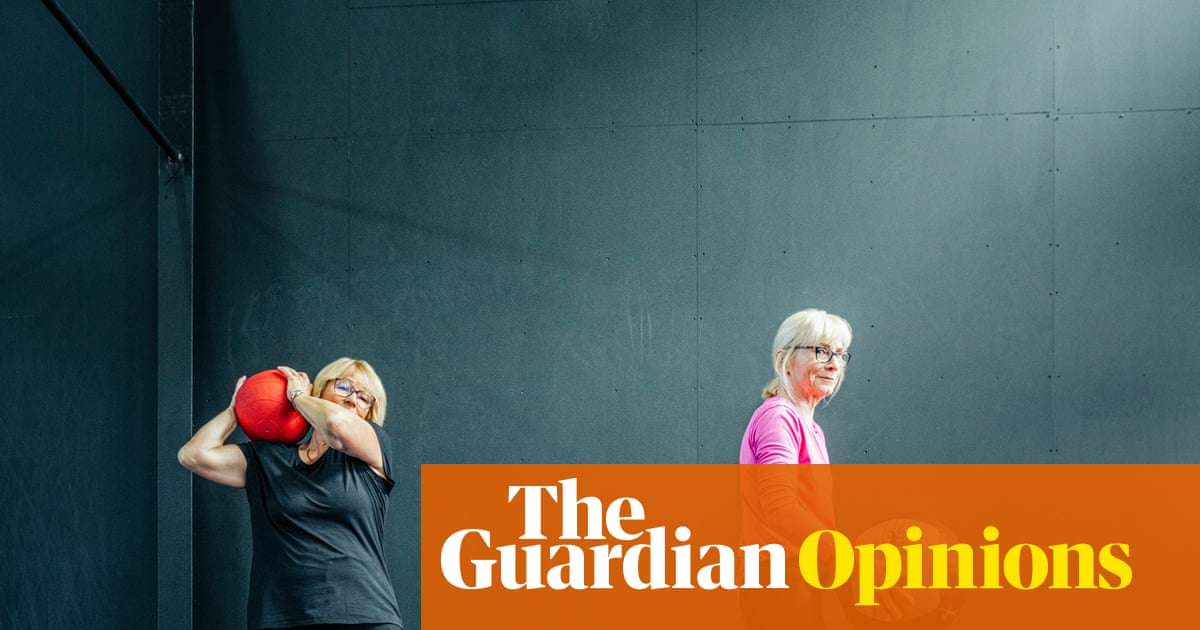
Forget snake yoga. All it takes to increase your life expectancy is factoring a set of simple exercises into your weekly routine Are you still keeping up with your 2026 resolution to exercise more? Or perhaps you’re just trying to survive the winter doldrums, with exercise the last thing on your mind. Whatever it is, social media is alight with fitness influencers showing off all kinds of bizarre and viral exercise trends. Take squats, a core exercise move . Those don’t seem good enough any more, so now we have Zercher squats (holding a barbell in your elbow crease like a metal baby), squats on vibration plates, squats while throwing a heavy ball and on and on. Some of these exercises may in fact be good, some useless, but because influencers can’t be seen to be doing the same thing every day, the key thing is that they’re novel and can be sold as “the little-known secret exercise that everyone should be doing”. Prof Devi Sridhar is chair of global public health at the University of Edinburgh Continue reading...