More Young People Committing Sex Offences. We Owe Our Kids A Conversation About It

More Young People Committing Sex Offences. We Owe Our Kids A Conversation About It

No parent wants to entertain the idea that their child could commit a sexual offence, or become the victim of one, but the latest statistics suggest we can’t bury our heads in the sand. Data from the Youth Justice Board shows the number of children committing sexual offences is on the rise. In 2025, proven sexual offences saw an increase for the third consecutive year, rising by 6%. The proportion of children arrested for sexual offences rose to 7%, up from 5% in 2024. Meanwhile the number of youth cautions for sexual offences rose by 27% compared with the previous year. “This data paints a troubling picture about today’s youth,” says Jessica Wilson, managing director at Eventum Legal. Kids are sharing indecent or extreme images According to the Youth Justice Board’s report, in the year ending March 2025, 54% (around 800) of proven sexual offences were related to indecent or extreme pornographic images or videos, which includes creating and sharing material. Ghislaine Bombusa, content and digital director at Internet Matters, tells HuffPost UK: “Child sexual abuse material (CSAM) includes any content that shows or causes the sexual abuse or exploitation of a child. This can include sexual images that a young person creates of themselves. “Once shared, these images can quickly spread beyond their control and be difficult to remove, causing serious and long-lasting harm.” It is illegal to create, possess or share sexual images of anyone under 18, including when the person sharing these is also a child. It’s also a crime to use AI to create, possess or distribute indecent images of children. Yet some young people appear to be either unaware of the consequences, or don’t think they will be caught. Internet Matters research found that almost half (49%) of teenagers aged 13-16 have heard about abuse of another young person’s sexual image. This includes an image being shared without consent and/or threats to do so; and creation of sexual images without consent, including ‘deepfake’ nude images. There’s been growing backlash against the availability of AI-powered nudifying apps, which can be used to ‘undress’ everyday images of people and turn them into pornography. While photos of anyone, of any gender, can be uploaded to these apps and turned into deepfakes, a staggering 99% of nude deepfakes feature women and girls. “Most young people don’t know or understand that sharing explicit content of their peers is considered a sexual offence,” suggests Wilson. “This explicit content can often emerge without them understanding the risks associated with it, leading to serious consequences.” Parents urged to educate kids on online safety Wilson believes education is key to preventing this from happening: “It’s more important than ever for parents, teachers, and communities to talk openly with young people about the dangers they face online, teaching them the value of consent, privacy, and how their actions can impact others.” While talking to children about consent and online risks can seem like a bit of a minefield ( where do we even begin? ), Bombusa says these conversations “are essential for keeping them safe”. It might be helpful to cover off areas such as: Legal implications of sharing sexual images – make sure that your child knows it’s not ok for anyone to create content to harm other people, How to report it if an image is shared Peer pressure Consent Digital footprint Bombusa advises parents to use simple, direct language, and start by talking through everyday scenarios, asking what a child might do in that situation. “This helps explain why young people may feel pressured to share images – including pressure from people they trust, and what the consequences could be,” she says. It’s really important to explain that once an image is shared, they may lose control over who sees or saves it, even if it was originally sent to just one person in private. The conversation can be an ongoing one – in fact, teens will probably feel more comfortable having informal side-by-side chats every now and then, rather than a sit-down lecture on online safety. During these discussions you can also show them how to use reporting and blocking features, or how to recognise when someone may be trying to cause them harm. “For older children, these conversations can help them understand how parents can support their digital wellbeing through parental controls across apps, devices, and networks,” Bombusa adds. “This includes managing who can contact them or share content with them, as well as reducing screen time and limiting exposure to harmful content.” Overall, the goal is to help children understand online risks without fear, says the expert, “empowering them to spot danger, speak up, and seek help” and “reassuring them that they won’t be blamed if something goes wrong”. The latter part is key as it means they should (theoretically) feel comfortable to come to you if something happens that makes them uncomfortable. If an image has already been shared, speak to your child about how to report it and block the sender. You can also report it to the police; as creating, possessing, or distributing indecent images of children is a criminal offence, regardless of whether the image is real or AI-generated. Services such as CEOP or Report Remove , which helps young people under 18 confidentially report sexual images or videos of themselves online to have them removed, are also important to be aware of. You can find helpful conversation starters on the Internet Matters site. Related... We Need To Speak To Our Daughters About This Disturbing Use Of AI 'A Stranger Made Fake Nudes Of Me. I’m Scared They Will Send Them To My Parents' After My Wife's Death, My Daughter Helped Us Find A New Way To Grieve

The National Year of Reading celebrates the ‘joy’ of books. But let’s not forget they can also be deeply troubling, too | Charlotte Higgins

The National Year of Reading celebrates the ‘joy’ of books. But let’s not forget they can also be deeply troubling, too | Charlotte Higgins

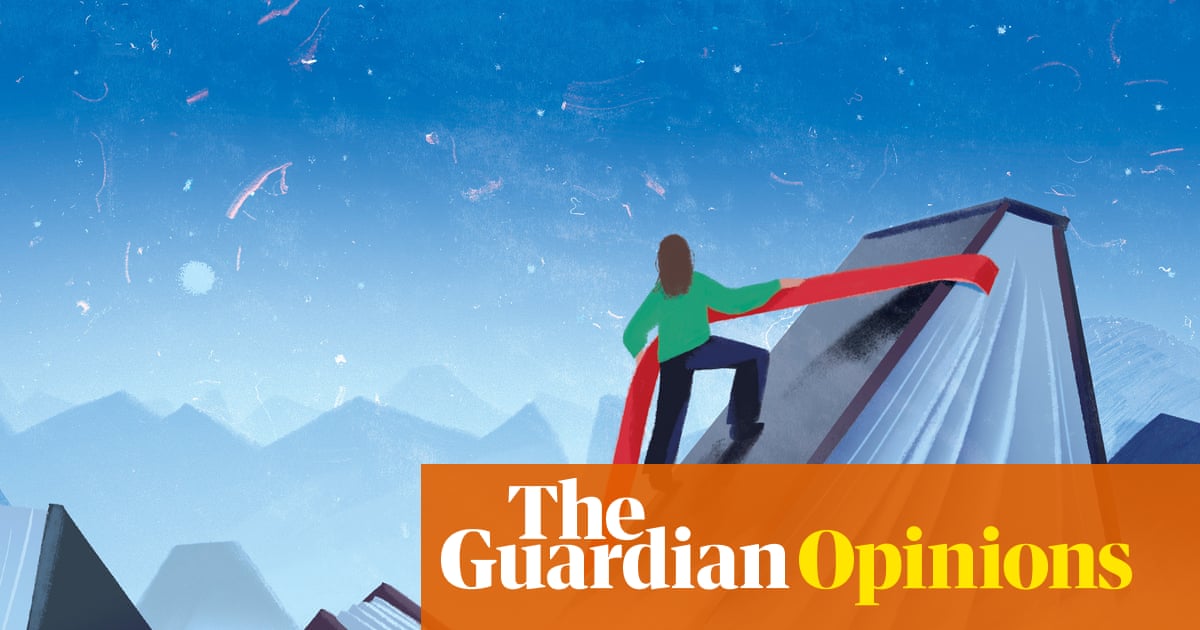
Encounters with great art can be absorbing, unsettling and even painful. How has this been tamed into mere ‘reading for pleasure’? It is the UK’s National Year of Reading. Specifically, this government-led scheme is about “reading for pleasure” and “the joy of reading”. This is not a matter of whimsy. Research has linked reading for pleasure in childhood to a host of positive educational and socioeconomic outcomes. But now – 14 years after the Department for Education, in a more innocent time, commissioned a chunky report on the matter – reading books for pleasure is an activity in crisis. The culprit usually blamed for this falling-off is the smartphone and its many short-term distractions; the mere presence of a smartphone in the room, recent research suggests , has an impact on our ability to concentrate. People are losing the mental means of getting lost in literature, it seems. There are lots of things that seem to be slightly off-kilter here. If reading really was such an immense pleasure, wouldn’t people be doing it anyway? Isn’t there something of a contradiction between the idea of reading “for pleasure” and the notion that engaging in this activity brings a ton of extrinsic benefits (all that extra “attainment”)? There’s something else, too: surely it’s not only the reading itself that’s important, but what you choose to read, and what you do with the experience of having read it. The current moment’s anxiety around smartphones seems to have ironed out all the doubts and provisos that earlier ages – sometimes sensibly – placed around reading. In Jane Austen’s Persuasion, the work of Byron – with all its “hopeless agony” – is not advised as sensible reading matter for a melancholy man, and the reading of novels has to be defended in her novel Northanger Abbey; Homer is excluded from Plato’s Republic in part because the poems include morally questionable scenes of gods behaving badly. I’m the last person to want to ban Homer. But self-evidently, there are some books that may harm you, even if you take pleasure in reading them – just as spending all day online may harm you. Charlotte Higgins is the Guardian’s chief culture writer Continue reading...

Meera Sodha’s vegetarian recipe for quinoa and chickpea salad with red cabbage, pomegranate and pistachios | Meera Sodha recipes

Meera Sodha’s vegetarian recipe for quinoa and chickpea salad with red cabbage, pomegranate and pistachios | Meera Sodha recipes

Tender jarred chickpeas make this colourful vegetarian dish a bit of a breeze to bring together Every now and then, something comes along in the food industry that is “better than sliced bread”, and right now I would say that thing is jarred chickpeas. Due to the way they’re processed, cooked at a lower temperature and for a shorter time, they tend to be softer than tinned and ready to eat in salads (a tinned chickpea, on the other hand, might need a five-minute boil to get to the same degree of softness). In any case, it’s safe to say that this innovation has led to an increase in my eating of chickpeas in salads, and today’s dish is a recent favourite. Continue reading...

‘Trump’s not enough. And he knows he’s not enough’: California governor Gavin Newsom on populism, ‘purity tests’ and whether he’ll run for the presidency

‘Trump’s not enough. And he knows he’s not enough’: California governor Gavin Newsom on populism, ‘purity tests’ and whether he’ll run for the presidency

He’s the Democratic politician with movie-star looks and a picture-perfect family, dogged by accusations of being a smooth‑talking elitist. Can he really unite the American left and win the most powerful office in the world? When you think of the politician Donald Trump isn’t, when you think of the norm he broke, the archetype he shattered, you might well picture a man who looks a lot like Gavin Newsom. Tall and handsome, hair coiffed just so, with a blond wife and four photogenic kids at his side, Newsom, who has been the governor of California since 2019 and is often described as the frontrunner to be the Democratic nominee for the White House in 2028 , looks the way professional politicians, and especially presidential candidates, look in the movies. It’s dogged Newsom for years, that look of his, perennially suggesting that he is, in the words of one California newspaper, “too ambitious, too slickly handsome, and too patrician-seeming” , especially for a populist age that cherishes the authentic and has no truck with anything either phoney or “elite”. The elite tag especially has hung around Newsom’s neck for decades, thanks to the fact that his ascent to the top of California politics has seemed smooth and unbroken, apparently eased by a childhood spent in the orbit of the Getty family, when that name was a byword for astronomical wealth. Continue reading...